


Mothurapur: From a quiet village to a dairy cow trading hub

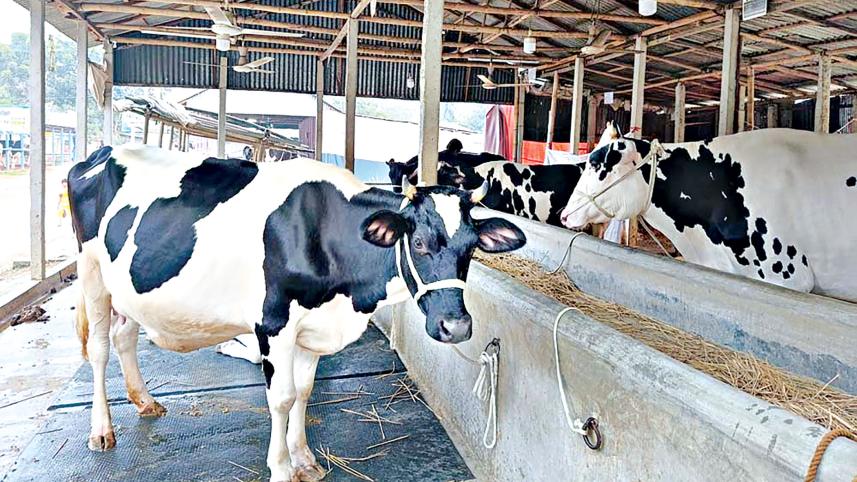
Mothurapur village, under Chatmohar upazila of Pabna, has transformed over the past two decades from a poverty-stricken settlement into a bustling hub for dairy cow trading.
Life in the village was once defined by low-paying farm work, little savings, and limited opportunities. Today, roads are lined with dairy sheds and signboards, reflecting a thriving livestock trade.

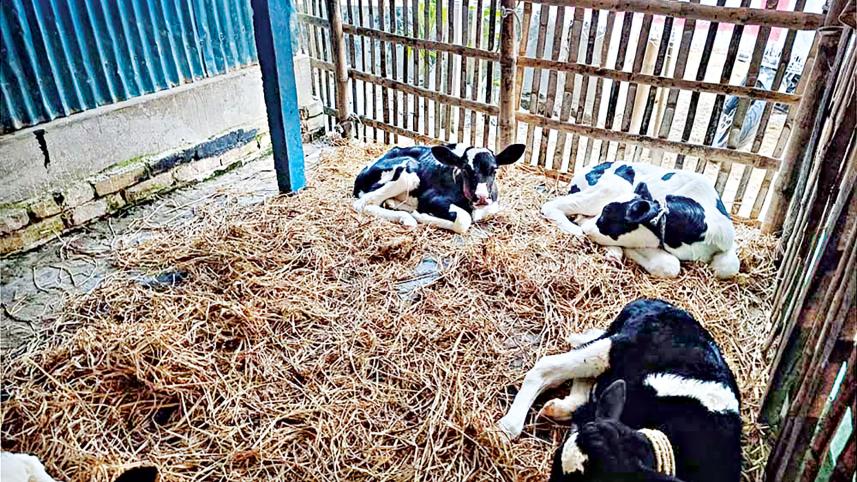
Interestingly, villagers do not rear or breed cows themselves. Instead, they focus on fast, high-value trading—buying top, often pregnant cows and reselling them within days to farmers nationwide, earning Tk 10,000-Tk 20,000 per animal. This entrepreneurial approach has lifted the village out of poverty, showing that ingenuity, rather than traditional farming, drives its prosperity.
LOCAL ENTREPRENEURS LEAD THE WAY
Md Rashidul Islam, a middle-aged man from the village, was a tea vendor struggling to earn a living two decades ago.
In 2005, he saved some money and took a loan to buy a pregnant cow for Tk 75,000. Within a week, a dairy farm owner purchased the cow for Tk 1 lakh, giving Rashidul a profit of Tk 25,000.
"I first started selling cows just to earn some extra income, but the business was more profitable than I expected. So, I invested more and built a shed like a small farm where I could keep 10 to 12 cows," he said.
Rashidul now sources high-quality milk-producing cows from Chatmohar, Bhangura, Faridpur, Baghabari, and other hubs, keeping them in his shed for a few days before posting videos online.
"Within days, customers from different districts contact me. I sell each cow with a minimum profit of Tk 10,000 to Tk 15,000 and sell at least 10 to 12 cows every month," he added.
His Ratul Dairy Farm now supplies cows nationwide, providing jobs for three to four previously unemployed people.
Md Jony Islam, another villager who completed a diploma in engineering, chose not to pursue low-paying jobs. Instead, he set up a modern shed a decade ago, using online platforms to attract buyers.
"Through online platforms, dairy farmers from across the country contact us. Sometimes they come here in person to see the animals and buy according to their preference and budget," he said.
Jony now trades 15 to 20 milk-producing cows every month, with prices ranging from Tk 2 lakh to Tk 4 lakh depending on breed and milk capacity. His shed includes modern facilities, such as a restroom for customers travelling long distances.
A VILLAGE TRANSFORMED
Md Hasmat Ali, a vegetable trader, reflected on the village's journey, saying, "A couple of decades ago, villagers had very few ways to earn a living. Most people had to travel to other areas to work as labourers.
"The cow trading business has quickly changed the socio-economic condition of the village. Many villagers have built sheds along both sides of the road and display their animals for customers. This is how Mothurapur, once a typical village, has become known as a dairy hub."
Md Rafikul Islam Bepari, an experienced livestock trader, explained that the hub grew gradually. "Years ago, dairy farmers from faraway places used to travel to remote villages to find animals. Many of them would rest in our village because there was plenty of open space, and they paid only a small amount," he said.
"At first, it was a no-investment business. We managed one or two cows on a selling agreement. When more customers started coming to the village, we invested money and built our own sheds," he added.
Today, Mothurapur has around 25 to 30 large sheds, with 20 active farms trading 250 to 300 animals every month.
 For all latest news, follow The Daily Star's Google News channel.
 DAIRY HUBS BOOST INDUSTRY, BENEFIT FARMERS
Md Jahurul Islam, upazila livestock officer, said the dairy sector in Pabna has grown significantly over the past few decades. "About 9,665 dairy farms are registered in the district, and over 8.48 lakh cows are officially recorded, though the real numbers are likely higher. Every month, the district produces around 25,000 tonnes of milk," he said.
"The supply of livestock in the district is much higher than the demand. Pabna is one of the leading dairy-producing districts in the country. With the growth of the dairy industry, job opportunities have also increased," he added.
Jahurul also noted that Pabna has two major dairy cow trading hubs -- Mothurapur and Harupara in Bhangura upazila -- both created by local people without external support. "These rural trading hubs provide opportunities for dairy farmers across the country," he said.
Dairy farmers from different districts praised these hubs for simplifying their work. Nur Mohammad, from Moulvibazar, said, "A few years ago, we had to travel across districts to find the best quality animals. Now, we can easily view animals online and contact specific traders, so we don't need to travel as much."
Iqbal, a farmer from Sylhet, added, "Local cattle hubs often deliver animals to our farms after receiving payment through banking transactions. In this way, rural trading hubs are playing a vital role in the country's dairy industry."
Comments