


Hand over Savar CETP to professional operator
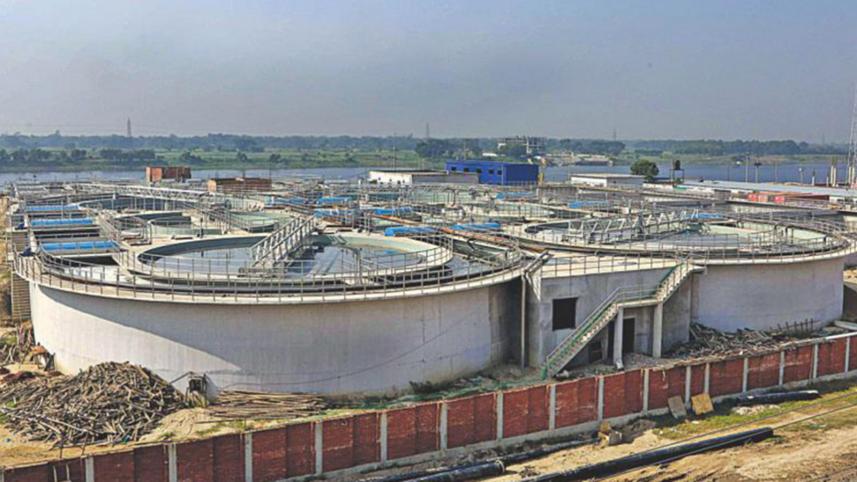
Bangladesh’s leather industry risks falling behind rising global compliance standards unless management of the troubled Central Effluent Treatment Plant (CETP) at the Savar Tannery Industrial Estate is handed over to a competent professional operator, economists and industry stakeholders said at a webinar yesterday.
The long-awaited relocation of tanneries from Hazaribagh to Savar remains incomplete because critical environmental infrastructure has failed to function properly, said Hossain Zillur Rahman, executive chairman of the Power and Participation Research Centre (PPRC),

“The relocation was never meant to be just a physical shift of factories,” he noted at the webinar on the leather sector organised by PPRC.
He added that waste treatment facilities must operate effectively if the industry is to meet international standards.
Rahman argued that the CETP, crucial for environmental compliance and export competitiveness, should remain under government ownership but be managed by an independent professional operator selected through a transparent process.
He questioned whether the Bangladesh Small and Cottage Industries Corporation should continue overseeing the facility, saying compliance requirements are essential for participation in global markets regardless of trade preferences.
Industry leaders said the sector continues to suffer from the consequences of the 2017 relocation.
Md Shaheen Ahmed, president of the Bangladesh Tanners Association, claimed that nearly 60 percent of goat and sheep hides were damaged during Eid-ul-Azha this year.
For the wastage, he blamed inadequate preservation, extreme heat, and a shortage of specialised processing capacity after the number of factories handling small skins fell from 30 to six.
He added that seasonal bank financing for tannery owners has dropped sharply — from Tk 460 crore before relocation to Tk 65 crore this year — worsening liquidity constraints and limiting hide purchases.
Tipu Sultan, chairman of the Bangladesh Finished Leather, Leather Goods and Footwear Exporters Association, said exporters were promised a fully functional CETP, chrome recovery unit, and dumping yard when they moved to Savar.
“Nine years later, those facilities remain incomplete,” he said, adding that compliance failures have driven away international buyers and pushed export prices down from around $1.50–$2 per square foot to 40–50 cents.
Despite project costs rising from Tk 250 crore to Tk 1,200 crore, the CETP has yet to secure full environmental clearance or Leather Working Group recognition, he said. As profitability declined, many exporters turned to imported leather while competitors such as Vietnam expanded their global market share.
Md Nasir Khan, chairman and managing director of Jennys Group, said the sector’s problems stem from years of policy inconsistency and regulatory uncertainty.
He argued that the relocation process damaged buyer confidence because gas and electricity connections in Hazaribagh were cut before adequate preparations were completed in Savar.
Mustafizur Rahman, distinguished fellow at the Centre for Policy Dialogue (CPD), said leather, once viewed as Bangladesh’s “second RMG industry”, has failed to realise its potential despite generating more than 90 percent domestic value addition.
Leather exports stood at about $1.67 billion last fiscal year, far below expectations, he noted, warning that increasingly stringent sustainability requirements and upcoming measures such as the EU’s Carbon Border Adjustment Mechanism will add further pressure on the industry.
Mohammed Nurul Amin, chairman of Bangladesh Krishi Bank, said private banks have largely withdrawn from financing raw hide collection during Eid-ul-Azha, leaving state-owned banks to shoulder most of the burden.
He identified financing constraints, compliance requirements, LWG certification and the CETP as key challenges facing the sector.
MA Sattar Mandal, former vice-chancellor of Bangladesh Agricultural University, called for prioritising the reduction of leather wastage, saying significant quantities of hides continue to be lost because of weak collection and preservation systems despite their considerable economic value.
 For all latest news, follow The Daily Star's Google News channel.
Comments