


Govt to turn crises into opportunities
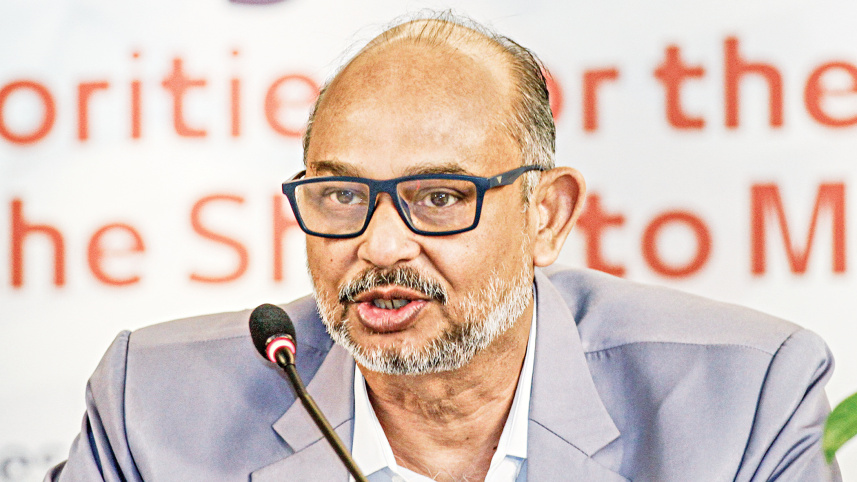
The government is navigating a critical situation amid a series of global crises, but remains committed to turning these challenges into opportunities, said Rashed Al Mahmud Titumir, adviser to the prime minister on finance and planning.
“The country is passing through a critical phase due to external shocks,” he said, referring to ongoing geopolitical tensions and their spillover effects on the economy.

The adviser made the remarks yesterday at an event organised by the Microcredit Regulatory Authority (MRA) in Dhaka.
Titumir said the previous Awami League government, along with the interim administration, had left behind a prolonged inflationary burden, which continues to weigh on households and businesses in the country.
Although there were expectations of some easing during Ramadan, inflationary pressures have persisted amid global uncertainties, including the ongoing US-Israel war with Iran.
Despite the challenges, Titumir expressed optimism that, as in the past, a BNP-led government would be able to convert the current crisis into an opportunity through appropriate policy measures and reforms.
“When the BNP first took charge of the state, Bangladesh was a war-ravaged, famine-stricken country. Then came the global oil crisis. Any textbook economist would have predicted that such an economy could not survive. But you will remember that Shaheed President Ziaur Rahman transformed that crisis into an opportunity,” he said.
According to Titumir, conventional economic thinking would suggest that domestic fuel prices should rise in line with international markets.
“Any textbook economist would say that when global fuel prices increase, countries must adjust accordingly,” he added.
The adviser said the government does not follow this path.
“Our government is accountable to the people. If a government is not accountable to its people, it can keep increasing electricity prices while distributing patronage through favouritism.”
However, he criticised the previous administration’s handling of the energy sector, claiming that electricity and fuel prices were raised repeatedly even when global gas prices remained relatively stable during the Russia-Ukraine war.
 For all latest news, follow The Daily Star's Google News channel.
Comments