


Drive was not to harass traders: Munshi
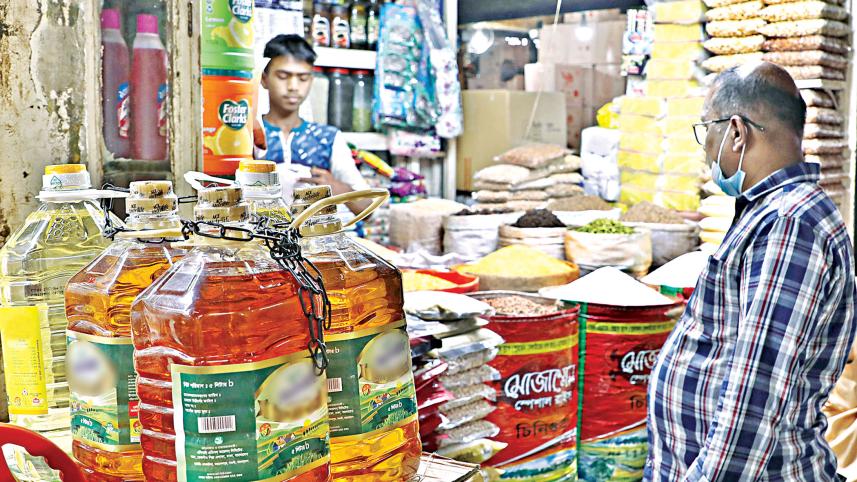
A recent drive by the Directorate of National Consumer Rights Protection (DNCRP) was not aimed at harassing edible oil traders, rather it was about finding out why the key cooking ingredient has seemingly disappeared from local markets, according to Commerce Minister Tipu Munshi.
At present, some traders are criticising the DNCRP drive as they see the sudden raids as "inappropriate" considering that only a few of them are engaged in hoarding edible oil products.

"But they [DNCRP officials] are actually working to provide relief to the common people," Munshi said.
He was speaking at a seminar organised by the Bangladesh Competition Commission (BCC) at its office on Eskaton Garden Road in Dhaka yesterday.
The commerce minister went on to say that although the DNCRP's actions may not bring any overall change to the domestic market, it will at least raise public confidence in this regard.
It should also be mentioned that the DNCRP has to work in a large area with limited human resources.
As such, the activities of only about 200 traders were inspected in the last seven days. "Still though, the commission is working to create a competitive market," Munshi added.
Md Jashim Uddin, president of the Federation of Bangladesh Chambers of Commerce and Industry, said the DNCRP had conducted the drive on the issue of the edible oil crisis but still, prices could not be reduced.
"Even so, many of these officials get very enthusiastic about doing such work but you cannot stabilise the market on laws alone," he added.
Uddin then said that despite allegations of stockpiling among traders, the DNCRP was able to seize about 2-3 lakh litres of edible oil through its drive. However, the daily demand for edible oil in the country currently stands at about 1.5 lakh tonnes.
"Of the 54 million shopkeepers in the country, how many are stockpiling edible oil? The way the situation is being portrayed in the media is not right," he said.
If the industry continues to be cast in such a light, even honest traders will be discouraged from doing business. So, it is pertinent to bring only those at fault under law.
"But it is not right to accuse everyone in such a way," Uddin added.
Md Mofizul Islam, chairperson of the BCC, said the market needs to be made competitive for business development. If not, producers, suppliers, wholesalers, retailers and buyers will all suffer.
"The commission is working to support business and not to harass anyone because only then will there be economic development and subsequently, jobs will be created and poverty will be eliminated," he added. It is natural that there will be competition among traders but it has to be ensured that it is a good competition, said Priti Chakraborty, director of the Bangladesh Women Chamber of Commerce and Industry.
Unhealthy competition is harmful for both consumers and businesses and besides, if there is a good environment for business, investment will increase, new entrepreneurs will be created and the quality of goods and services will improve, Chakraborty added.
 For all latest news, follow The Daily Star's Google News channel.
Comments