


Cold storage owners seek higher charge for potato
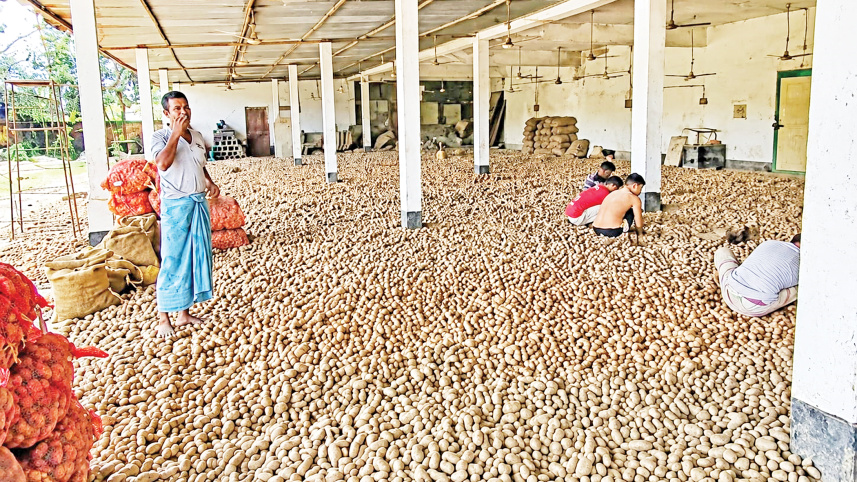
The Bangladesh Cold Storage Association yesterday defended the government-approved potato storage charge, saying its members have not collected more than the fixed rate despite rising operating costs, and urged the government to revise the tariff to ensure the sector’s sustainability.
Addressing a press briefing in Dhaka’s Purana Paltan yesterday, Mostofa Azad Chowdhury Babu, president of the association, dismissed allegations that cold storage owners were charging farmers more than the approved rate.

“Not a single cold storage has charged more than the government-approved rate of Tk 6.75 per kilogramme for potato storage,” he said.
He said operators have continued to charge the government-fixed maximum rate even though operating costs have risen sharply over the past year.
According to the association, electricity tariffs for cold storage facilities rose by 18 percent from June 1 this year, while labour costs, employee salaries, refrigerant gas, lubricants and maintenance expenses have also increased substantially.
“We have repeatedly requested the government to revise the storage charge in line with the increased operating costs. Without a revision, many cold storage operators will struggle to pay electricity bills and bank loans,” Mostofa said.
The association said Bangladesh produced around 1.12 crore tonnes of potatoes this year against an estimated domestic demand of 90 lakh tonnes, while nearly 34 lakh tonnes were stored in 351 cold storage facilities nationwide.
Mostofa said some “vested groups” were spreading misinformation by claiming that cold storage owners were charging more than the approved rate, creating unnecessary confusion among farmers and policymakers. He maintained that all potatoes accepted for storage this season were stored under agreements based on the government-approved charge.
Presenting the association’s cost analysis, he said a 10,000-tonne cold storage facility pays around Tk 5.86 per kg in bank loan repayments and interest alone. With electricity costs rising to about Tk 1.25 per kg, the combined cost reaches Tk 7.11 per kg, exceeding the approved storage charge.
After adding staff salaries, maintenance, refrigerants and other operating expenses, the actual cost of storing potatoes stands at about Tk 9.62 per kg, he said.
“The current tariff does not even cover our basic operating costs. If cold storage operators become financially unviable, the entire potato supply chain will be affected,” Mostofa said.
The association warned that if operators fail to pay electricity bills because of mounting losses, power connections to cold storage facilities could be disrupted, putting millions of tonnes of stored potatoes at risk.
Calling for an urgent review of the storage charge, Mostofa urged the government to determine the tariff through consultations with relevant ministries, financial experts and stakeholders.
He also proposed subsidised electricity for privately operated cold storages, concessional bank financing, higher export incentives for potatoes and more flexible loan repayment schedules.
“If cold storage operators cannot survive financially, potato farmers, traders and ultimately the country’s food security will suffer,” he said.
 For all latest news, follow The Daily Star's Google News channel.
Comments