


Cashless push faces infrastructure, trust barriers: BB
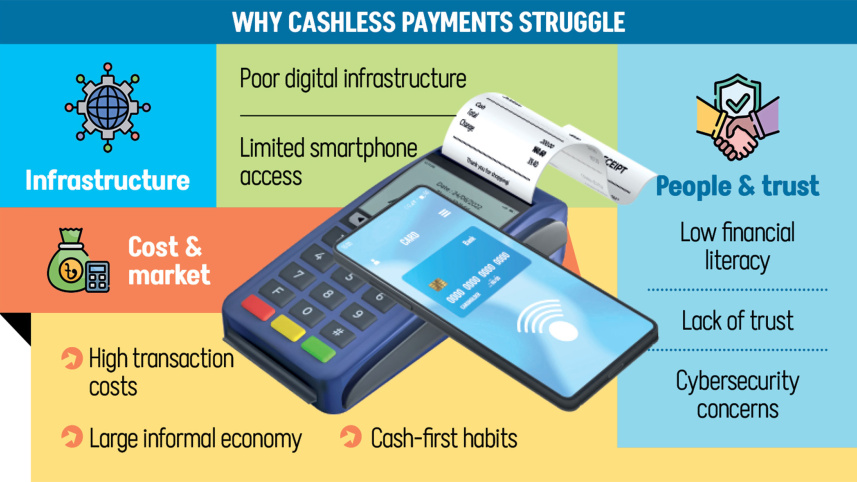
Bangladesh is seeing rapid growth in card-based transactions, but the transition to a cashless payment system continues to face structural challenges, including inadequate digital infrastructure, low financial literacy, cybersecurity concerns, high transaction costs and a deep-rooted cash-based culture, according to Bangladesh Bank.
The central bank, in its June 2026 report titled “An Overview of Card Usage Patterns Within and Outside Bangladesh”, said limited digital infrastructure, particularly in rural areas, remains a major obstacle to wider cashless adoption.

Low financial literacy, concerns over cybersecurity and a lack of trust in digital platforms also discourage many consumers from using electronic payment methods. High transaction costs, limited smartphone access and the country’s large informal economy further complicate the shift away from cash.
The challenges persist despite a significant expansion in card usage. The number of debit, credit and prepaid cards issued in Bangladesh increased by 97 percent over the past five years, while transaction volume through the three types of cards rose 91 percent to Tk 44,813 crore in June 2026 from Tk 23,497 crore in July 2021, the report said.
Domestic credit card transactions also increased 43.24 percent year-on-year in June 2026, reaching Tk 4,461 crore, up 4.04 percent from the previous month.
Despite the growth in digital payments, cash remains a vital part of the ecosystem. In June, purchases accounted for 91.11 percent of domestic credit card transactions, while cash withdrawals made up 7.11 percent (Tk 317 crore). Fund transfers comprised the remaining 1.78 percent.
The report said many eligible consumers remain reluctant to use cards because of fear and a lack of knowledge about card-based transactions.
Bangladesh Bank began promoting card-based “plastic money” in 2012 as part of its efforts to establish a technology-driven cashless banking system.
The central bank said rising digital transactions make it essential to strengthen cybersecurity and protect customers from fraud, alongside greater consumer awareness and training.
Meanwhile, the government and Bangladesh Bank have intensified efforts to promote cashless payments. The central bank recently decided to waive merchant fees for small shopkeepers, street vendors and small businesses accepting payments through Bangla QR, while offering incentives to banks and payment service providers to boost its use. The measures will take effect on October 1.
Bangladeshis are also increasingly using cards for international transactions. In June, combined outflows through credit, debit and prepaid cards stood at Tk 1,037 crore, up from Tk 813 crore in May, while card inflows from abroad amounted to Tk 242 crore.
Industry insiders said that the expanding card usage is a positive step towards greater financial inclusion. But achieving a genuinely cashless economy will require wider digital infrastructure, particularly outside major cities, greater financial literacy, lower transaction costs, wider smartphone access and stronger consumer confidence in digital payment platforms.
VISA credit cards were the most popular choice for both domestic and international transactions. Notably, Bangladeshi nationals predominantly used their cards in the United States.
Among foreign nationals, US cardholders spent the most within Bangladesh, according to the report.
 For all latest news, follow The Daily Star's Google News channel.
Comments