


Budget signals shift to ‘new economic model’
Highlights
- Budget signals shift to new economic model
- Weak banking sector threatens economic recovery, Sattar warns
- Ambitious revenue target concerns business leaders, MCCI says
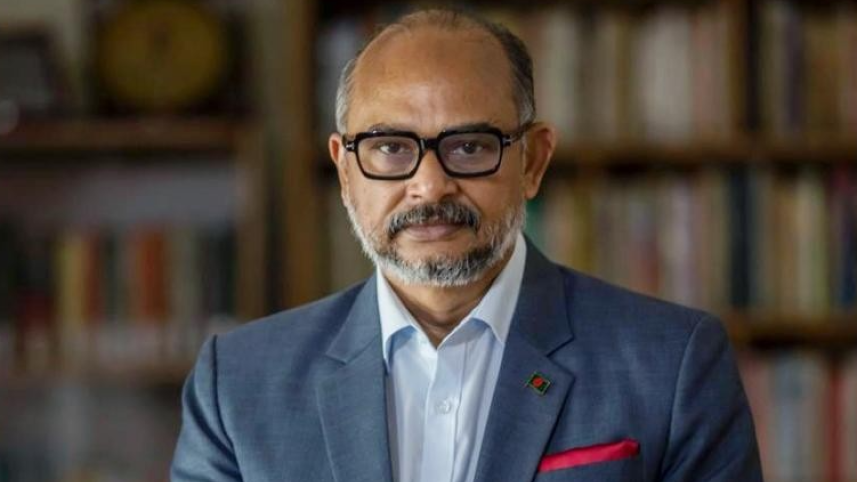
The proposed national budget for FY2026-27 marks a shift towards a “new economic model” centred on investment, employment and public trust, said Rashed Al Mahmud Titumir, the prime minister’s adviser on planning and economic affairs, yesterday.
Outlining the government’s broader economic strategy, he said restoring investor confidence, reducing regulatory bottlenecks and ensuring reliable energy supplies are essential measures to revive investment.

Speaking at a post-budget dialogue, Titumir said Bangladesh had overcome previous economic crises through home-grown solutions rather than textbook prescriptions.
Business leaders present at the event identified weaknesses in the banking sector, investor confidence, revenue mobilisation and implementation challenges as key hurdles to achieving the country’s growth targets.
The Metropolitan Chamber of Commerce and Industry (MCCI), Dhaka, the Policy Research Institute of Bangladesh (PRI) and Standard Chartered Bangladesh jointly organised the event in Dhaka.
Investors need policy continuity, deregulation, access to finance, energy security and improved connectivity, Titumir said, describing the proposed five-year policy outlook as an important signal to businesses.
The Tk 60,000 crore support package should be performance-based, unlike earlier stimulus programmes that often failed to deliver the intended outcomes, he said.
On energy, he said Bangladesh would pursue a diversified energy mix, including renewable energy and nuclear power, while expanding onshore and offshore gas exploration.
He also called for greater investment in education and healthcare, saying skill mismatches and weak primary healthcare services remain major constraints.
The government plans to raise education spending to 5 percent of gross domestic product (GDP) and health spending to 2 percent, he said, adding that it intends to recruit 5,000 doctors and up to 1 lakh health workers.
Bangladesh’s banking sector could become the biggest obstacle to economic recovery unless urgent reforms are undertaken, PRI Chairman Zaidi Sattar warned yesterday, arguing that stronger banks are essential to restoring investment and sustaining growth.
He described the budget as a “useful stabilisation and confidence budget” that appropriately prioritises macroeconomic stability, fiscal discipline, expenditure efficiency and debt management.
While the government’s diagnosis of the economy’s key challenges is broadly accurate, the proposed remedies remain insufficient, Sattar said.
He noted that achieving the targeted 6.5 percent growth rate would require a substantial increase in investment, which is unlikely without comprehensive banking sector reforms.
Sattar called for independent asset quality reviews, bank-specific resolution plans, stronger governance, recapitalisation linked to restructuring and tougher action against wilful defaulters.
Echoing concerns over growth and implementation, Naser Ezaz Bijoy, CEO of Standard Chartered Bangladesh, said the proposed budget seeks to balance macroeconomic stability with growth, but its success will depend on effective execution.
He described the budget as broadly business-friendly and praised the government for avoiding measures that could have undermined business activity despite difficult economic conditions.
However, he warned that the ambitious revenue target would be difficult to achieve. With revenue collection likely to fall short of this year’s target, aggressive collection efforts could place greater pressure on existing taxpayers.
Bijoy also cautioned against excessive bank borrowing to finance the budget deficit, saying it could worsen liquidity shortages, crowd out private-sector credit and push up interest rates.
He called for a clearer roadmap to curb inflation and accelerate reforms in banking, tax administration and governance. Gas shortages, he said, remain a major constraint on investment and industrial expansion.
 For all latest news, follow The Daily Star's Google News channel.
 MCCI President Kamran T Rahman said the proposed Tk 9.38 lakh crore budget comes at a critical time as Bangladesh seeks to revive growth, attract investment, generate employment and rein in inflation.
While welcoming measures to modernise tax administration and simplify business procedures, he expressed concern over the ambitious revenue target of Tk 6.95 lakh crore.
With revenue collection reaching only 65 percent of the revised target through April, he warned that undue pressure to meet the target could burden existing taxpayers.
Instead, he called for broadening the tax base and strengthening implementation capacity.
Hasan Mahmud, chairman of MCCI’s Tariff and Taxation Committee, said the proposed budget leaves several key concerns unresolved.
He criticised the unchanged minimum turnover tax, saying it imposes a burden on businesses regardless of profitability.
He also warned that higher personal tax rates and reduced tax rebates on investments would increase pressure on salaried taxpayers and discourage savings.
Comments