


BSEC to make listing mandatory for ‘public interest firms’
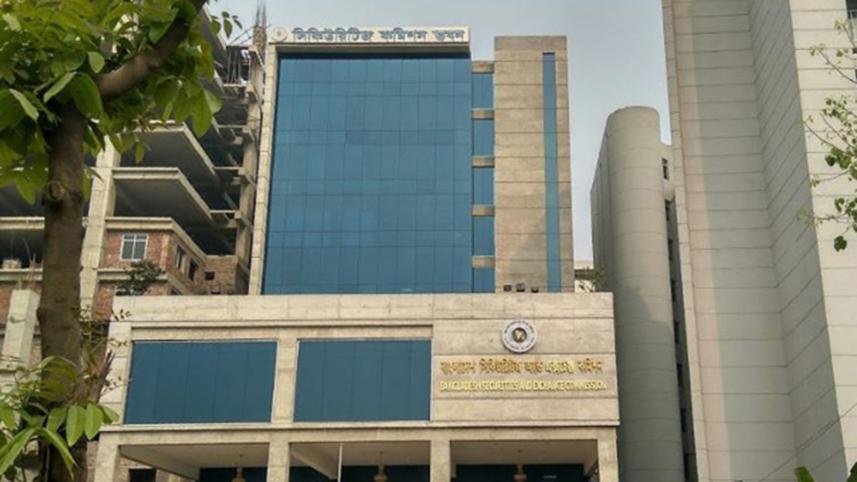
The Bangladesh Securities and Exchange Commission (BSEC) is planning to frame a regulation to bring certain “public interest companies” to the stock market under the Securities Act, said its Chairman Masud Khan yesterday.
He made the remarks as chief guest at an open discussion on the current state of the capital market, organised by the DSE Brokers Association of Bangladesh (DBA) at the DSE’s multipurpose hall in Dhaka.

Under the Securities Act, the stock market regulator has the authority to direct any company to list in the public interest, Masud said.
He said the commission now plans to define what qualifies as a “public interest company” and frame rules under the existing provision. “Those companies falling under certain categories will have to apply.”
The move is aimed at bringing eligible companies to the market rather than relying solely on voluntary listing decisions, according to the BSEC chief.
He said the commission expects direct listing, a revamped initial public offering (IPO) process and a hybrid listing mechanism to encourage more good companies to get listed.
The direct listing regulation will be made public for feedback within days, while the IPO rules will be made public within a few months, he said.
Noting that the IPO process currently takes too long, Masud said companies are required to submit documents to both the Dhaka Stock Exchange (DSE) and the BSEC.
He explained that assessments by both agencies lead to a prolonged listing process, which can sometimes take a year to a year and a half. “This is how the patient dies.”
To address this, the BSEC is proposing an extended audit under the new IPO rules, the BSEC chief said. The audit would go beyond a conventional statutory audit, verifying whether a company’s assets, land titles, receivables and liabilities actually exist.
Under the proposed system, auditors would certify financial statements as “true and fair”, after which the DSE would not raise further questions about those statements. The exchange would instead assess whether the company’s business model is viable.
“From now on, issuing companies will submit IPO applications to DSE or Chittagong Stock Exchange and give us a copy,” Masud said. “We at BSEC will not ask any questions. All questions will go to DSE or CSE.”
He said several large companies are already showing interest in listing through direct listing.
The hybrid mechanism is also expected to be introduced within a week, he said. Under it, a company would be able to offload some shares through direct listing and some through an IPO.
Beyond listing reforms, the BSEC and DSE have taken steps to develop the bond market, including cutting trading fees, he added.
Also speaking at the event, Md Mominul Islam, chairman of the DSE, said the stock exchange had already decided to reduce bond listing fees and other fees by around 80 percent to revamp the corporate bond market.
He also said the bourse is working on returning client funds stuck at several brokerage houses.
Thousands of investors have fallen victim to embezzlement at several brokerage firms over the past five years, The Daily Star has reported previously.
Nearly a dozen brokerage houses have reportedly embezzled hundreds of crores of taka over the last few years.
Four brokerage houses -- Moshihor Securities, Banco Securities, Crest Securities and Tamha Securities -- collectively embezzled around Tk 270 crore since 2020, according to the BSEC.
 For all latest news, follow The Daily Star's Google News channel.
 Earlier in May this year, the regulator fined four firms -- NBL Securities, Gibson Securities, UCB Stock Brokerage and Khulna Printing & Packaging -- and several of their officials Tk 1.09 crore for securities law violations and fraud in the stock market.
Later in June, a BSEC probe found that brokerage firm Salta Capital had embezzled around Tk 100 crore in client funds and shares.
Several brokers at the event called for bringing good companies to the market, simplifying the listing process, and ensuring greater transparency and accountability.
They also said the exchange should not issue notices over large buy orders from a single brokerage house, but should instead examine whether brokerage houses are conducting repeated trades to influence the index.
Comments