


BSEC eases approval process to speed up market monitoring
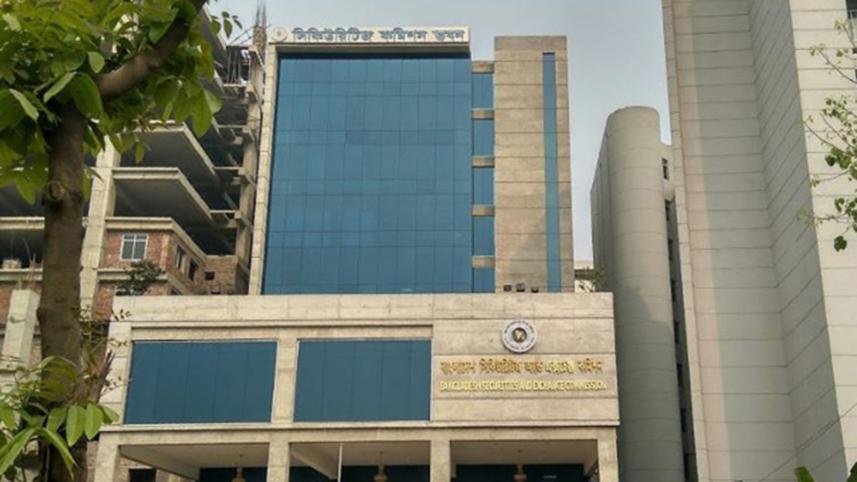
The Bangladesh Securities and Exchange Commission (BSEC) has decided to speed up stock market surveillance by allowing its concerned units to investigate abnormal transactions and price movements without prior approval from the commission.
The concerned units would be able to take necessary action once they identify unusual transactions or price fluctuations, BSEC Chairman Masud Khan said yesterday, while speaking as the chief guest at a seminar organised to mark World Investor Week 2026.

The Bangladesh Association of Publicly Listed Companies (BAPLC) and the Bangladesh Merchant Bankers Association (BMBA) jointly organised the event at the Dhaka Stock Exchange (DSE) auditorium.
Masud said requiring approval from the commission through a meeting before initiating an investigation or inspection often causes delays in surveillance.
“That is why this decision has been taken,” he said.
He also said the number of companies listed on the capital market is expected to increase, making it impossible to monitor the entire market through manpower alone.
The commission will therefore establish a technology-driven surveillance system, he said.
Also Speaking at the event, Dhaka Stock Exchange (DSE) Chairman Mominul Islam said stricter surveillance was needed to prevent manipulation of small-cap and weak-fundamental companies.
He said stricter trading restrictions could be imposed on small-cap and weak-fundamental shares by placing them in separate categories.
This would give investors advance warning if unusual price movements occurred in a share, he added.
Mominul also identified the absence of registered financial analysts as a major weakness in the market.
Professional analysis on whether a company’s shares should be bought, sold or held would help investors make more informed decisions, he said.
It could also make it harder for manipulators to create confusion in the market, he added.
He said stock exchanges and the BSEC had traditionally focused their surveillance on brokers, investors and issuers involved in trading.
“The scope of that surveillance needs to be expanded further,” he said.
In addition to using artificial intelligence to detect manipulation and fraud, initiatives should be taken to identify people using AI to commit fraud through digital platforms and bring them under the law, Mominul said.
Prof Al-Amin, acting dean of the Faculty of Business Studies at Dhaka University, said “pump-and-dump” schemes were one of the major problems in the stock market.
In such schemes, the price of a share is artificially inflated rapidly to create investor interest before manipulators sell large volumes of shares and exit, he said.
If such manipulation is not detected and addressed quickly, it can harm the market, he said.
Institutional investors can also be drawn into such schemes, after which retail investors may suffer losses when large investors exit, Al-Amin said. Such manipulation can both erode investors’ capital and create liquidity problems in the market.
 For all latest news, follow The Daily Star's Google News channel.
 The professor also said in cases of unusual price surges, it is not difficult to identify who is buying the shares.
“Analysing transaction data makes it possible to understand who is buying the shares and how trading is taking place,” he said, adding that effective intervention and strong resolve from the regulator were essential.
Comments