


Bangladesh faces higher freight costs amid Mideast conflict
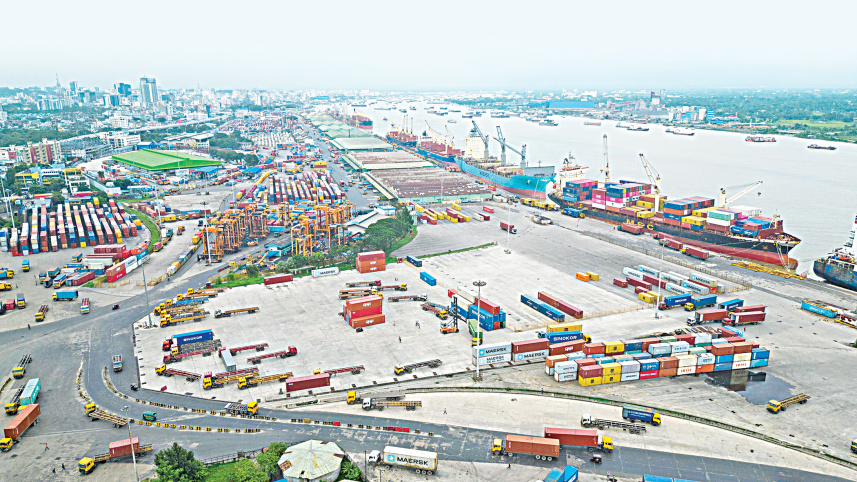
Bangladesh’s export sector is facing sharply higher ocean freight rates, largely driven by an escalating conflict between Iran and the US-Israel coalition that has choked shipping through the Strait of Hormuz, according to industry insiders.
However, most garment exporters, who account for the lion’s share of the country’s total exports, are expected to remain shielded from paying those costs directly, stakeholders say.

Import costs have risen too, though by a much smaller margin.
The Mideast conflict deepened this week, with Iran saying it stopped two vessels trying to leave the Strait of Hormuz and turned back four tankers, following a drone attack on ships at an Egyptian port earlier in the week, Reuters reported.
The US and Israel are reportedly planning strikes on Iran’s energy infrastructure, including power plants and refineries, possibly as soon as this weekend, though no final order had been given as of Friday.
RATES FOR MIDEAST TRIPLED
Khairul Alam Suzan, vice-president of the Bangladesh Freight Forwarders Association (BAFA), said freight rates to the Middle East had briefly dropped to $1,400 to $1,500 per container during a ceasefire three weeks ago.
They have since jumped to $5,000 to $6,000.
He also said rates to Europe have climbed from around $4,000 to $5,000 to about $11,000 per container. Rates to Africa are up by another $3,000 to $4,000.
“Freight charges have doubled or even tripled,” Suzan said. “Demand for 40-foot export containers remains high, while many containers are stranded in the Middle East because of the conflict.”
He said shipping lines have rerouted vessels to avoid the Strait of Hormuz, adding to fuel and insurance costs.
Houthi forces in Yemen have this month also begun threatening the Bab el-Mandeb Strait, the other route out of the Red Sea, adding a second pressure point for shippers.
Industry insiders say shipping companies have cut back on export bookings from Bangladesh as well, leaving exporters and freight forwarders paying more and waiting longer for vessel space — in some cases up to three weeks longer.
GARMENTS SHIELDED, FOR NOW: BGMEA
Mahmud Hasan Khan, president of the Bangladesh Garment Manufacturers and Exporters Association (BGMEA), said most garment exporters are insulated from the immediate impact, since 90 to 95 percent of export orders are shipped on Free on Board (FOB) terms.
“Under FOB contracts, exporters bear transportation costs only up to the port. Ocean freight, container charges and other international shipping costs are paid by overseas buyers,” he said.
But he warned the effects would eventually reach exporters too. “When logistics costs increase, buyers usually reduce imports or place fewer orders,” he said.
Large international buyers are more insulated, he said, since they lock in freight rates through annual contracts with major shipping lines.
Smaller buyers who rely on spot bookings have to absorb the higher rates — and that, he said, could start affecting where they choose to source from.
On the import side, traders report a comparatively smaller 20-30 percent rise in freight rates.
 For all latest news, follow The Daily Star's Google News channel.
 They attributed this partly to container-size dynamics – most inbound cargo moves in 20-foot containers, while exports mostly need 40-foot ones, which are running short during the disruption.
Comments