


Abandoning reforms will bring people to streets again
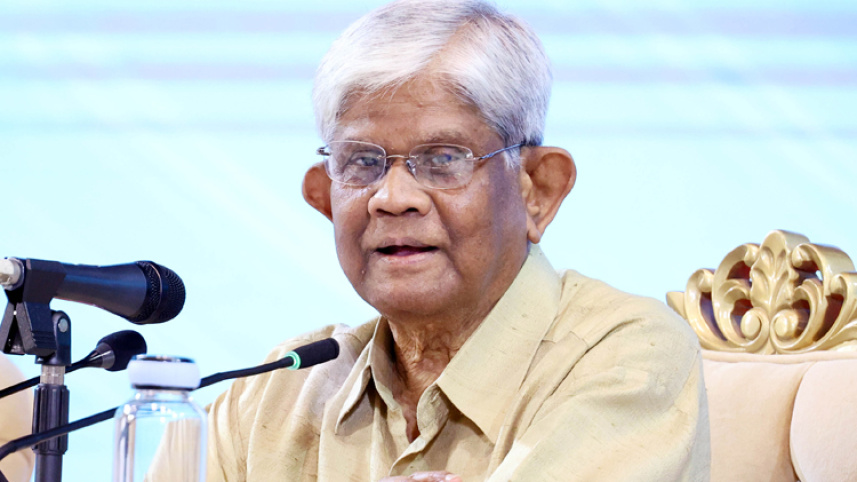
The next elected government must continue the ongoing reform agenda in the country’s interest, or risk facing public backlash, Finance Adviser Salehuddin Ahmed warned yesterday.
“We, as the interim government, tried to prioritise some reform initiatives. But many things cannot be completed within a short time – they require more time,” he said at an event organised by the Policy Research Institute (PRI) of Bangladesh in Dhaka on the reform agenda for the next government.
 For all latest news, follow The Daily Star's Google News channel.
 Warning the next government of potential consequences if reforms are abandoned, the adviser said, “Unless you do this for the country, for the good of the country, people will come back to the streets and pull you down again. You will not be able to get away with deception the way you did before.”
“Whatever we started, these are not one-offs. They must continue. You can certainly do more, but you have to choose and prioritise,” he also said.
Ahmed urged political leaders not to dismiss reforms simply because they are associated with the International Monetary Fund (IMF) or the World Bank.
“Not all of their prescriptions are bad. Some of them deserve serious attention,” he said.
The government undertook reforms based on “the felt needs of the country” and what was “absolutely necessary,” Ahmed said, rather than personal preference.
He said the interim government had to address multiple pressing issues, including high inflation, the current account deficit, and the energy crisis. The government also encountered problematic contracts.
“We were shocked to see some contracts – independent contracts, such as those of Adani and Rampal. Astonishing! We were told the High Court would review these contracts,” he said.
“They were extremely distorted, and we tried to revise them. We couldn’t. It was too complicated,” he added.
Warning of a recurring pattern in Bangladesh’s political system, Adviser Ahmed said, “When one government does something, the next one labels it as bad and starts building something else. But development is cumulative. If someone has done something good, build on it.”
“Our suggestion is: please consolidate some of the things we have done and move forward faster. You cannot go as slowly as before,” he said.
He also highlighted the lack of coordination across government as a major obstacle.
“It is extremely difficult to implement anything because of lack of coordination and resistance to reform,” he said, recalling his tenure.
“I tell you, we tried. We had no personal agenda, no political agenda. We tried. And definitely Bangladesh is not in a bad shape,” said the adviser.
Also speaking at the event, KAS Murshid, former director general of Bangladesh Institute of Development Studies, said they have been asking for reforms for a very long time.
“If you look at our economic history, significant reforms mostly happened only when the IMF was involved. Rarely have we independently decided that reforms were important and then implemented them.”
He attributed this to political-economy constraints, saying most governments cannot handle the backlash. “Only under external pressure do we say: we have to carry these reforms through. But we need to move beyond this mindset.”
Comments