


60pc of fruits still imported to fill demand
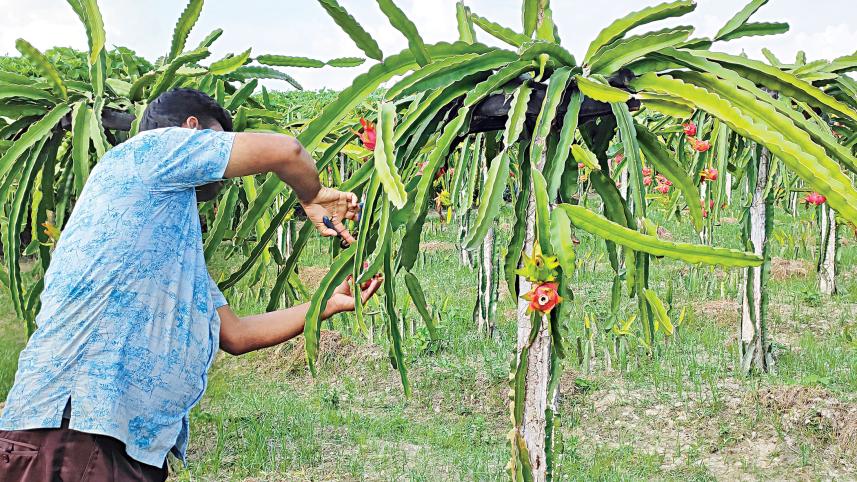
Although Bangladesh is one of the largest producers of mango, jackfruit and guava in the world, about 60 per cent of the country's demand for fruit is met through imports at an annual cost of around $300 million, according to experts.
So, to reduce import dependency and ensure nutritional security, the government should focus on the production and marketing of high-value fruits, they said.

Besides, the constraints of getting quality saplings, poor post-harvest technologies and lack of storage facilities should be removed as soon as possible, they added.
These comments came yesterday at a seminar on "Year-Round Production of Nutritious and High Value Fruits", jointly organised by the Bangladesh Academy of Agriculture (BAAG), Department of Agricultural Extension (DAE) and Agricultural Research Foundation at the Bangladesh Agriculture Research Council.
"Although Bangladesh is the world's second, seventh and eighth largest producer of jackfruit, mango and guava respectively, the country still has to import exotic fruits as local production meets only 30 to 40 per cent of the demand," said Md Mehedi Masood, deputy director of the DAE's horticulture wing.
"There is a bright prospect for high-value fruit production in Bangladesh but the problems in cultivation and marketing should be resolved immediately," added Masood, also project director of the "Year-Round Fruit Production for Nutrition Improvement Project".
He went on to say that apple, malta and grapes are the main fruits that have to be imported as they are mostly consumed between September and January, when local supply is low.
In addition, the number of fruits cultivated has only slightly widened from 56 to 78 varieties over the past decade, Masood said.
Farid Uddin Ahmed, former executive director of the Arannayk Foundation, mentioned how different local research and educational institutions have developed a total of 197 modern varieties of fruits.
Of these fruits, the Bangladesh Agricultural Research Institute, Bangladesh Agricultural University, Patuakhali University of Science and Technology, and Bangabandhu Sheikh Mujibur Rahman Agriculture University developed 97, 88, eight and four varieties respectively.
Agriculture Minister Muhammad Abdur Razzaque urged researchers in the country to play an active role in the agricultural sector and focus on improving fruit cultivation.
Terming the government as "agriculture-friendly", he said they are giving a subsidy of about Tk 28,000 crore to farmers to provide fertilisers at lower prices.
"The government will take all efforts to avoid a shortage of fertilisers at any cost," he said.
Md Benojir Alam, director general of the DAE, urged for utilising the tissue culture method for improving local fruit production.
Tissue culture refers to the process of growing tissues or cells in an artificial medium separate from the parent organism.
Among others, Shaikh Mohammad Bokhtiar, executive chairman of the Bangladesh Agricultural Research Council, also spoke at the event chaired by BAAG President Kazi M Badruddoza, a national emeritus scientist.
 For all latest news, follow The Daily Star's Google News channel.
Comments