


$2b out of pocket as energy costs surge
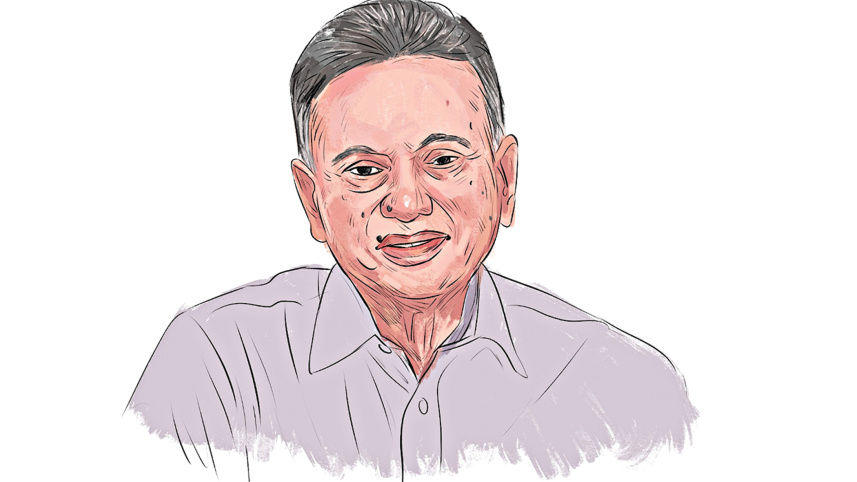
Bangladesh has shouldered nearly $2 billion in extra costs as global disruption drives up energy imports, said Finance Minister Amir Khosru Mahmud Chowdhury.
“The major sources of procurement were not working anymore. Due to disruptions, we have had to rely heavily on spot market purchases, which are significantly more expensive,” the minister said during a discussion at the Atlantic Council on the sidelines of the IMF-World Bank Spring Meetings in Washington.
 For all latest news, follow The Daily Star's Google News channel.
 Bangladesh imports about 95 percent of its energy. Following the US-Israel war on Iran and conflict across the Middle East, global supply chains took a severe hit. Oil and natural gas prices spiked as state-run agencies increasingly turned to the volatile spot market.
“And if this continues, I don’t know what the eventual outcome will be,” said Khosru, adding that prolonged disruption would deepen pressure on public finances.
To ease the pressure, he said the government is seeking new suppliers and more competitive deals abroad.
“We have also requested and received a waiver from the United States to import energy from Russia, which offers relatively lower prices. This will provide some relief,” said the minister.
At the same time, Bangladesh is strengthening energy ties with the United States and other development partners to secure longer-term price and supply stability, he added.
The mounting costs are “bleeding the exchequer of the government,” the minister said, as revenue collection is weak due to stress in the private sector.
“On top of that, the tax-to-GDP is not increasing because of business stress, the businesses are in bad shape,” he said.
Khosru noted that stabilising the economy will require immediate financial support and structural intervention, including recapitalising banks and private firms. “Without this, no reform agenda will be effective.”
He said the tax-to-GDP ratio has dropped from around 11 percent to below 7 percent. Conditions of the International Monetary Fund (IMF) often miss a basic point: if businesses do not recover, tax receipts will not improve.
“The major problem we face right now is that until the economy turns around, we need a cushion for two years. That’s budget support and everything else that has to come,” he said.
Capital shortages, he added, remain the most urgent obstacle.
“The economy we have inherited where the financial sector is practically in the doldrums. The capital market is also in the doldrums, and more than $200 billion has been siphoned out of Bangladesh,” he said.
“The financial sector, particularly the banks, is in a fragile state. Many are practically bankrupt and need immediate recapitalisation.”
He said the economy had operated in an oligarchic fashion, limiting fair competition.
“Then came a 40 percent depreciation of the currency, followed by around 10 percent erosion due to inflation. Effectively, about 50 percent of capital and working capital has been wiped out.”
Rebuilding capital buffers is the first order of business, he said. Without fresh capital in banks and companies, growth will stall.
The government is in talks with international financial institutions to help restore confidence, particularly in the banking system.
“We have been talking to IFC [International Finance Corporation], and we had a good discussion. They are looking into how this banking sector revival plan can be worked out,” he said.
Khosru also stressed the need for structural reforms, a better business climate and digital systems to improve tax collection and strengthen resilience.
He said the government has approved a Digital Public Infrastructure framework designed to boost transparency, widen the tax net and improve public services.
“Every investment decision is now evaluated based on value for money, return on investment, employment generation, and environmental impact,” he said.
He expressed hope that a mix of reform, investment and digital innovation would help Bangladesh weather global uncertainty and stay on its growth path.
Comments