


Agro‑entrepreneur cultivates grapes over pond, inspires locals

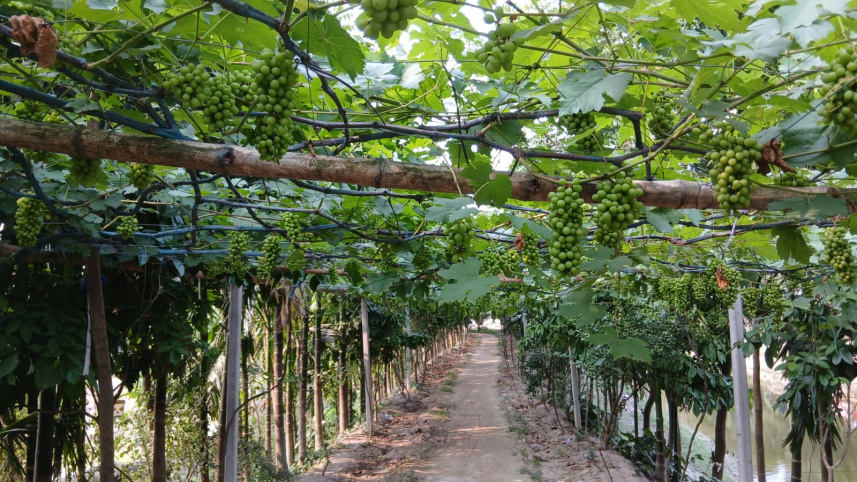
A farmer in Thakurgaon has successfully cultivated grapes, an import‑dependent fruit, by using unused spaces in his homestead and over a pond. The effort has drawn attention from locals and offered a model for cultivation without relying on arable land.
Abul Kalam Azad of Basantapur village under Pirganj upazila first planted 70 grape saplings along pathways of his homestead in early 2025. Encouraged by healthy growth and sweet yield, he expanded to 1,200 plants of 22 varieties across his homestead and over parts of a pond covering two acres.

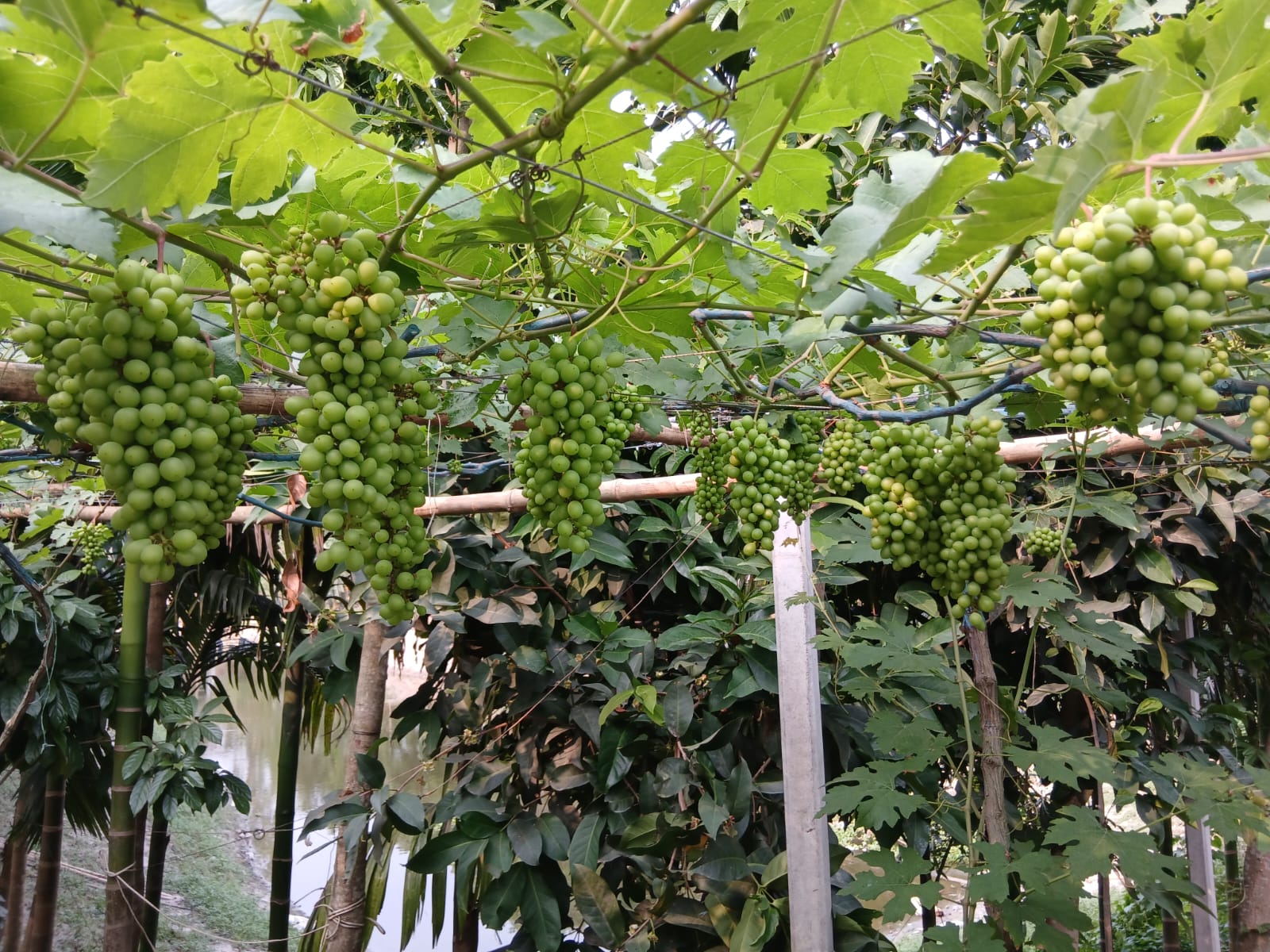
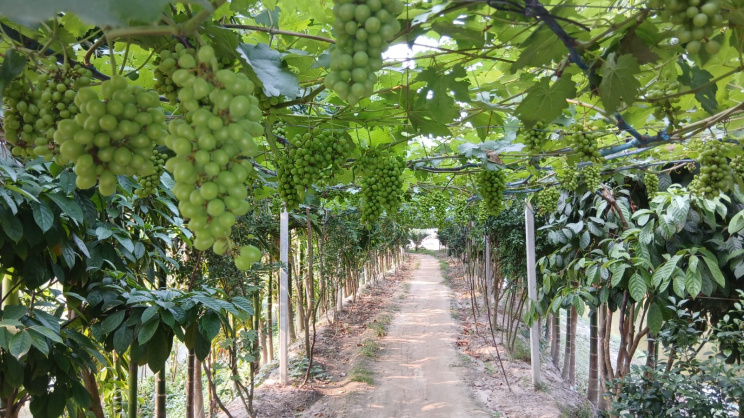
During a visit on Friday, grapevines stretched overhead, forming a leafy canopy with bunches of green grapes hanging above. The vines are expected to ripen by late June, with harvesting likely through July. Azad invested Tk 8 lakh in the project, mainly for lofts built with concrete pillars, bamboo and iron wire. He hopes to earn Tk 8‑10 lakh this season, harvesting 5‑10kg from each plant.
Azad lived in Saudi Arabia for three and a half years from 1993, where he visited grape gardens and dreamed of cultivating grapes at home. After returning, he engaged in farming traditional crops but later turned to diversification, including seed production, betel nut plantation and fish farming. He gathered knowledge on grape cultivation from YouTube and experts, sourcing saplings from Dinajpur, Jashore and Noakhali.
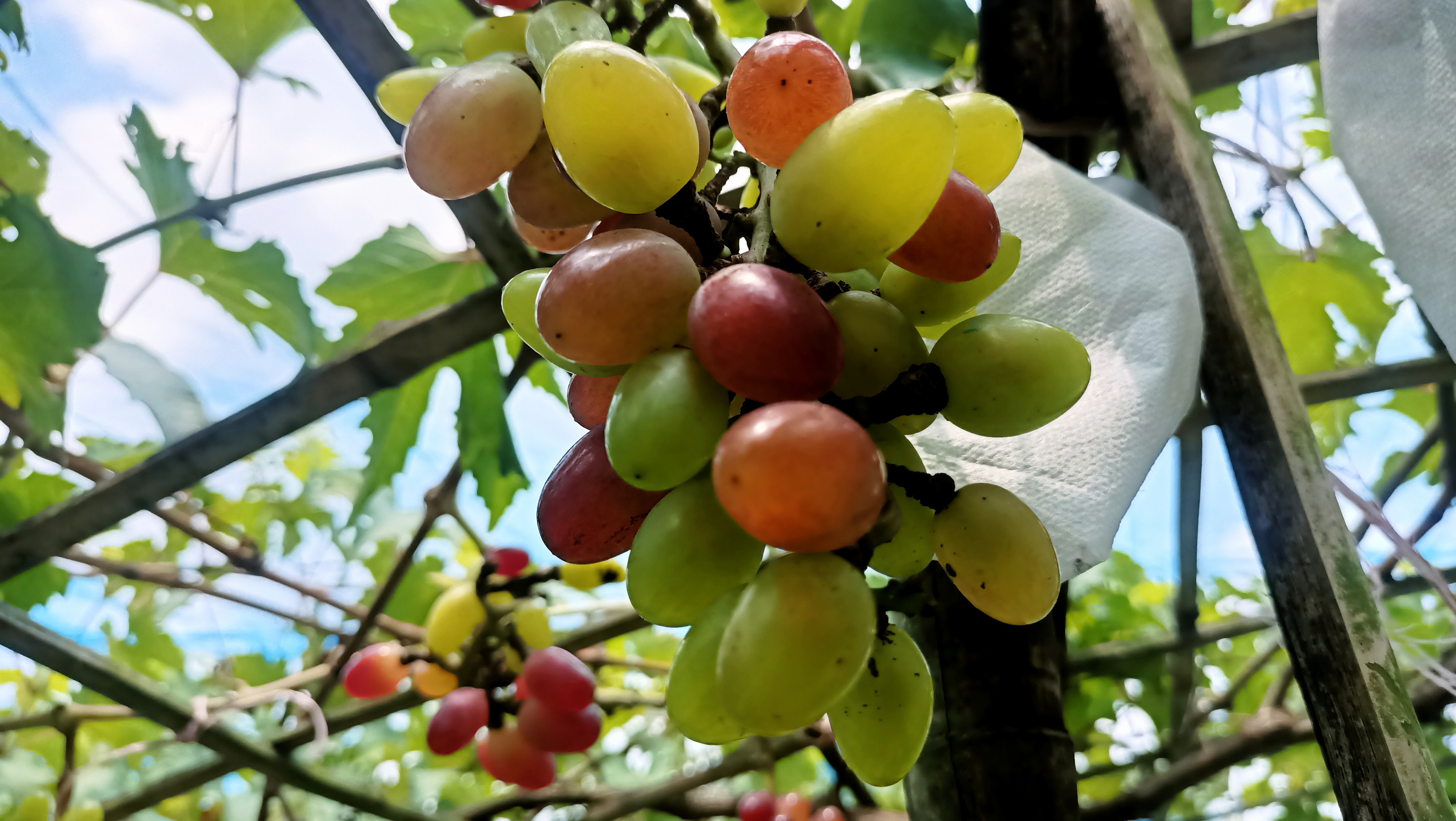
He believes 7‑8 varieties are suitable for commercial farming, including Baikonu, Shilva, Apollo, Black Magic, Black Jumbo, Dixon and Velage. Apart from grapes, he produces saplings and sells them at Tk 300 each.
Last year, he had his first harvest, distributing grapes among relatives and traders, who praised the taste as comparable to imported varieties. Videos of his vines went viral, drawing visitors. Locals expressed interest in starting cultivation themselves. Motiur Rahman of Ranishankoil upazila said he was inspired to try grape farming after seeing Azad’s orchard. Gopal Sarker, a restaurant owner at Jhaljhali Bazar, said the fruit tasted as sweet as imported grapes.
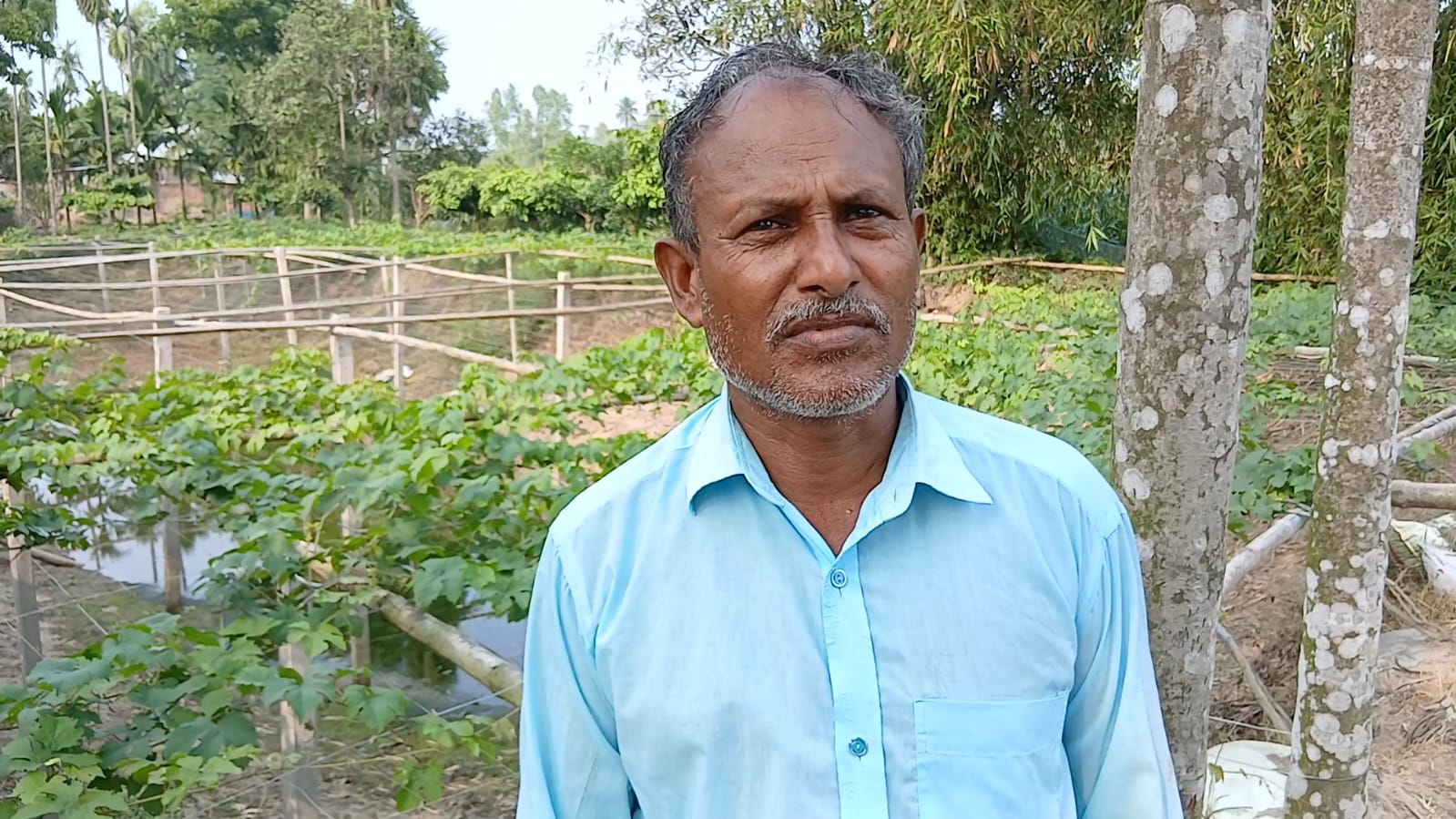
Nazmul Hasan, upazila agriculture officer, said grapes in the area usually do not produce sweet yields, but Azad’s orchard may prove otherwise. Loamy soil is suitable for grape cultivation, though pests like red spider mite are common. He suggested sex pheromone and sticky traps for pest management.
Azad, now a successful agro‑entrepreneur, owns 17.5 acres of land. Alongside grapes, he cultivates banana, potato, paddy, betel nut, pineapple, dragon fruit, lotkon, pear, black chilli and chuijhal. He urged rural growers to maximise land use through crop diversification for sustainable development.
His journey began after returning from Saudi Arabia, where he realised that the same labour could generate higher income if invested in his own country. He inherited 2.5 acres from his father and purchased 1.5 acres with his earnings abroad. Initially engaged in traditional crop cultivation, he later shifted to diversification, focusing on winter vegetables and seed production. Within a few years, he acquired another 15 acres of land in his village.
His market, homestead and ponds now cover 4.25 acres of his total land. He has planted 5,000 betel nut trees along crop‑field demarcation lines and pond banks. His diversified farming includes pineapple, dragon fruit, lotkon, pear, black chilli and chuijhal, alongside traditional crops.
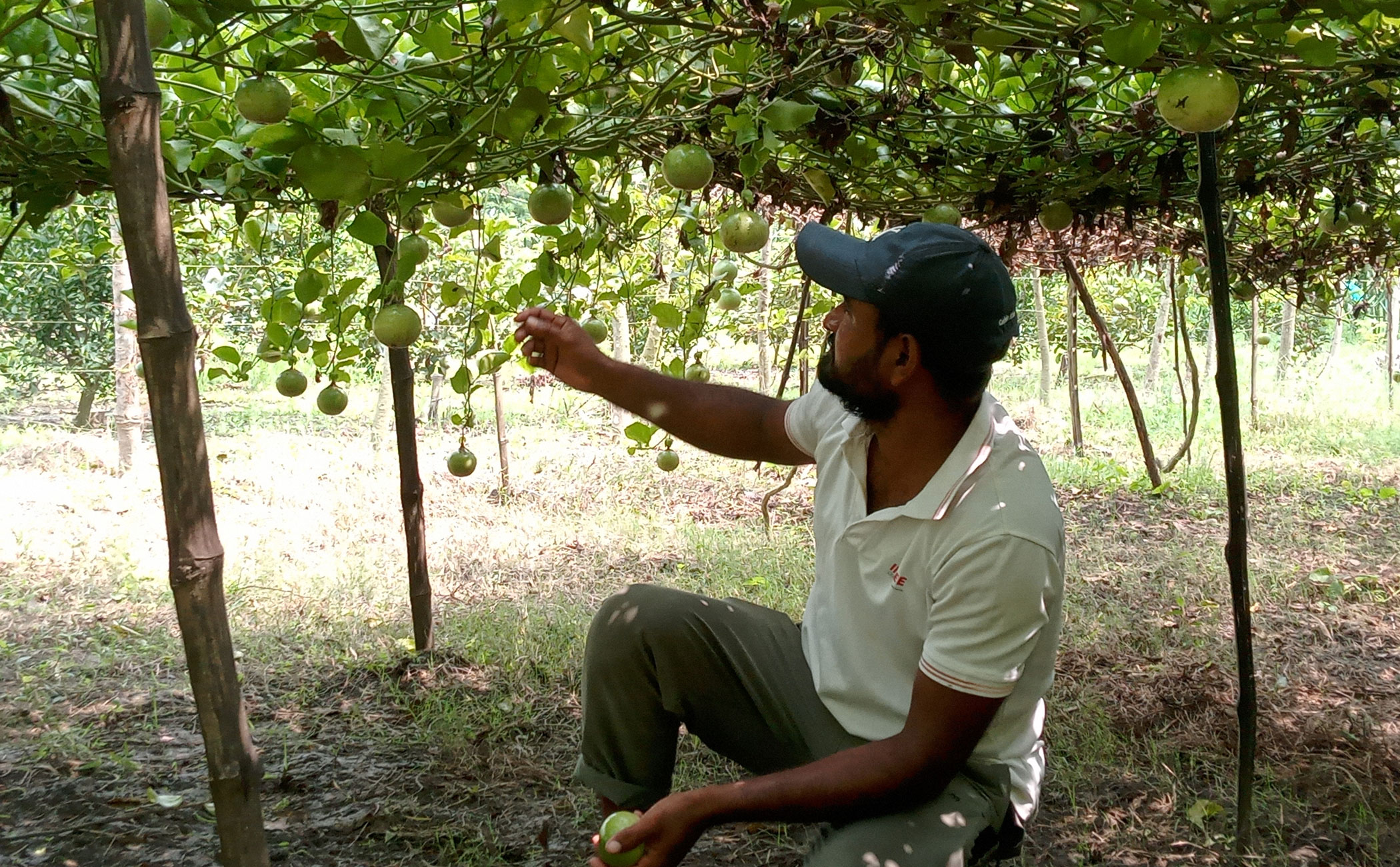
The scenic beauty of his orchard, with grapevines forming a canopy and bunches of fruit hanging overhead, has already become a local attraction. Visitors continue to arrive, curious to see grapes grown successfully in Thakurgaon. Traders are showing interest in buying his produce, raising hopes that grapes could become a viable crop in northern Bangladesh.
Azad believes crop diversification is the key to sustainable rural development and hopes his grape orchard will inspire others to follow suit.
 For all latest news, follow The Daily Star's Google News channel.
Comments