


Bonded warehouse benefits to cover all exporters: finance minister
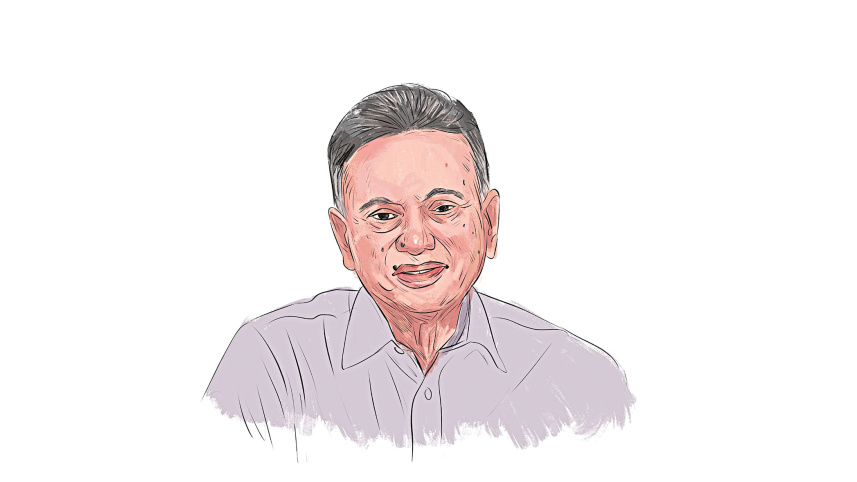
The government will allow all exporters to import required materials duty-free for the production of export items, Finance and Planning Minister Amir Khosru Mahmud Chowdhury said yesterday.
To that end, the bonded warehouse facilities will be extended to any exporters producing goods for overseas markets, not just the garments industry, he said at a pre-budget roundtable organised by the Dhaka Forum Initiative at Hotel Sarina in Dhaka.
 For all latest news, follow The Daily Star's Google News channel.
 “We will no longer tolerate any form of harassment over bonded warehouses. We are significantly simplifying the rules and regulations. Anyone exporting any product from Bangladesh will be allowed bonded warehouse facilities,” Khosru said.
This would allow exporters in promising sectors such as jewellery and diamond cutting to avail themselves of bonded warehouse facilities under back-to-back LC arrangements, according to the minister.
He added that sweeping changes to the bond licence renewal process will be made to improve the ease of doing business.
“Businesses will no longer need to renew bond licences every year,” he said. “Even the annual audit requirement is being removed. Instead, audits will be conducted only once every three or five years,” the minister said.
Stating that there was a lot of opposition to extending the facilities to other sectors, Khosru said, “But I have made it clear that no excuses will be accepted. Those engaged in exports will receive this facility without any tariffs or duties.”
The finance minister said the highest level of corruption occurs in taxation, which is why the government is placing the greatest emphasis on digitising the tax system.
“We can no longer allow businesses to bear huge costs from the time goods arrive at ports until they are released. Reducing the cost of doing business is one of our key priorities,” he added.
Simeen Rahman, group CEO of Transcom, said deregulation and reducing the cost of doing business are essential for Bangladesh’s growth.
“That is the biggest impediment to actual growth,” she said, referring to bureaucratic red tape and inefficiency.
She stressed that attracting foreign direct investment requires reforms in taxation, transparency and the simplification of processes.
Tanvir Ghani, special assistant to the prime minister for investment and capital market affairs, said the government is prioritising deregulation to attract investment and support the country’s next generation of businesses.
“The biggest initiative being taken in this budget is deregulation,” he said, adding that entrepreneurs are “just fed up even before they’ve opened their factories and businesses because of red tape.”
“When the announcements are made on deregulation in the next few weeks, I think you’ll all be happy,” he added.
Sharif Zahir, managing director of Ananta Group, demanded special incentives for man-made fibre (MMF) products to ensure the sustainable growth of the garment sector and attract new investment.
He also demanded that the bond licence approval process be made fully corruption-free and easier.
He added that cotton-based incentives should be withdrawn and the focus should shift to new sectors, such as synthetic fibres and man-made yarns.
“If we provide incentives there, we will be able to handle the 30 percent tariff pressure.
A five-year special incentive policy could be introduced, where support starts at a higher rate and gradually decreases over time,” he said.
Comments