


Rediscovering the heroes we were never taught
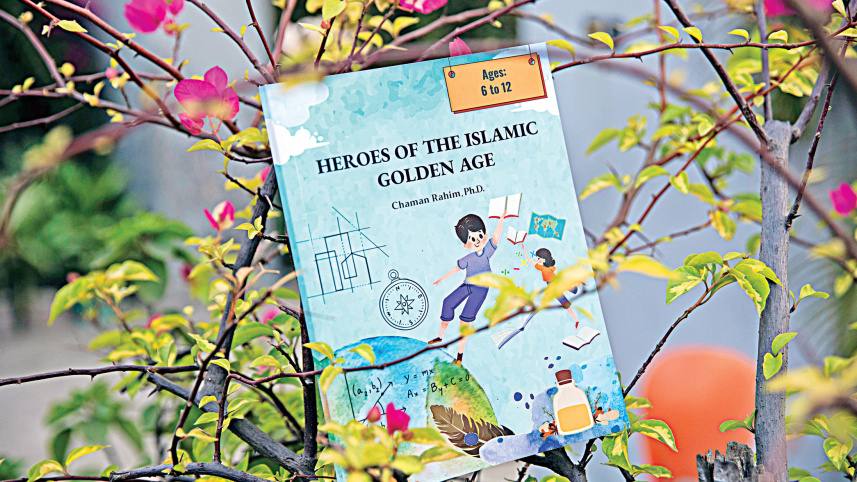
Because of colonialism and the westernisation of our education systems, many of us grow up learning history from a narrow angle not knowing about the scholars who shaped knowledge in other parts of the world. We often learn about modern science without learning where many of its ideas first came from. As a result, the lives and works of Muslim scholars from the past remain unfamiliar, even though their contributions helped build the world we live in today. Heroes of the Islamic Golden Age by Dr Chaman Rahim gently works against this forgetting. It introduces young readers to people who imagined, invented, and created during a time when learning flourished across the Muslim world.
The book tells the stories of eight remarkable figures who lived between the 8th and 13th centuries. Instead of presenting history as a list of dates, the book focuses on people. It shows how curiosity, creativity, and hard work shaped discoveries in science, medicine, music, and travel. The language is simple and warm, which makes complex ideas feel friendly and exciting to children, the book’s primary target audience, rather than distant or difficult.

The journey begins with Mariam Al Astrulabi, one of the earliest known female astronomers. The book explains how she worked with the astrolabe, an instrument used to study the sky and measure time and direction. Rather than overwhelming young readers, the explanation is clear and visual. Children learn what the astrolabe does, how it works, and why it matters in everyday life. Mariam’s story also quietly challenges the idea that science has always been shaped by men. From there, the book introduces Muhammad Ibn Musa Al Khwarizmi, widely known as the father of algebra. His work in mathematics and astronomy is explained through examples that are easy to follow.
One of the most lively chapters is about Ziryab, a figure who seems larger than life. He was a musician, poet, fashion innovator, and cultural leader. The book talks about his contributions to music, the school he founded, and even how he influenced seasonal clothing and celebrations like the New Year. These details make history feel playful and human, especially for young readers.
The book also features Al-Kindi, a scholar who worked across philosophy, science, and music. Then comes the famous traveler Ibn Battuta, whose journeys across continents are described alongside the creation of his travel account, The Rehla. Readers also meet Ibn Sina, whose medical writings shaped healthcare for centuries, and Al Jazari, known for his imaginative machines and mechanical designs.
A striking feature of the book is that most of these figures were not limited to one field. They were scientists and artists, thinkers and makers. This helps children see that learning does not have to stay inside one box. To keep the reading experience light and fun, the book includes illustrations, puzzles, quizzes, and visual games. These elements help children stay engaged and curious.
Heroes of the Islamic Golden Age is a wonderful starting point for young readers who want to understand history, civilisation, and the people behind everyday knowledge. It shows that the world we live in was built by many minds across many cultures, and it invites children to wonder, ask questions, and imagine themselves as future creators too.
Mahmuda Emdad is a sub-editor at Star Books & Literature.
 For all latest news, follow The Daily Star's Google News channel.
Comments