


Law and Order: Punishment for disruption to be harsher
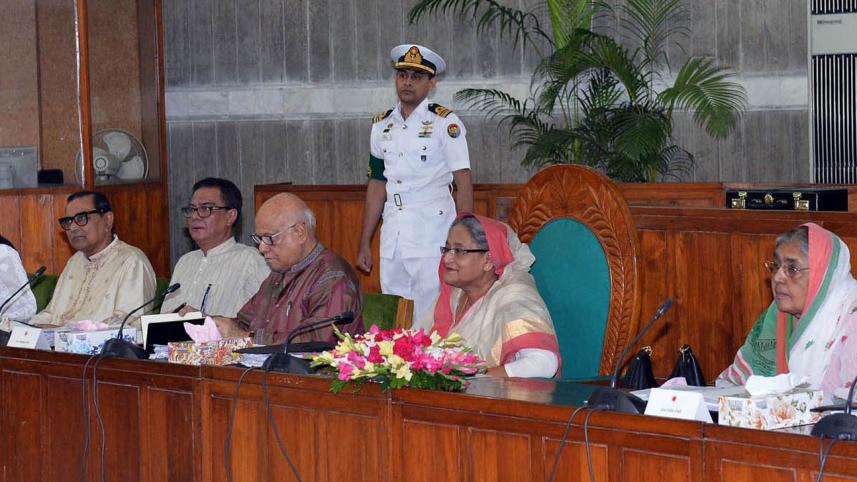
The cabinet yesterday approved in principle the draft of "The Law and Order Disruption (Speedy Trial) (Amendment) Act-2017" increasing the punishment up to seven-year jail sentence for law and order disruption-related crimes.
According to the law, disruption to vehicular movement, blocking of roads, tender manipulation, issuing threats, extortion, mugging, terrorising people and vandalism of public properties will be treated as offences.

Anybody committing any of those crimes would be sentenced to minimum two years and maximum seven years of rigorous imprisonment along with fine, Cabinet Secretary Mohammad Shafiul Alam told reporters.
According to the existing law, minimum punishment is two years' imprisonment and maximum five years', he said at the secretariat.
The amount of fine is not mentioned in the law, which jurists criticised and expressed concerns over its misuse against political rivals ahead of the general elections.
The cabinet secretary said only one amendment had been made to the existing law of 2002 to increase the punishment after extensive discussions with stakeholders.
Replying to a query as to why the punishment had been increased, he said it was done in line with the proposals from stakeholders.
The law was enacted by the BNP-Jamaat alliance government in April 2002 for two years. Later, the time was extended several times.
In 2014, the home ministry proposed extending the act's term for four years, in response to which the Awami League-led coalition cabinet extended it for five years. The tenure of the act will expire on April 7, 2019.
“This is purely designed for political harassment of citizens the state does not like,” said eminent jurist Shahdeen Malik.
The draft manifests characteristics of an uncivilised and undemocratic society, he said.
Shahdeen Malik termed the law the biggest threat to the liberty of citizens. “This is a symptom of a police state and total control of the law enforcement agencies over the citizens.
“Anyone can be accused of these offences as per the definition of the law.”
If a procession is brought out on the street, it will cause disruption to vehicular movement and in that case, everyone participating in the procession can be accused of violating the law, the jurist said.
He, however, added that courts often did not convict people of these offences as the offences were not properly defined in the law.
The cabinet also approved a proposal for ratifying the "Convention on the Physical Protection of Nuclear Material and Nuclear Facilities".
It passed the draft of an agreement on Russia's taking back spent nuclear fuel from Rooppur Nuclear Power Plant.
The cabinet secretary said the agreement could be inked anytime, and it would help dispose of nuclear waste.
 For all latest news, follow The Daily Star's Google News channel.
Comments