


A foreign vlogger’s guide to discovering Dhaka

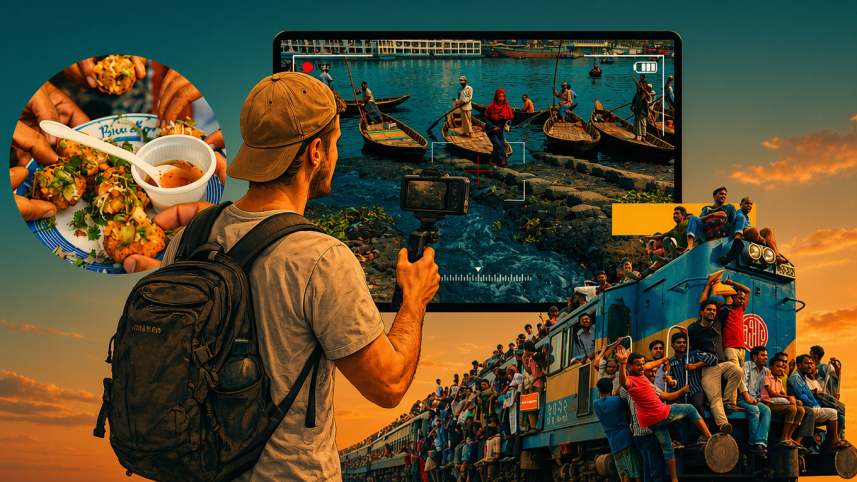
A white man walks through Old Dhaka with a camera strapped to his face. A thumbnail screams INSIDE THE WORLD’S CRAZIEST CITY. Another one discovers fuchka, because apparently the entire nation was waiting for Brad from Bristol to taste tamarind water and confirm that, yes, it has flavour. Another foreign vlogger takes a boat ride on the Buriganga and stares into the black water as if he has personally discovered pollution. Congratulations, the river was dead long before you discovered it.
This is the new content route: India, Pakistan, Bangladesh. Big populations, big emotions, big comment sections. The algorithm looks at South Asia and sees a buffet. Bangladesh alone had 132.8 million internet users (according to BTRC) and 64 million social media user identities by 2025.

Dhaka, of course, is the jackpot. The UN’s 2025 report on urbanisation placed Dhaka as the world’s second-most populous city, with 36.6 million people. It is projected to become the largest by 2050.
For a travel creator whose views are drying up in Bali or Manila, Dhaka offers instant drama. Humanity pressed against humanity. Rickshaws, wires, traffic, sweat. A city that looks, on camera, like it has been assembled in a hurry by someone wildly optimistic and criminally underpaid.
The problem is not that Dhaka has ugly parts. We live here. We do not need a man in linen shorts to tell us what Buriganga smells like. Dhaka’s air can feel like a punishment from a minor Greek god. The traffic can take a sane person and turn him into a WhatsApp uncle. These are facts.
The problem here is selection.
A camera can tell you the truth and still lie. It lies by choosing only the drain, only the slum, only the barefoot child, only the overloaded launch, only the man sleeping beside garbage, only the black river, only the rooftop train stunt. It lies by presenting fragments as essence. It lies when Dhaka becomes only “poverty”, “chaos”, “danger”, “toxic”, “unbelievable”, “shocking”, “you won’t survive here”.
You can find the pattern in titles alone. “Luxury and poverty in Dhaka.” “Bangladesh’s dirty and impoverished reality.” “The most toxic country.” “Trying fuchka for the first time.” “This river in Dhaka is black.” The city is chopped into emotional thumbnails.
And we, dear Bangladeshis, often help them sell it.
This is the uncomfortable part. The foreign vlogger does not work alone. He is assisted by our own colonial hangover. A foreigner says “Bangladesh is so friendly” and we melt. A foreigner says “kachchi is better than Hyderabadi biryani in India” and suddenly he is the second coming of Anthony Bourdain. A foreigner says “I love Bangladesh” and the comment section becomes a national awards committee.
We crave validation. Fair enough. Bangladesh rarely appears in global media unless there is a flood, a factory collapse, a political crisis. So, when a foreigner arrives and says nice things, it feels nice. See? We are not just disaster footage. We are hospitable. We are funny. We force-feed people until they lose the will to resist.
But this hunger for validation makes us easy to farm.
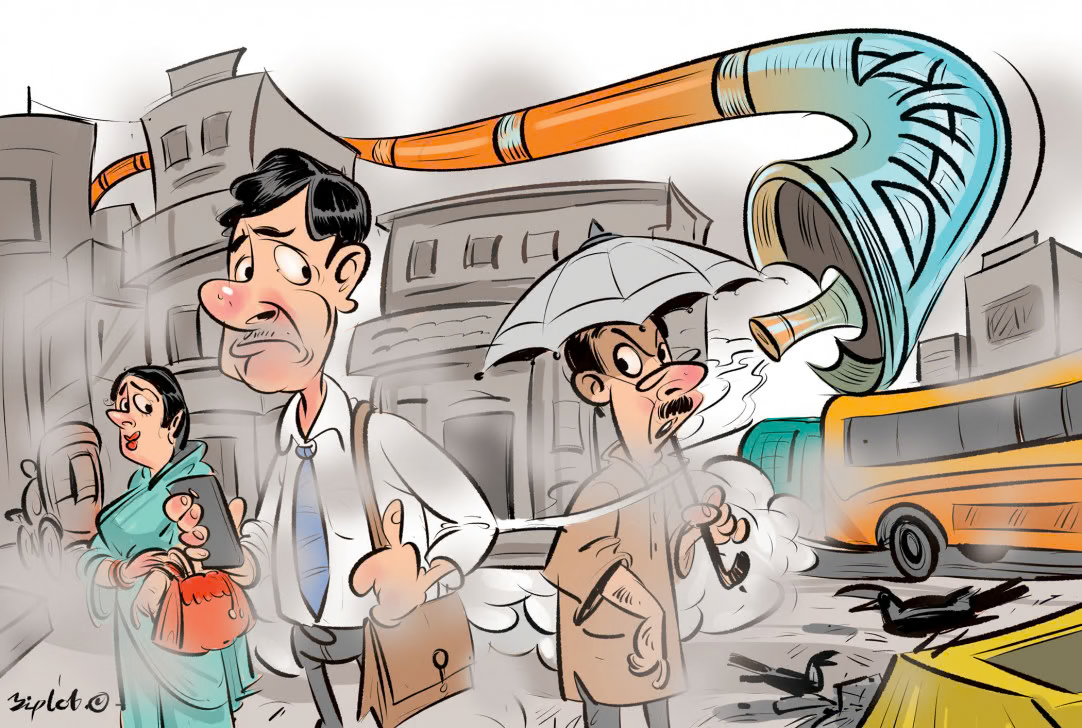
There is another layer. Some creators seek shock. They know Western audiences have a long-standing appetite for the “Third World” as spectacle. Brown suffering remains strangely cinematic. A filthy river, an overflowing train, a child begging. These images travel well because they confirm what many viewers already believe: that countries like ours are tragic, chaotic, barely functioning places where life is cheap and dignity is optional.
This is poverty porn with better editing software.
To be fair, not every foreign vlogger is doing this. Some are genuinely curious and respectful. The Daily Star interviewed global travel vloggers who explored far beyond the usual Dhaka-chaos template -- highlighting food, weddings, tea gardens, Bandarban, cricket, and the wider diversity of Bangladesh. That kind of work matters. It does not deny the crazy traffic; it simply refuses to make traffic the national anthem.
But the bad content spreads faster because algorithms like extremes. “Dhaka is complicated” will not beat “I nearly died in Bangladesh” in the thumbnail Olympics. And once a creator learns that panic sells, he/she will keep buying panic wholesale from our streets.
Meanwhile, locals become props. A rickshaw puller becomes “the kindest man in Bangladesh.” A child becomes “heartbreaking reality.” A woman speaking English becomes a flirtatious plot device. A poor man following a tourist becomes national embarrassment.
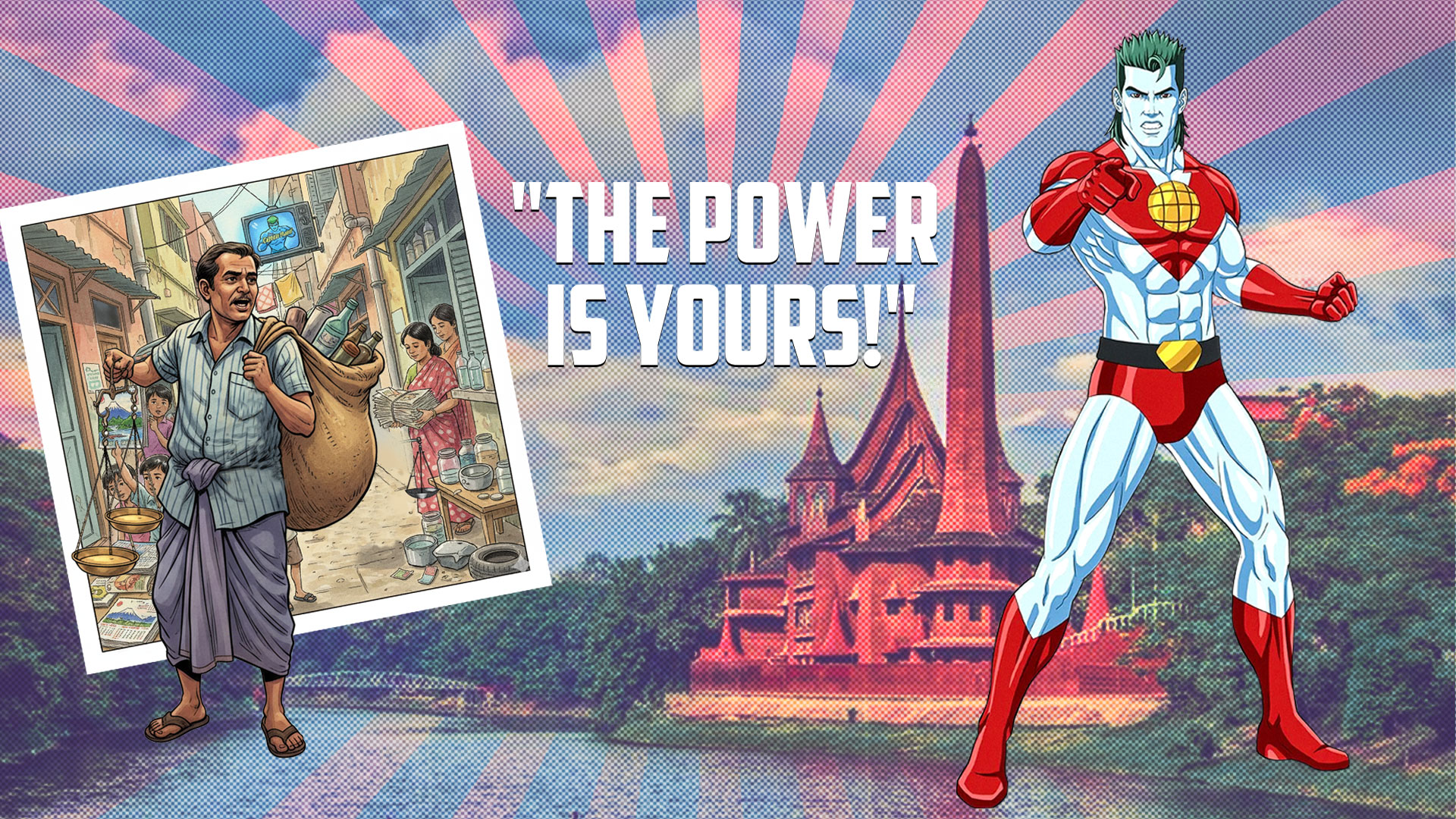
A better travel video would still show the mess. Show the river, show the slums, show the choking air, show the impossible crowd at Sadarghat, show the exhausted garment worker waiting for a bus. BUT SHOW CONTEXT. Show why the river died. Show who profits from the pollution. Show the migrant dream that built this city. Show the universities, the bookshops, the rooftop gardens, the restaurants, the metro, the live music by Dhanmondi Lake, the street dogs fed by kind strangers.
 For all latest news, follow The Daily Star's Google News channel.
 Show Dhaka as a city, not a festering wound.
And we, the deshi viewers, need to grow up too. We do not have to clap every time a foreigner says “dhonnobad”. We do not have to swarm the comment section like unpaid tourism officials. We can be hospitable without being clingy. Critical without becoming defensive uncles shouting at the internet.
Millions of people wake up every day in this impossible city and make life happen with humour, faith, tea, rage, and astonishing stamina.
Dhaka is not a thumbnail. It is not a reaction video. It is not an “extreme travel” episode for bored Western netizens.
Comments