


The need to bridge the civic gap in classrooms and communities
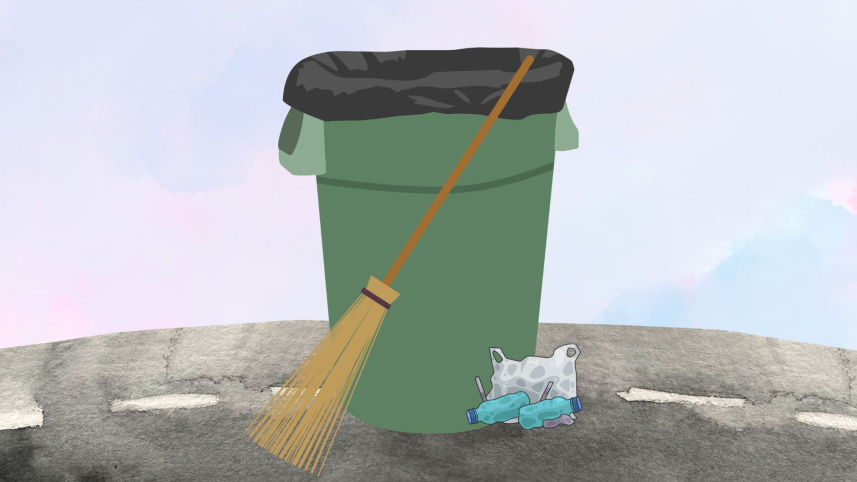
Every student, parent, educator, and citizen witnesses countless voids in our society every day. Littering is so common that it seems as if we've all teamed up to make our country the world’s largest dustbin. Coughing, spitting, and urinating publicly occur everywhere. Footpaths are treated no differently than our washrooms. Even toilets in our educational institutions lack proper sanitation and are too filthy to use.
We show little regard for public property, and trust among citizens is low. Be it food adulteration or corruption, it all proves how far we have drifted away from our principles. Yet, I strongly believe Bangladesh holds great possibilities. With persistence and a well-planned approach to integrating family principles, educational institutions, and religious values, Bangladesh is more than capable of filling these voids and bringing change.

These changes, however, cannot happen overnight. They have to be practised daily so they become an instinct. And that’s where a family has to step in.
Children spend most of their time at home with their parents. When a child sees their parent putting litter in the bin or keeping a washroom clean without being told twice, they learn a lesson a hundred lectures can never teach. It ensures that they carry these manners into adulthood so that they learn to treat a road and a public toilet with the same respect as their own clean home. The habit must become a reflex action rather than a rule to be followed.
Not only are the public toilets in dire condition, but so are the toilets in our educational institutes. The lack of sanitation in schools can significantly contribute to student illness. Sick children miss school and need medical care, both of which cost money and result in lost learning. The cost of prevention is a fraction of the cost of treatment. Every washroom must be equipped with soap and working taps.
Religious values can play a great role too. After all, every religion practised in this country mentions cleanliness and respect for public property.
Furthermore, Bangladesh is the 13th most corrupt country in the world according to the Transparency International Bangladesh Corruption Perceptions Index (CPI). It’s a distinction that does not match what our faiths actually teach. Such moral lessons matter most for the next generation since today’s children will one day sit in the country’s important chairs. The goal is to raise people who are incapable of accepting bribes in the first place.
Childhood is when learning sticks to the brain. The moral, social, and religious lessons taught to you at seven will stay with you as you grow older. What matters is that the lesson was taught to you as an instinct, not an instruction. Bangladesh has no shortage of the raw talent required to pull this off. These solutions do not need a huge budget, just consistency. Only with the collective effort of our families, educational institutes, and religious values can we cultivate these qualities among students from an early age, thereby building a clean, corruption-free, and humane Bangladesh.
The author is a student of class 11, Sunnydale (Bashundhara senior campus).
 For all latest news, follow The Daily Star's Google News channel.
Comments