


Four nations threat to climate goal
Ahead of a key climate meet in London, scientists have warned that only four leading G20 nations' climate targets would lead to disastrous global warming.
The warning comes as Britain yesterday hosted climate and environment ministers from 51 countries for "critical" climate talks ahead of November's Cop26 summit in Glasgow.

British minister Alok Sharma, President of COP26, will lead the two-day meeting, which London said will address "key issues that require resolution" at the summit.
Environment and climate ministers from the US, India and China will be among those taking part in the closed-door meeting, which will include both virtual and in-person attendance.
According to The Guardian, the scientist said that China, Russia, Brazil and Australia all have energy policies associated with 5C rises in atmospheric temperatures, a heating hike that would bring devastation to much of the planet.
The analysis, by the peer-reviewed group Paris Equity Check, raises serious worries about the prospects of key climate agreements being achieved at the Cop26 summit in Glasgow in three months. The conference – rated as one of the most important climate summits ever staged – will attempt to hammer out policies to hold global heating to 1.5C by agreeing on a global policy for ending net emissions of greenhouse gases by 2050.
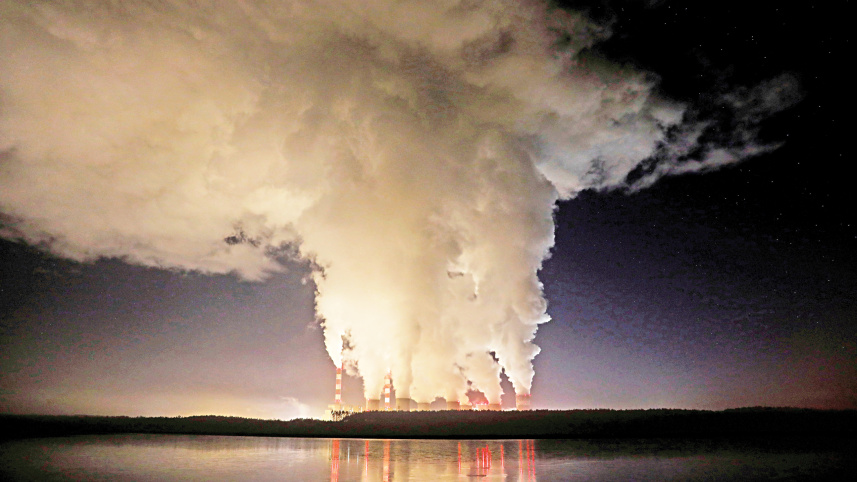
The EU and UK have outlined emission pledges that could bring the world close to these aspirations. However, those of China, Russia, Brazil and Australia – which remain reliant on continued fossil-fuel burning – would trigger temperature rises of 5C if followed by the rest of the world. This dramatic discrepancy reveals a deep division over the energy and environment policies of the world's richest nations.
"Without more ambition from China, Brazil, Russia and Australia, Cop26 will fail to deliver the future our planet needs," warned Tanya Steele, chief executive at WWF.
The stark difference between the climate plans of different G20 nations – who together are responsible for 85% of all global carbon emissions – was underlined last week in Naples, when a meeting of member states' energy and environment ministers ended with the group failing to agree on a package of commitments to tackle climate change.
"The G20 is failing to deliver," said the online activist network Avaaz.
A world that would be 5C hotter than it was before the Industrial Revolution, when fossil-fuel burning began in earnest, would be one in which a quarter of the global population would face extreme drought for at least one month a year; rainforests would be destroyed; and melting ice sheets would result in dangerous sea-level rises.
In addition, loss of reflective ice from the poles could cause oceans to absorb more solar radiation, while melting permafrost in Siberia and other regions would release plumes of methane, another pernicious greenhouse gas. Inevitably, temperatures would soar even further.
By contrast, scientists say that if temperature rises can be kept below 1.5C, then the worst impacts of climate change could be prevented – though they also point out that temperatures have already risen 1.2C, leaving the world facing very tight margins to avoid the worst impacts of global warming over the next 30 years.
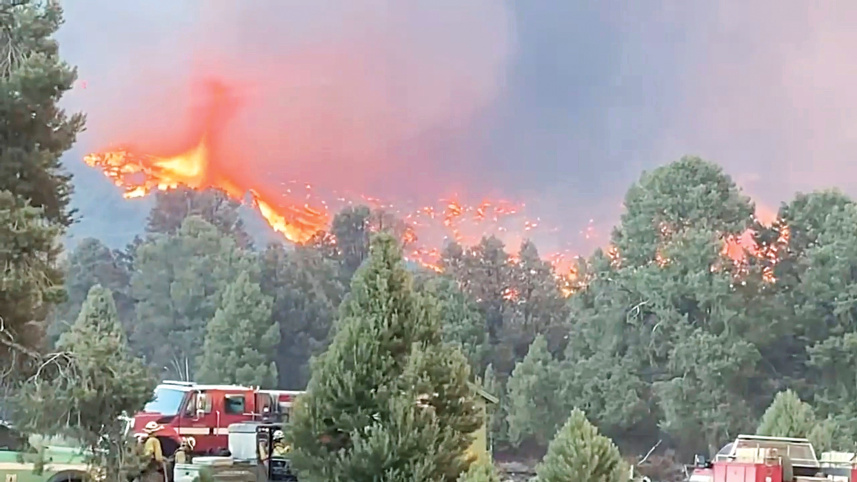
The extent of the climate crisis has also been highlighted this month with extreme weather events causing devastation across the world: deadly floods have swept through Germany, Belgium and China, while massive wildfires have gripped the US and Siberia. Global warming has been implicated in every case.
Under the 2015 Paris Agreement, nearly 200 countries committed to submit new climate plans every five years with a goal to limit global warming to well below 2C, aiming at 1.5C, compared to pre-industrial levels. However, earlier this year, the United Nations issued a "red alert" over current climate plans, warning they were "nowhere close" to meeting the Paris goals.
 For all latest news, follow The Daily Star's Google News channel.
Comments