


Strangers at the table: Dhaka’s supper club stories

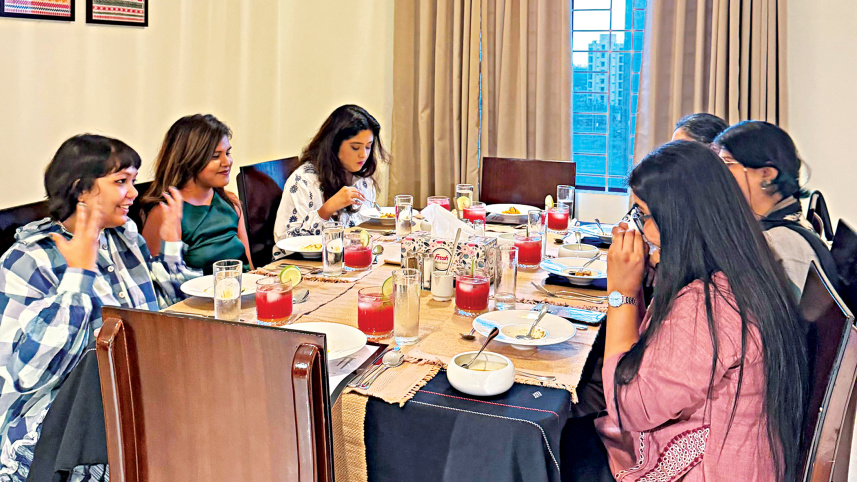
My social media feeds are awash with reels of posh dinners: elegant homes, exotic menus, perfectly styled tables. I had been toying with the idea of hosting supper clubs myself, and somehow the Meta world sniffed it out -- suddenly I was bombarded with glossy clips of invite‑only gatherings where chefs unveil blind menus. Strangers discover both food and company only at the table.
In this post‑social media era, it’s easy to imagine a young couple in London, a single earner in New York, or a family in Mumbai hosting chic dinners for strangers. Every detail is considered -- menu cards, name cards, seating plans. These weekend gatherings often double as a way to add a little extra to the piggy bank.

DHAKA JOINS THE BANDWAGON
Our megapolis has embraced the supper club trend, which traces back to the 1930s in America when inns hosted fixed‑menu dinners for neighbours. Dhaka’s version is branching into distinct identities.
Table for Her, launched by Adhara Mercy Tripura, is female‑only and invite‑only. Just eight seats at a secret location, with a blind menu revealed at the table.
Tablore, created by Chef Farhana Chowdhury, is lifestyle‑oriented and cosmopolitan. The dinners are hosted at her own space in Gulshan. It leans into ambience -- elegant spreads, themed evenings, diverse guest lists. Where Table for Her is about secrecy and safety, Tablore is spectacle and experience.
Open Plate Studio, curated by Ajo x Arpon Chakma, takes the idea into fine‑dining territory. Trained in India and at Le Cordon Bleu Dusit, Arpon uses Ajo to showcase indigenous Bangladeshi ingredients in progressive tasting menus.
Together, these chefs have evolved supper clubs into pop‑up dinners and underground restaurants. Carefully planned evenings for strangers have become both a trend and a lifestyle statement.
BONDING OVER THE TABLE
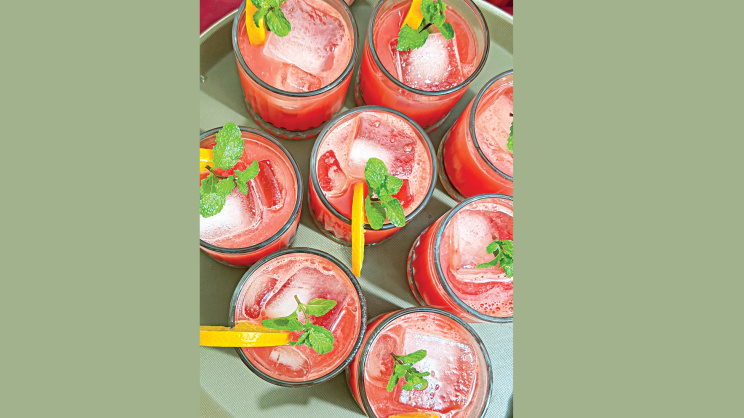
The essence is connection. Guests are cherry‑picked from registration forms, seating plans revealed only hours before. “I only invite people I want to meet and cook for. A bittersweet situation, honestly,” says Mercy. Her partners -- hostess Thangsri Dango and content creator Victoria Chakma -- manage bookings and storytelling. Profitability remains elusive, but Mercy is undeterred: “Fingers crossed I can make this profitable. I love cooking for my guests. My dream job.”
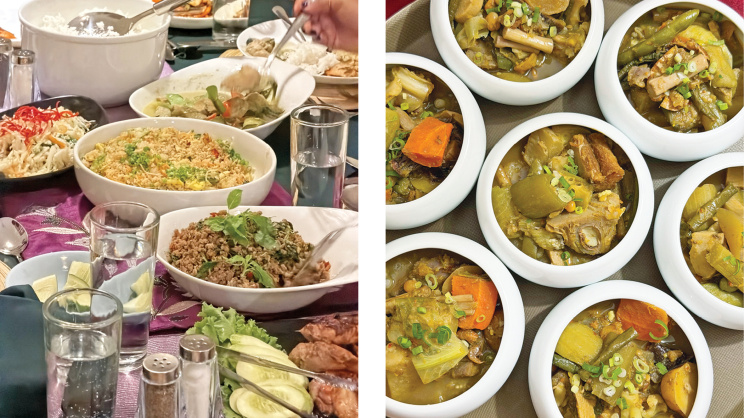
At the May 22 supper club, the menu travelled through Bangkok and Hanoi -- Vietnamese spring rolls, lemongrass chicken, steamed cabbage dumplings, Mercy’s 48‑hour phở, Thai green curry, basil beef stir‑fry, mango sticky rice, and saffron caramel flan. Every plate was prepared live and served fresh.
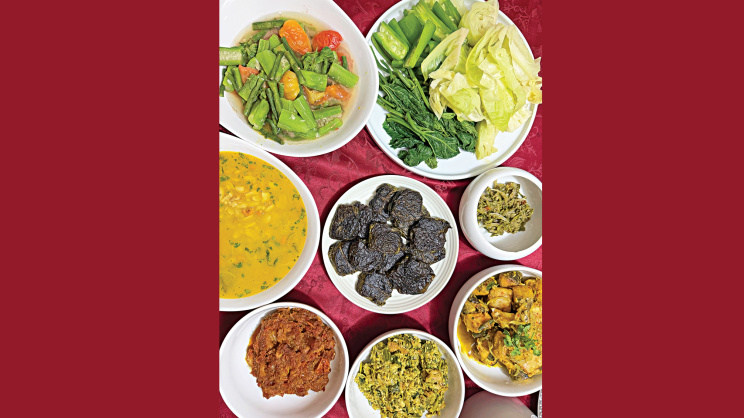
The response has been overwhelming: more than 300 sign‑ups in the first week, now over 2,000 women on the waitlist. Monthly themes add anticipation -- April was CHT cuisine for BoiSaBi, May explored Thai and Vietnamese cuisines, June returns to monsoon ingredients, July promises Korean cuisine.
EXPERIENCING THE EXPERIENCE
But supper clubs are more than food -- they are rituals of connection. Guests are asked to embrace the unknown, dress in whatever makes them feel powerful, and respect the intimacy of the gathering. Phones are silenced once the first course arrives.
Mahenaw Ummul Wara, who works in an international foundation, found the evening transformative. “Most social spaces in Dhaka aren’t designed for the kind of connection I was looking for -- somewhere you could meet people who are interesting and interested, without having to shout over a DJ or make small talk at a dawat.” Supper clubs had already worked for her in Amman, Canberra, and Madrid, and she found the same intimacy here. “There’s something quietly radical about a dinner where no one knows each other at the start, and everyone is slightly reluctant to admit they’ve googled the address three times.”
What struck her most was the balance of food and company. “Mercy cooked with the kind of confidence and care that you cannot fake. Eight women, eight entirely different worlds, and somehow five hours passed in what felt like forty‑five minutes. There were moments of riot -- the kind of laughter that makes you concerned for your mascara smudging.”
Networking was never her goal. “I didn’t go looking for networking. I went looking for people. And I found a few wonderful women I am happy to keep in my social circle -- not because it’s useful, but because they make an evening better simply by being in it. That’s rarer than any business card.”
Shahida Rahman, head of Academic Learning Support at Grace International School, echoed the sentiment. “It was intentionally curated around conversation, comfort, and genuine connection -- a setting designed to encourage openness and authenticity. A supper club creates a different pace: people slow down, listen more, and engage more thoughtfully.” She left with what she laughingly called a “food coma,” but also with the resolve to return. “Growth often comes from stepping into unfamiliar spaces and observing different perspectives. That night reminded me of how food can break down barriers and create trust.”
THE INTIMACY OF SUPPER CLUBS
Dhaka’s supper club culture is diversifying. Table for Her charges BDT 5000 for its grassroots and community‑driven menu; Tablore is very cosmopolitan and exclusively lifestyle‑oriented, and Open Plate Studio is experimental fine dining rooted in tradition.
 For all latest news, follow The Daily Star's Google News channel.
 Arpon’s collaborations are ticketed, sold‑out affairs at BDT 7,500 ++ per guest for the meal. Dinner dates are announced once the menu is fully curated, and guests can leave their contact details via the Ajo Idea Space social media page to stay updated.
Open Plate Studio is a space for experimenting with progressive Bangladeshi cuisine alongside local art and artists. With food as their canvas, they take risks, explore new ideas, and challenge boundaries while staying rooted in tradition. Through each dish, Arpon tells unheard stories of Bangladesh -- using ingredients sourced across the country and transforming them into unique dining experiences.
“What misses one palate may become another’s favourite -- that is the beauty of individuality. Take, for example, our coconut pavlova with passion fruit curd and shutki caramel -- an experiment that brought shutki into dessert, and it worked. Art on the Plate- Squid (stuffed with mango and ginger compote), Rosko (wild blood fruit from CHT), Paan Chingri (shrimp) -- inspired by local mela, where fried chingri is sold beside paan stalls.
At Open Plate Studio, we never compromise on our roots. This journey is about taking Bangladeshi cuisine forward without losing sight of where we come from,” Arpon says. “Passion for food stories from the sea, the hills, and the plain land, preserving lost recipes through food and creativity says it all.
Right now, Dhaka’s underground dining scene is small, but it is growing. Each current dining studio offers a different lens -- safe space, social spectacle, culinary innovation. What unites them is the idea that strangers can gather around a table and leave with something more than a meal: connection, memory, rediscovery of Bangladeshi food stories.
Just like those reels, Dhaka’s supper clubs blend the intimacy of private dinners with the exclusivity of invite‑only events. They experiment with regional flavours alongside global cuisines, standing as a bridge between fine‑dining culture and supper club intimacy.
In Dhaka, supper clubs are not simply dinners. They are rehearsals of trust, experiments in closeness, rituals where strangers become companions. Around these tables, food is the excuse -- connection is the course.
Comments