


A room to breathe amid Dhaka’s vanishing third spaces

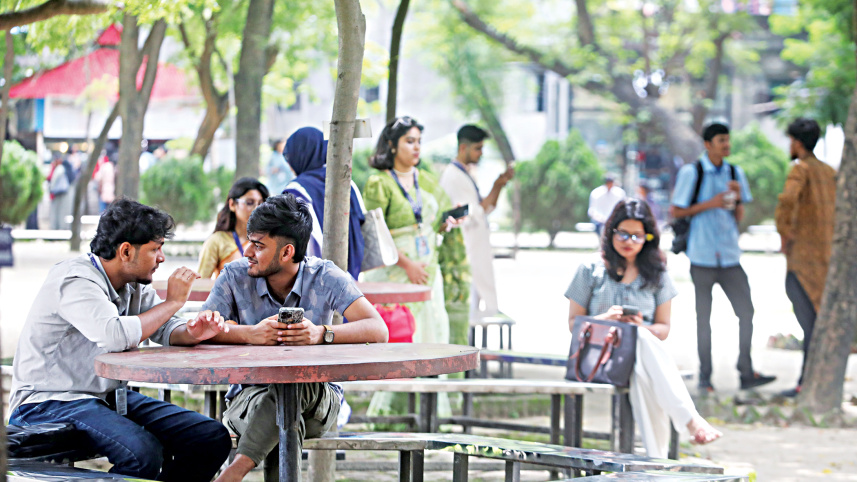
Imagine the scene: The clock strikes 4:00 PM. You have just walked out of an exhausting three-hour midterm exam. Your brain is fried, and you and your friends desperately need to unwind, talk about how poorly the test went, or just laugh it off. In a horizontally spread, green city, your instinct would be to walk to a nearby park, sit under the shade of a large banyan tree, kick a football around, or simply lie on the grass and ponder upon your thoughts.
But this is Dhaka. Instead of a lush lawn, you are met with a wall of traffic, dust, and concrete. Your immediate instinct is likely to look for the nearest café or fast-food joint. While this might solve the immediate need for a seat, it highlights a quiet crisis creeping into the lives of Bangladeshi university students: the rapid shrinking of the third space. In this sense, some public university around Dhaka offer that space. However, students of private universities who have a permanent campus only get the scope without the cost of any transaction.

Understanding the Third Space
In sociology, the first space is our home, and the second space is where we work or study, our classrooms and offices. The third space, a term coined by sociologist Ray Oldenburg, represents the anchors of community life: public parks, playgrounds, libraries, and street corners. It is where we go to exist without any transactional expectations, where we socialise, debate, and let our minds wander.
For university students, this space is far more than just a place to pass time. It is crucial for mental decompression and social growth. It serves as a neutral ground where they can step away from academic stress and domestic expectations to discover their independence, build peer connections, and engage in informal, spontaneous learning. Without a vibrant third space, the university experience risks being reduced to a monotonous routine of exams and commutes, depriving students of the community-building that shapes their transition into adulthood.
The Shrinking Outdoors
The root causes of this spatial drought are deeply tied to Dhaka’s rapid, unplanned urbanisation and the commercialisation of land. Over the last two decades, the city’s open fields and playgrounds have dramatically declined.
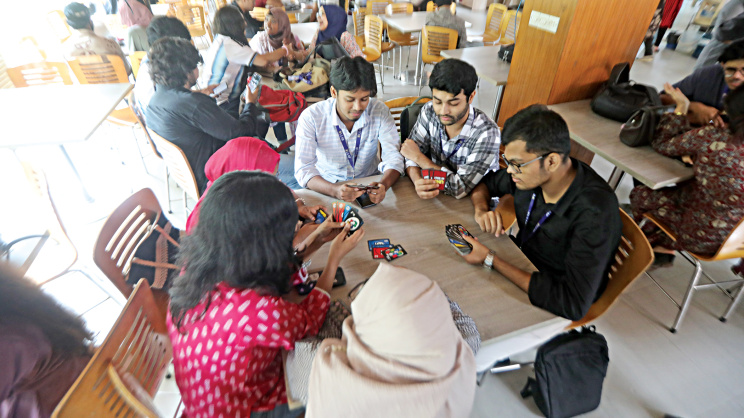
When the private university boom started in the 1990s, many institutions operated out of rented commercial buildings in densely packed neighborhoods like Dhanmondi, Banani, or Uttara. A campus often meant a few floors of a high-rise, an elevator, and a narrow corridor. The classroom was the second space, and the congested street outside was a chaotic transit zone. There was simply no room to breathe, let alone unwind on weekends.
Coping With The Café Trap
To cope with this spatial starvation, students have turned to Dhaka’s booming café and book café culture. From cosy retro diners to quiet reading spots, these places have become the default third spaces for the youth. However, this reliance on commercial venues has a steep price tag, both financially and biologically.
In a city where a single coffee or a quick snack easily costs upwards of 300 to 500 BDT, hanging out with friends multiple times a week becomes a massive strain on a student’s budget. For those depending on monthly allowances or modest incomes from tutoring, the pressure to spend money just to secure a place to sit is unsustainable. It turns socialising into a transactional activity; you are essentially paying a premium just to exist in a space.
Humans are built to connect with nature and open air. Sitting in an air-conditioned room under artificial LED lights, staring at screens, and shouting over the hum of espresso machines is not a true substitute for the outdoors. It deprives young minds of the natural process of socialising, the feeling of a fresh breeze, the sight of greenery, and the spontaneous, unchoreographed interactions that happen in open public plazas.
How Campuses Are Mitigating the Crisis
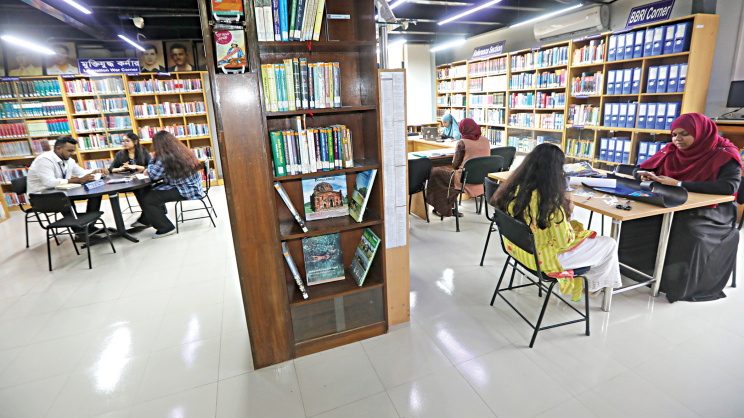
Recognising the toll this takes on student mental health and community building, several private universities in Bangladesh have made a conscious shift. Prompted by regulatory guidelines and a genuine realisation of student needs, many have transitioned to purpose-built, permanent campuses outside the congested city center.
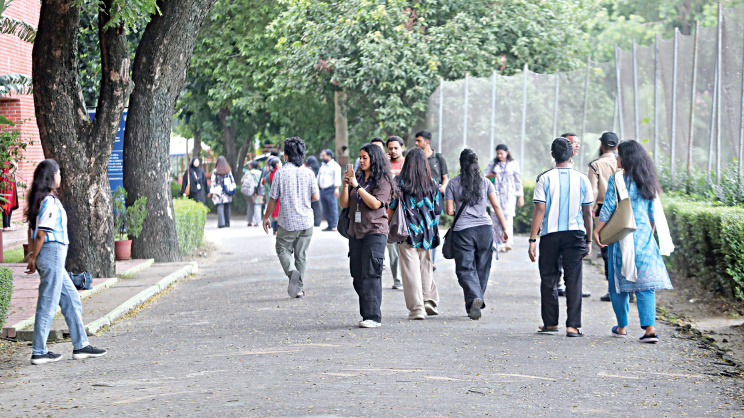
These new campuses are actively being designed to build back the third space. BRAC University’s eco-friendly campus in Merul Badda is a prime example of vertical green architecture. The campus utilises double-and triple-height open plazas, cross-ventilation, and beautifully manicured green courtyards inspired by the Sundarbans ecosystem. Students do not need to leave the building to feel connected to nature; they can sit on wide, amphitheater-like stairs, enjoy the natural breeze, and chat without spending a single Taka.
Daffodil International University (DIU) in Ashulia features a 100-acre green campus designed specifically to counter the concrete claustrophobia of Dhaka. With sprawling playgrounds, a large pond, and even a conserved miniature forest area Bono Maya, it provides students with the natural environment they have been starved of in the city center.
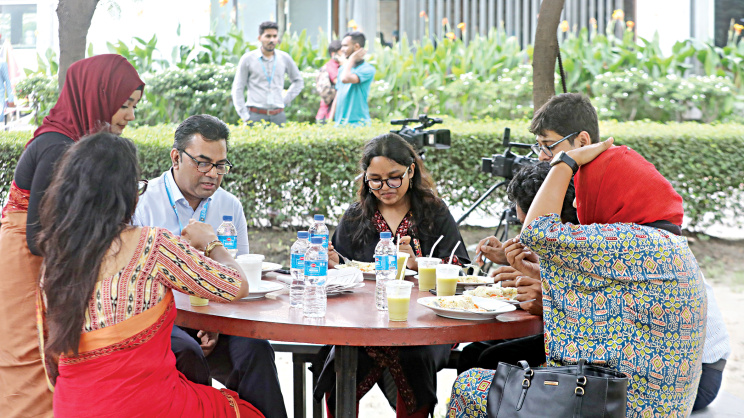
The University of Liberal Arts Bangladesh (ULAB) in Mohammadpur showcases a deeply climate-sensitive, porous architecture.. Built with local red bricks, the campus stands out for its green roofs, un-programmed semi-open gathering spaces, and a restored natural lake that was developed from a brownfield site. This design facilitates natural cross-ventilation and offers pocket-gardens where students can experience nature without leaving campus.
United International University (UIU) in United City, North South University (NSU), and the Independent University, Bangladesh (IUB) in Bashundhara, have integrated open-air plazas, green sports fields, and spacious indoor student lounges. In tandem with this movement, other private universities are also in the pipeline, actively transitioning to or developing their own permanent campuses to ensure that no student is left without a campus sanctuary.
The Road Ahead
While the rise of permanent, green campuses is a step in the right direction, the struggle for third spaces remains an ongoing challenge, particularly for universities still operating within the city core.
 For all latest news, follow The Daily Star's Google News channel.
 For students, a university campus should not just be a place to collect a degree. It needs to be a sanctuary. As Dhaka continues to grow vertically, the effort to preserve and create open, non-commercial spaces is vital for the mental well-being, creativity, and social fabric of the next generation. Until our city planning catches up, our campuses must continue to serve as the green havens where students can freely meet, breathe, and simply be.
Comments