


Transforming everyday retail payments
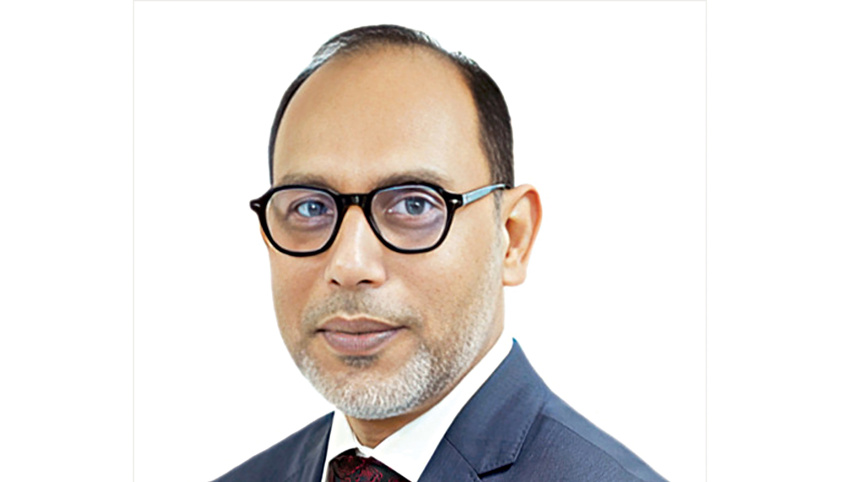
Md. Ahteshamul Haque Khan
Managing Director & CEO
Dutch-Bangla Bank PLC.

At DBBL, we have integrated Bangla QR into our NexusPay and Rocket apps to empower millions. Our goal is to bring small neighborhood shops into the formal economy, making QR scanning the natural choice for everyday transactions.
Bangla QR holds the potential to accelerate financial inclusion and reduce cash handling costs across Bangladesh. In this interview, Md. Ahteshamul Haque Khan, Managing Director and CEO of Dutch Bangla Bank PLC, discusses how a unified payment infrastructure is essential for driving the country toward a truly cashless future and ensuring digital access for all segments of society.
The Daily Star (TDS): How do you perceive the role of Bangla QR in driving Bangladesh’s transition toward a truly cashless society?
Md. Ahteshamul Haque Khan (MAHK): Bangla QR is a landmark step for digital payments. It drives financial inclusion by creating a unified, low cost system that integrates underserved merchants and rural consumers into the formal economy. Bangla QR allows customers to use their preferred bank or MFS app anywhere, making shopping safer and strengthening the national digital ecosystem.
TDS: How are banks, MFS providers, and fintech companies collaborating to ensure seamless, cross platform transactions for the end consumer?
MAHK: Success relies on teamwork rather than competition. Under Bangladesh Bank guidance, banks, MFS providers, and fintechs operate under a unified regulatory framework. While each institution develops its own application, the underlying infrastructure connects everyone. This interoperability ensures that consumers do not have to worry about whether a merchant uses their specific bank QR. This collaborative approach creates a robust national system that benefits all stakeholders while driving efficiency across the financial sector.
TDS: How can we make Bangla QR a natural, daily habit for everyday retail transactions?
MAHK: Shifting cash habits requires proving that scanning a QR code is faster and safer than handling physical money. Beyond bank incentives, QR codes must become ubiquitous, available at local tea stalls, pharmacies, and even on public buses. DBBL is running awareness campaigns with Bangladesh Bank to shift consumer behavior and make scanning a QR code the normal, daily choice for small purchases across both urban and rural landscapes.
TDS: What further policy support, tax incentives, or infrastructure developments are needed to accelerate the countrywide rollout?
MAHK: While our regulatory framework is strong, specific policy support like tax exemptions on digital revenue for micro merchants would provide immediate motivation. We also need continued investment in faster mobile internet in rural areas. Collaborative public campaigns focused on digital literacy will also be vital in teaching people how to use these systems securely, ensuring the ecosystem grows sustainably across the entire country.
 For all latest news, follow The Daily Star's Google News channel.
Comments