


Bangla QR Drive Towards a Cashless Economy
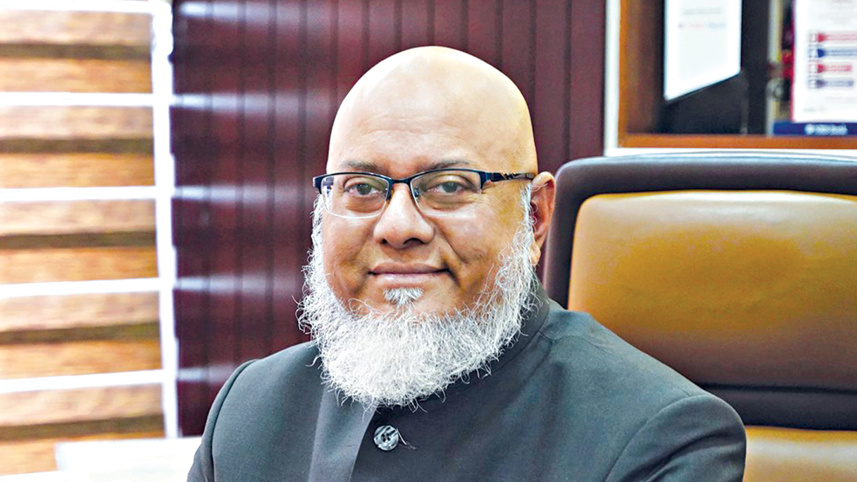
Tarek Reaz Khan
Managing Director & CEO
NRB Bank PLC.

We are expanding merchant acquisition through our app and agent network, and deepening partnerships with leading MFS and fintech players. Our near-term goals are, increase in active Bangla QR merchants on our network, faster settlement cycles, and deeper integration of QR payments with savings, credit and remittance products.
Bangladesh’s payment landscape has been reshaped by Bangla QR. Built on the National Payment Switch Bangladesh (NPSB), the standard allows a single QR code to accept payment from any bank, MFS wallet, or fintech app in the country. In this interview Tarek Reaz Khan, Managing Director & CEO of NRB Bank PLC, shares where the cashless journey stands and where it is headed.
The Daily Star(TDS): How do you perceive the role of Bangla QR in driving Bangladesh’s transition toward a truly cashless society?
Tarek Reaz Khan (TRK): Bangla QR is one of the most important building blocks of our cashless journey. A customer no longer needs to worry about which bank a shopkeeper uses; one code, one scan, and the payment is done. I see Bangla QR less as a payment tool and more as the foundation, laid by the central bank, of a connected digital economy.
TDS: What robust security standards and fraud-prevention mechanisms are integrated into the Bangla QR framework to protect users and build long-term consumer trust?
TRK: Bangla QR follows the EMVCo global QR specification, so every transaction is tokenised and encrypted end to end; the merchant never sees or stores a customer’s underlying account or card details. Banks add their own layers on top: transaction limits, device binding, real-time fraud monitoring and OTP authentication for higher-value transfers. Bangladesh Bank’s oversight ensures every participating institution meets a common security baseline, and a formal dispute resolution mechanism gives customers recourse when something goes wrong.
TDS: From an industry standpoint, what further policy support, tax incentives, or infrastructure developments are needed to accelerate the countrywide rollout?
Tarek Reaz Khan: Tax or VAT incentives for merchants who transact digitally would offset their hesitation around income visibility. A more affordable merchant discount rate for micro-merchants would remove a real economic barrier. Continued investment in rural connectivity and affordable smartphones is essential, since QR adoption is only as strong as the network beneath it. And if government agencies adopt Bangla QR for their own collections, taxes, fees, utility payments, through Bangladesh Bank’s framework, it would send a strong signal and generate the volume that makes the whole ecosystem self-sustaining.
 For all latest news, follow The Daily Star's Google News channel.
Comments