


Lives at risk

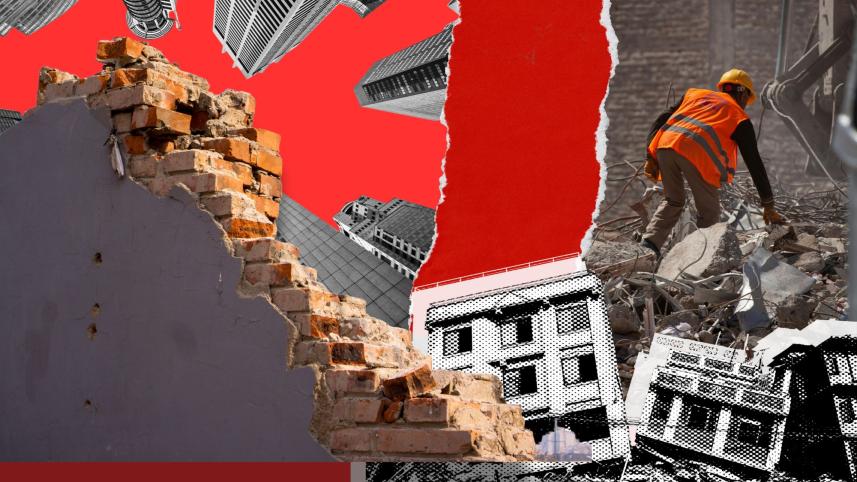
Bangladesh’s vulnerability to earthquakes and unsafe construction has once again come into sharp focus, as two major initiatives meant to safeguard lives and buildings remain stalled.
BBRA formation still pending
Five years after the Bangladesh National Building Code (BNBC-2020) was gazetted, the government has yet to establish the Bangladesh Building Regulatory Authority (BBRA), the central body mandated to enforce it. At the same time, a Tk 250 crore Urban Safety and Resilience Institute (USRI), built under a World Bank–funded project to assess seismic risks in Dhaka, has been waiting for approval to launch for 16 months.

Together, these delays have left the country dangerously exposed to disasters that experts warn could cause catastrophic losses.
What BNBC 2020 requires
The BNBC-2020 was drafted to provide a comprehensive framework for safe construction, requiring architectural, structural, electrical, mechanical, and fire-safety designs to be submitted before construction.
It also mandated monitoring and compliance checks. Yet none of these steps are being followed in practice. Instead of forming the BBRA, the previous government appointed deputy commissioners as heads of district-level building committees.
Urban planner Mohammad Abu Sadeque, a member of the BNBC drafting team, criticised this move, saying: “The building code offers a life-saving system if implemented properly. But this approach has crippled building-code enforcement nationwide.”
He argued that district-level PWD engineers, not deputy commissioners, should lead enforcement, as they are technically equipped to monitor construction.
The urgency of a dedicated authority was underscored by a recent 5.7-magnitude earthquake that killed at least ten people in Dhaka, Narsingdi, and Narayanganj, injured hundreds, and damaged around 300 buildings in Rajuk areas.

Recent quake underlines urgency
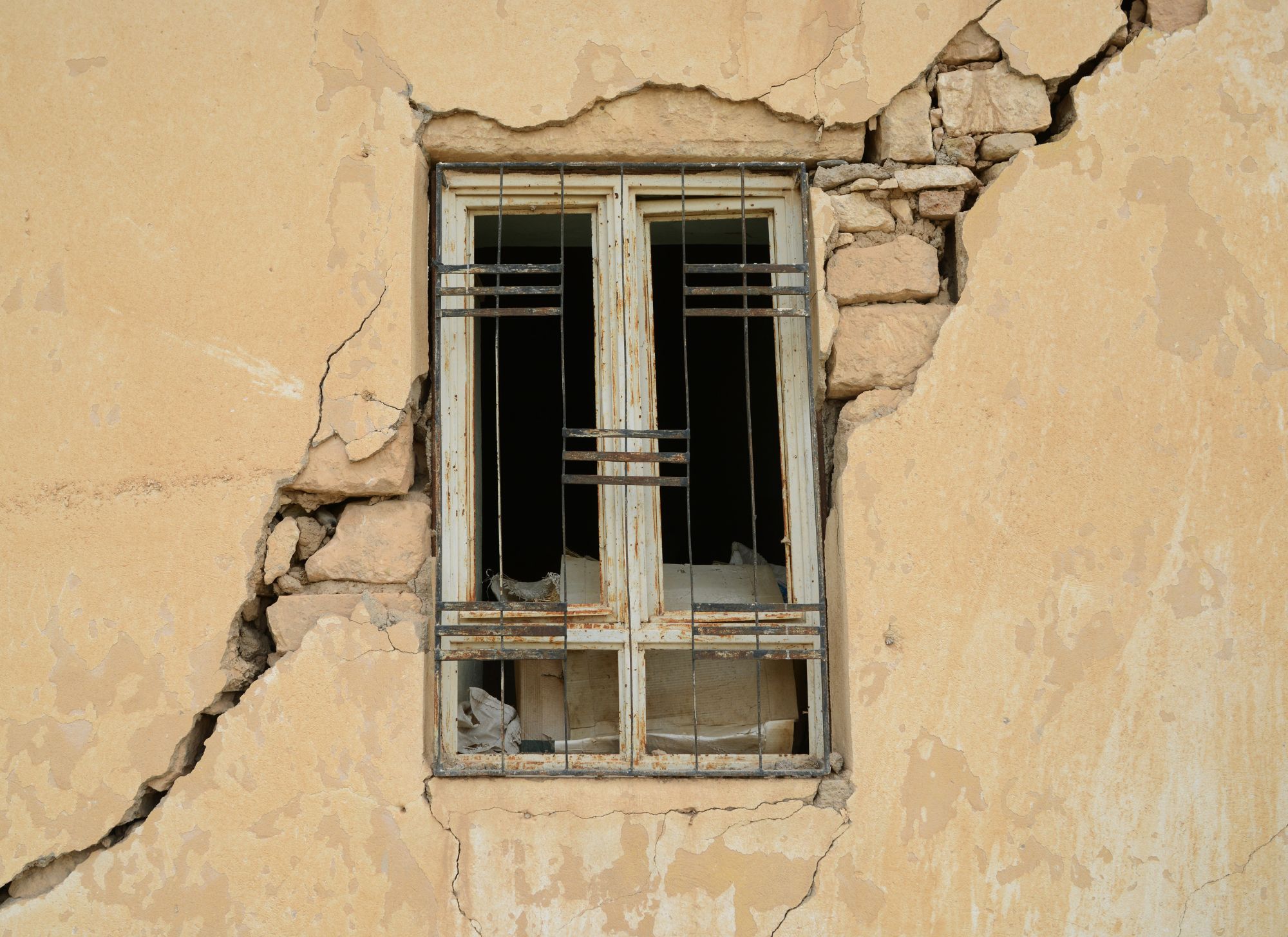
Rajuk’s own estimates warn that a 6.9-magnitude quake could collapse 865,000 buildings and kill 210,000 people in Dhaka alone. Old Dhaka, with its narrow lanes and century-old structures, is especially vulnerable.
In Chattogram, assessments show that 70–75 percent of more than 380,000 buildings are at serious risk, while Sylhet, sitting atop the active Dauki Fault, faces rising micro-quakes with over 70 percent of buildings lacking seismic design.
Prof Mehedi Ahmed Ansary of Buet’s civil engineering department warned, “A dedicated authority is essential because the building code, despite being robust, is barely enforced.”
The current government has formed an interim committee led by the housing and public works secretary, Rajuk chairman, and PWD chief engineer to begin the process of establishing the BBRA.
Rajuk Chief Town Planner Md Ashraful Islam said the authority could be formed by December.
But experts remain skeptical. Sadeque said, “The interim government’s term is ending, and the next administration may not prioritise the issue.”
Prof Munaz Ahmed Noor of Buet stressed, “None of these mandatory steps are followed in Bangladesh.”
Adil Mohammed Khan, president of the Bangladesh Institute of Planners, added, “Bangladesh needs a comprehensive physical plan. Earthquake risk, topography, and geological attributes must guide development. Otherwise even a moderate earthquake could cause severe damage.”
Chief Adviser Prof Muhammad Yunus has recently instructed authorities to explore creating a separate national body to approve all buildings and oversee construction works nationwide.
Press Secretary Shafiqul Alam confirmed, “The chief adviser directed the housing and public works ministry to examine whether a separate authority can be created for approving buildings across Bangladesh.”
What the USRI can do
While the BBRA remains unformed, another crucial initiative has also stalled. The Urban Safety and Resilience Institute (USRI), built under the World Bank–funded Urban Resilience Project, has been awaiting government approval for 16 months. The Tk 250 crore project constructed a 10-storey facility in Mohakhali and procured advanced equipment from Europe and the UK to assess seismic vulnerabilities of Dhaka’s buildings.
 For all latest news, follow The Daily Star's Google News channel.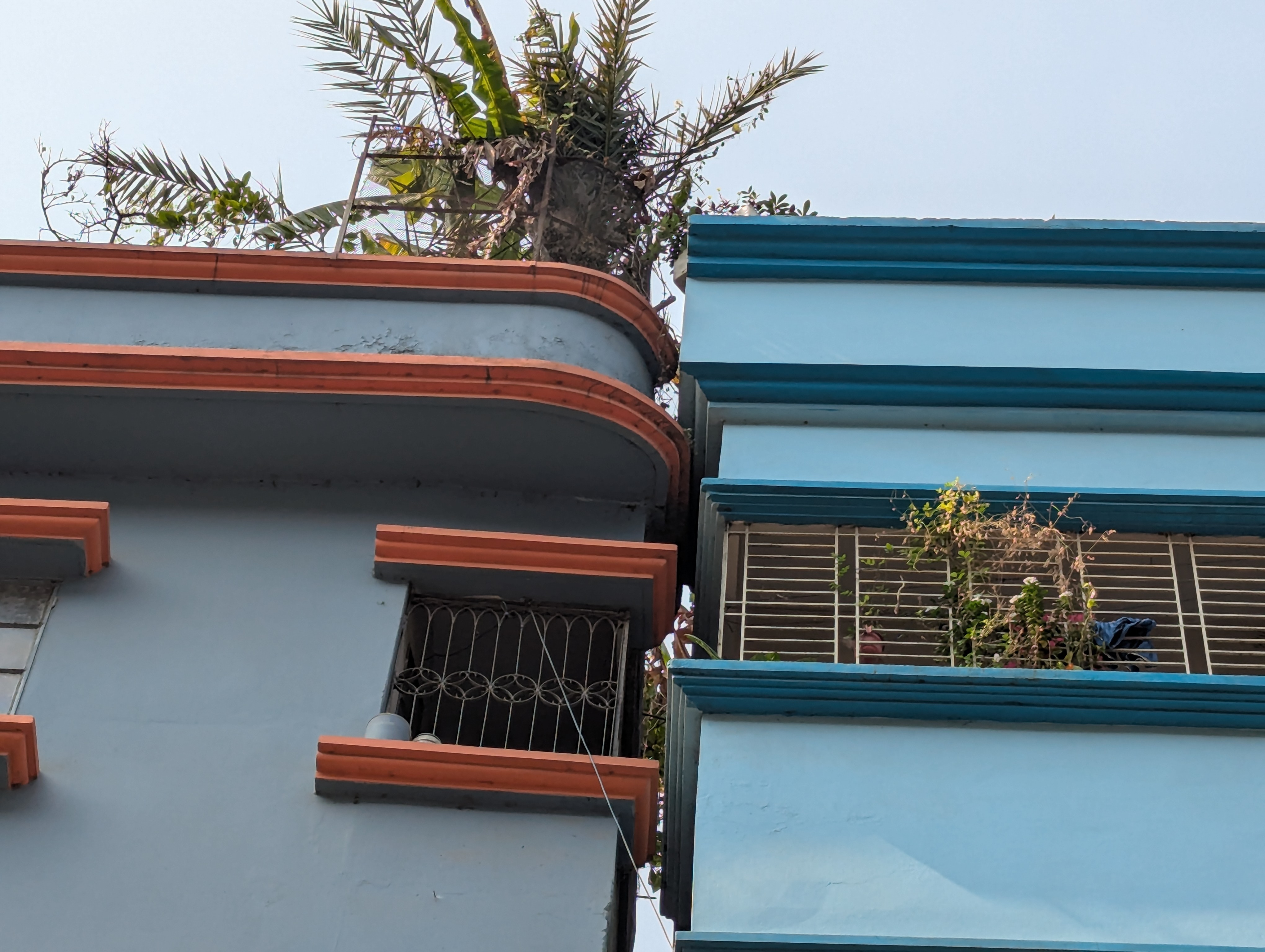
The institute is equipped with 25 categories of devices, including cyclic and universal testing machines, cross-hole and tri-axial systems, a terrestrial laser scanner, parallel seismic instruments, and a pile integrity tester. These tools can test soil strength, determine material quality, and even detect how many reinforcing bars were used in a building beam. Yet the facility remains locked and unused.
Former project director Abdul Latif Helaly said, “The assessment devices are fully ready. Once taken to a building, the scanners can detect the number of rods, strands and the concrete strength. Earlier, these tests had to be done manually at BUET.”
He stressed that approval is urgently needed to resume disaster-mitigation work.
Rajuk Chairman Reazul Islam said, “We are very positive about launching this institute. We sent a letter again recently seeking approval to start the institute.”
He added that the board of trustees has already been restructured and Rajuk will provide a cash fund to support operations.
The World Bank emphasised the importance of the project, noting that it aimed to strengthen emergency response capacity and advance disaster-resilient urban planning in Dhaka and Sylhet.
Swarna Kazi, senior disaster risk management specialist, said, “The project established Emergency Operations Centers, improved inter-agency coordination, and laid the groundwork for risk-sensitive land-use planning and electronic building permitting.”
 Work already done
As part of the project, Rajuk worked with six companies to assess 3,252 buildings belonging to schools, colleges, and hospitals. Demolition was recommended for 42 structures, while retrofitting designs for about 200 buildings have already been completed.
Adil Mohammed Khan said, “Such an institute is absolutely necessary. It would allow us to quickly identify vulnerable buildings. And with better knowledge about building conditions, public awareness would also increase.”
Bangladesh stands at a critical juncture. The absence of the BBRA and the delay in launching the USRI reflect a broader pattern of inertia in addressing building safety and disaster resilience. The risks are not hypothetical; they are real and immediate. Recent earthquakes have already claimed lives and damaged buildings, and scientific assessments warn of catastrophic losses in the event of a major quake.
The BNBC-2020 provides a robust framework for safe construction, but without enforcement, it remains little more than paper. The USRI offers advanced tools to assess vulnerabilities and guide retrofitting, but without approval, it remains idle. Together, these gaps leave the country dangerously exposed.
Calls for action
The path forward requires political will and administrative commitment. Establishing the BBRA must be prioritised, with clear authority and resources to enforce the building code nationwide. Launching the USRI must be expedited to ensure that its equipment and expertise are put to use.
Land-use planning, micro-zoning, and soil-sensitive development must be integrated into national policy. Bangladesh’s rapid urbanisation has created immense challenges, but it also offers an opportunity to build safer, more resilient cities.
The lessons of recent earthquakes must not be ignored. A comprehensive approach to building safety, combining regulation, enforcement, assessment, and planning, is essential to protect lives and infrastructure, said expressed.
Concrete steps include funding for nationwide inspections, certified training programs for masons and contractors, and a publicly accessible registry of building assessments. Priority must be given to retrofitting schools, hospitals and key infrastructure, with incentives for private owners to comply. Inter-ministerial coordination should establish clear timelines, monitoring, and transparent reporting of progress. International technical assistance and dedicated budget lines will accelerate implementation. Community engagement and awareness campaigns will ensure local buy-in and compliance. Regular audits, strict penalties for violations, and support for low-income households to upgrade unsafe homes are essential to translate policy into safer, resilient urban environments and oversight.
1. “The building code offers a life-saving system if implemented properly.” — Urban planner Mohammad Abu Sadeque 2. “A dedicated authority is essential because the building code, despite being robust, is barely enforced.” — Prof Mehedi Ahmed Ansary, BUET 3. “None of these mandatory steps are followed in Bangladesh.” — Prof Munaz Ahmed Noor, BUET 4. “Such an institute is absolutely necessary. It would allow us to quickly identify vulnerable buildings.” — Adil Mohammed Khan, Bangladesh Institute of Planners
Comments