


Growing up with a new nation: The Dhaka we once knew
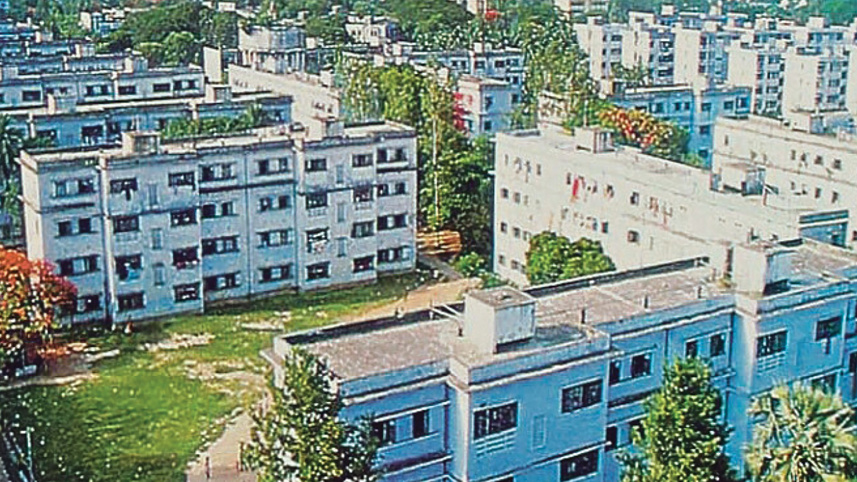
Children of 1972–73 came of age alongside Bangladesh itself. In Azimpur’s close‑knit colony, a telephone became a neighbourhood lifeline, television was a shared ritual, and the Buriganga was our afternoon escape.
There are generations whose childhoods are braided with the birth of a nation. Ours is one such cohort—those who walked into their first classrooms in 1972 and 1973, as Bangladesh itself took its first uncertain steps. We learned our lessons while the country learned to hope. The Dhaka of that time was not the relentless metropolis it is today; it was gentler, slower, a city that exhaled softly after dusk.

We lived in Azimpur government colony, in modest four‑storey blocks that housed more love than luxury. Everyone knew everyone else. Parents of our friends were our Khalus and Khalammas; seniors were boro bhais, juniors choto bhais. Doors were rarely shut, and an unexpected knock was never an intrusion. We belonged to one another—at iftar tables in Ramadan, around winter stoves, and in the shaded squares where conversations skipped easily between households.
Only one family in our building owned a Philips television, and it turned their drawing room into a small cultural centre. On broadcast evenings, neighbours drifted in, seniors settling on chairs, stools (back then sofas were a luxury) and we, kids, on floors. The shows that etched themselves into our minds were imported wonders: Star Trek,Voyage to the Bottom of the Sea, Batman, The Saint, The Persuaders, and Hawaii Five‑O. And how will I ever forget that wonderful children’s serial Double Decker! The glow of that black‑and‑white set was less about pixels and more about proximity—the community gathered shoulder to shoulder, sharing delight.
Our home was one of the few with a telephone—a heavy, black rotary device that rang for the entire block. Neighbours used it freely and gratefully, passing messages to cousins across town. We became both switchboards and messengers: “Khalamma, call asche!” we would shout, and someone would hurry over, sari rustling. Connectivity then was communal, not personal; a single number stitched a dozen families together.
Most of us attended West End High School. There were no uniforms in those days; we wore what our mothers pressed and our fathers approved. We did not carry schoolbags either. Instead, we clutched sturdy briefcases—often leather, sometimes tin—whose metal snaps clicked like small declarations of purpose. Our school did not boast vast playgrounds; a compact field served us well. When we needed space, Azimpur’s colony fields welcomed us with their forgiving grass and goalposts improvised from slippers.
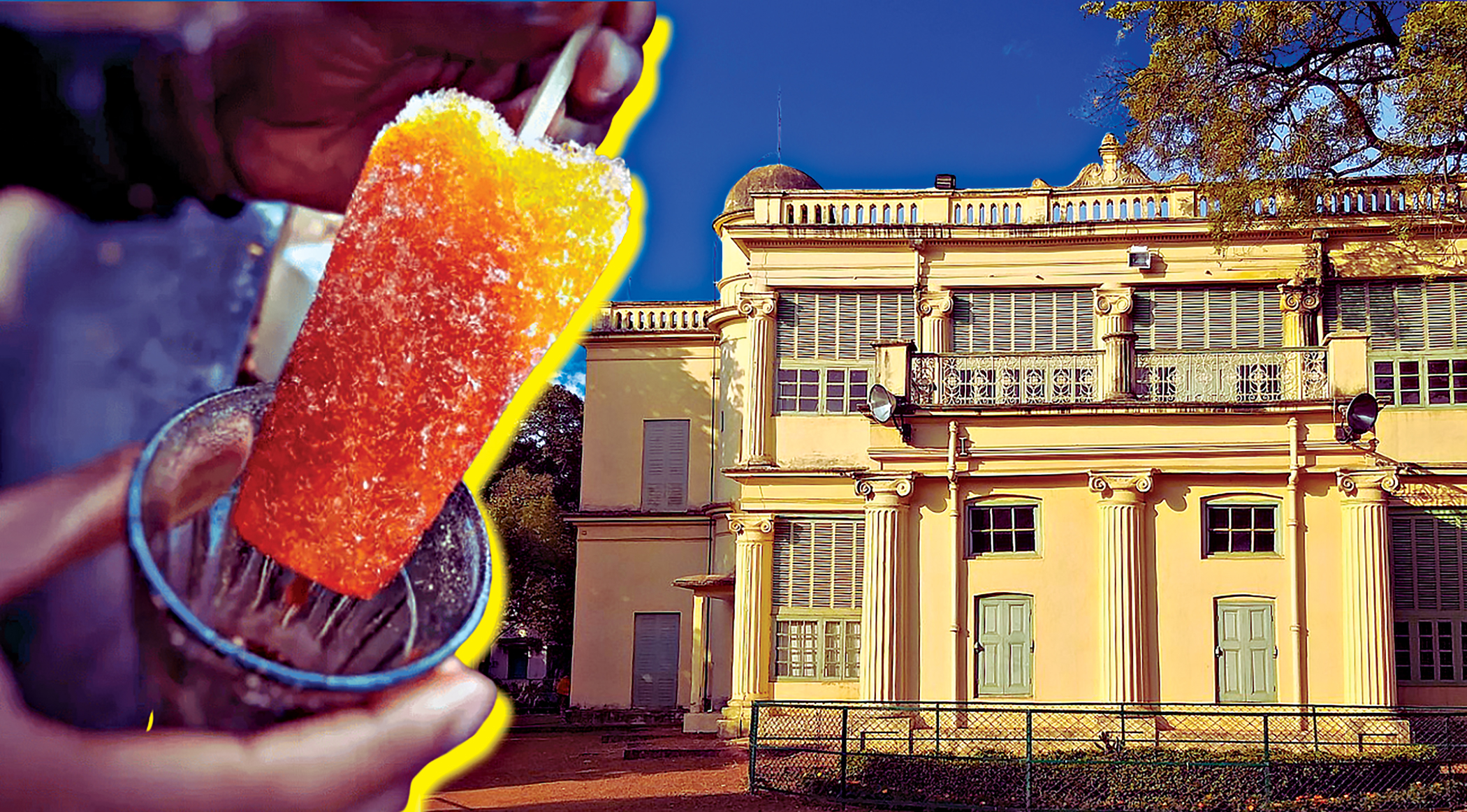
As Class-V students, we often made for the Buriganga after school, swimming in waters that were then clear and kind. We returned home in the early afternoon, washed off the river, and ate with the happy hunger that only childhood provides. Then came the wait—the delicious, fidgety hour before late‑afternoon games. Football in summer and rainy days; in winter, cricket, badminton, and volleyball. And always gollachut, daribandha, bouchi, race cue, and marbles, seasonless and timeless—games that asked little of money and everything of imagination.
Life in Azimpur moved to an internal rhythm—shaped by corridor conversations, stairwell secrets, and the comforting predictability of neighbours whose lives intertwined with ours daily. Parents discussed ration lines and rising hopes. Shared scarcity mingled with shared optimism, and somewhere in that mixture a neighbourhood identity formed: practical, resourceful, unafraid of inconvenience.
Mornings began with aluminium buckets clanging in impoverished kitchens. The milkman called out; the newspaper boy slipped Daily Ittefaq and/or Bangladesh Observer under hinged doors or tossing them expertly onto balconies. Before school we stopped by neighbours’ flats—sometimes to borrow a ruler or a fountain pen, sometimes because their breakfast smelled too good to ignore. The rituals were ordinary, but like beads on a tasbih they added up to something sacred: a sequence of small certainties that steadied our days.
Afternoons transformed the colony into a lively playground. Children spilled onto the fields behind the blocks, forming teams instantly. We lacked branded kits and level outfields but made up for them with invention. Older boys taught us how to float a slower ball from the back of the hand, how to bend a football barefoot, how to keep score with pebbles. When monsoon arrived, the fields flooded just enough to make football exhilarating—a festival of splashes, sliding tackles, and mothers shouting from balconies to mind our colds.
Winter brought badminton courts chalked on the ground, nets tied between bamboo‑posts, and the soft thwack of shuttlecocks slicing the crisp air. It also meant pitha‑sharing evenings—bhapa, patishapta, chitoi—sent across homes by children, sometimes squashed slightly on arrival but always warmly received. In those exchanges, we learned a politics more durable than any slogan: the civic grace of giving and receiving.
By sunset, shadows stretched long across the grounds. Radios played songs or the news, and yet most children lingered outside, squeezing in the last minutes of play before mothers called them in. Friendships deepened in the dimming light—between marbles, stories, and whispered plans for tomorrow. If a quarrel broke out, it rarely survived the promise of another game the next day.
The sounds of the city had their own calendar. Azan drifted from nearby mosques; hawkers announced puffed rice, eggs; the bell of “Baby” ice‑cream seller threaded through the lanes like a faint miracle. Some afternoons were scored by the hammering from a carpenter’s shed fixing tin briefcases; others by the clatter of typewriters from a neighbour. It was a chorus without a conductor, and yet everything felt in time.

If television gathered us in one room, radio united the whole neighbourhood. We waited eagerly for ‘Durbar’—a regular evening feature on Bangladesh Betar, officially meant for our Sainik bhais, somehow spoke to us all. Its rhythm was comforting, its company assured. The news bulletins seemed weightier then, perhaps because our elders listened with the alertness of people determined to rebuild. We inherited that alertness without quite knowing it.
Dhaka in those years slept early and woke gently. Nights were darker, stars brighter. A rickshaw’s bell travelled farther, and a goodnight felt like a small benediction offered across a landing. In the decades since, the four‑storey blocks of our childhood have been replaced by multi‑storey buildings, and Azimpur’s playgrounds have thinned out, pressed hard by concrete and necessity. The city has grown restless, resourceful, dazzling—and yet, every so often, the old pace returns in memory, like a river glimpsed between buildings.
That is perhaps the heart of magic: the 1970s Dhaka we knew asked us to belong before it asked us to achieve. We learned courtesy from shared phones, patience from ration queues, cooperation from stitched‑together footballs, and courage from river currents that were clear enough to trust. None of this was grand, but all of it was formative. It made us citizens before we learned to be consumers.
What made Dhaka magical then was not abundance but closeness—the generous sense of belonging that turned neighbours into kin and a river into our playground.
Ahmed Ahsanuzzaman is professor of English at Independent University, Bangladesh (IUB). He can be reached at ahsanuzzaman@iub.edu.bd.
 For all latest news, follow The Daily Star's Google News channel.
Comments