


A new kind of hospital in China is combining AI, cancer care, and global services

In recent years, patients from Bangladesh seeking advanced medical treatment have often looked towards countries such as Singapore, Thailand, or India. But China is increasingly positioning itself as another major destination for specialised healthcare — particularly in cancer treatment, precision medicine, and AI-driven diagnostics.
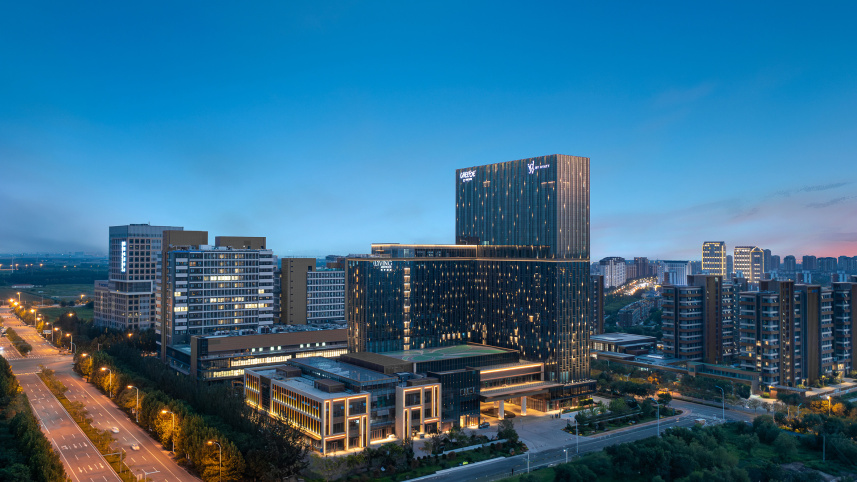
At the centre of this growing ambition is Perennial Healthcare City Tianjin, a newly launched medical complex in northern China that combines hospital services, rehabilitation, elderly care, and hospitality under one integrated system. During a recent visit and interview with the hospital’s leadership team, officials described a healthcare model they believe represents the future of patient-centred medicine.

Unlike many traditional Chinese hospitals, the institution says it follows a healthcare model inspired by hospitals in Singapore, Britain, and the United States. Officials repeatedly stressed that the hospital was designed around patient convenience, multidisciplinary care, and international standards.
One of the hospital’s most distinctive features is its international structure. According to hospital representatives, it is among the first wholly foreign-owned hospitals operating in China’s newly liberalised healthcare market and is managed by a Singaporean team working alongside Chinese medical professionals.
The leadership team said China’s rapid technological advancement in healthcare has significantly narrowed the gap with Western countries. “China’s medical technology is very developed now. It may be neck and neck with the United States,” one official said during the discussion.
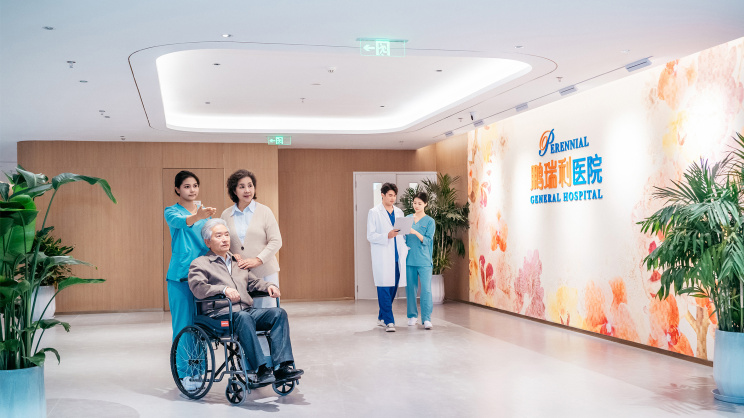
Cancer care appears to be one of the hospital’s major priorities. The institution provides multidisciplinary treatment for a wide range of cancers, including lung cancer, breast cancer, blood cancers such as multiple myeloma, and pancreatic cancer. The approach combines surgery, radiation oncology, imaging, interventional medicine, nuclear medicine, and internal medicine under one coordinated system.
Hospital officials placed particular emphasis on the growing role of artificial intelligence in early cancer detection. In lung cancer, for example, they said AI-assisted analysis is being used to improve the identification of pulmonary nodules — tiny abnormalities in the lungs that may indicate early cancer. Combined with genetic and cellular diagnostic techniques, the hospital claims this approach can significantly improve early detection rates.
The discussion also touched on pancreatic cancer, often described by doctors as one of the deadliest cancers because it is usually detected late. Officials said they are exploring technologies such as methylation screening and cell-based diagnostics to identify pancreatic cancer earlier, potentially improving survival outcomes.
Another major focus is precision oncology — tailoring treatment according to the genetic profile of a patient’s tumour. Hospital representatives explained that genetic testing and molecular analysis are increasingly being used to determine which targeted therapies may work best for individual patients.
The hospital also described how advanced radiation therapy technologies, including intensity-modulated radiotherapy and proton therapy, are becoming part of modern cancer treatment strategies in China.
One of the most closely watched areas in modern oncology is cell therapy, including CAR-T therapy, which modifies immune cells to attack cancer. Hospital officials acknowledged both the promise and risks of these treatments. They explained that cell therapies require extremely strict monitoring because severe inflammatory reactions can affect organs such as the lungs, heart, and brain. As a result, such therapies are carried out only in highly specialised centres with intensive care support.
Beyond technology, the hospital is also trying to compete through service design. Officials said international patients receive multilingual support, online consultations before arrival, assistance with visas and travel documentation, airport transfers, accommodation support, and dedicated service coordinators who guide patients and families throughout the treatment journey.
The scale of the project is also striking. The medical complex currently includes a 500-bed hospital, a hotel with around 1,000 guest rooms, and an elderly care community with approximately 1,800 beds.
Officials were careful not to market the institution as a “cheap” alternative to other international destinations. Instead, they argued that their advantage lies in combining high-quality Chinese medical expertise with coordinated multidisciplinary care and transparent pricing.
Another aspect repeatedly highlighted during the discussion was China’s longstanding practice of combining Western medicine with Traditional Chinese Medicine (TCM). Hospital representatives said most Chinese doctors are trained primarily in Western medicine, while a smaller proportion also receive training in traditional Chinese therapies. According to them, integrating both systems can sometimes improve rehabilitation and supportive care outcomes.
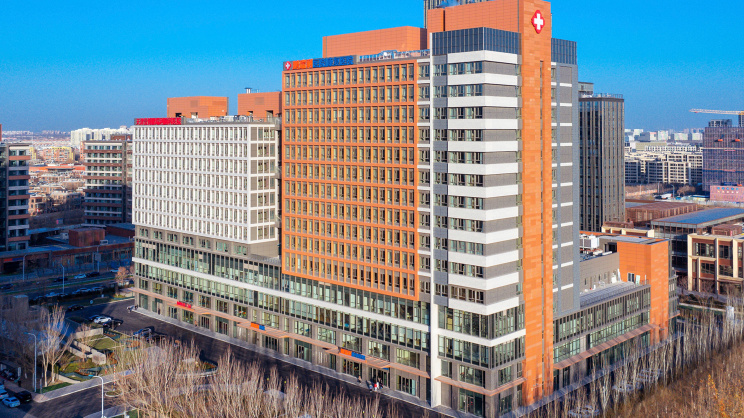
For patients from Bangladesh, however, distance remains a practical concern. Officials acknowledged that Tianjin is geographically far from South Asia but argued that patients seeking highly specialised treatment often prioritise expertise and outcomes over travel inconvenience. They also pointed out that the Perennial network operates across multiple Chinese cities, allowing patients to access coordinated services through different locations.
China’s healthcare system may still be relatively unfamiliar territory for many Bangladeshi patients. Yet institutions like Perennial Healthcare City Tianjin appear eager to change that perception — positioning themselves as technologically advanced, internationally connected, and increasingly patient-focused.
As global healthcare becomes more interconnected, China may soon emerge not only as a manufacturing and technological powerhouse, but also as a serious player in the rapidly evolving world of international medical care.
 For all latest news, follow The Daily Star's Google News channel.
Comments