


‘We do feel for Bangladesh’: Scotland name squad after unlikely call-up
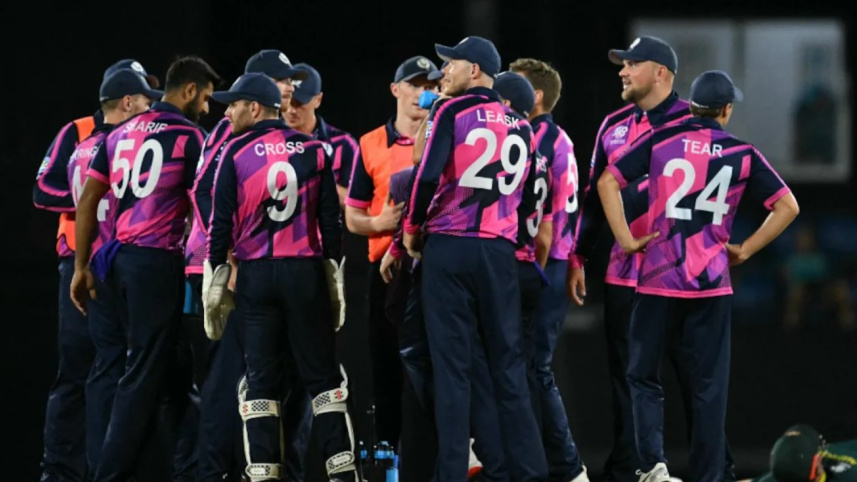
When Trudy Lindblade, the chief executive of Cricket Scotland, said, “We do feel for the Bangladesh team,” her words captured both empathy and the strange, sudden opportunity now facing Scottish cricket.
Scotland’s invitation to the T20 World Cup came not through qualification, but through extraordinary circumstances—Bangladesh’s last-minute withdrawal after the ICC refused to shift their fixtures out of India. For Scotland, it was a lifeline. For Bangladesh, it was heartbreak.

The news arrived late on Saturday, catching Cricket Scotland off guard. Defeats to Italy and Jersey at the Europe Regional Final had ended their World Cup hopes months earlier. Now, as the highest-ranked team not already qualified, Scotland were offered a place at the tournament. “This is not how we wanted to go to a World Cup,” Lindblade admitted.
“There is a qualification process, and nobody wants to be invited in this way. We acknowledge it’s unique circumstances, and we do feel for the Bangladesh players.”
The scramble that followed was intense. Within 48 hours, Cricket Scotland had to assemble a 15-man squad, arrange travel, and begin the complex visa process for India. The uncertainty surrounding Indian visas—particularly for players with Pakistani heritage—loomed large, especially for fast bowler Safyaan Sharif, born in Huddersfield to Pakistani parents and raised in Scotland from the age of seven.
Cricket Scotland received assurances from the ICC that a team was working “very, very hard” to ensure visas would be granted in time. Lindblade described the process as an “unknown,” regardless of how much notice a team receives. Head of performance Steve Snell praised the ICC’s support and expressed confidence that Scotland would reach India, noting that it would reflect poorly on global cricket if an invited team could not enter the host country.
Despite the chaos, Scotland announced a squad blending experience and fresh promise. Richie Berrington will captain the side, joined by familiar faces such as George Munsey, Mark Watt, and Safyaan Sharif. Tom Bruce, a former New Zealand international who switched allegiance to Scotland, and 19-year-old Afghanistan-born fast bowler Zainullah Ihsan headline the new inclusions. Ihsan, the only uncapped player, has impressed at youth and ‘A’ level and now stands on the brink of an international debut.
Notable absentees include express pacer Chris Sole, who has stepped away from professional cricket, and Scott Currie, now ineligible after being selected by England. The squad is supported by two travelling reserves and three non-travelling reserves, ensuring Scotland can field a team even if visa delays occur.
Preparation time is limited. Warm-up matches against Afghanistan and Namibia in Bengaluru on February 2 and 4 offer rare opportunities to adapt before the opening fixture against West Indies at Eden Gardens on February 7. Scotland’s group also includes England, Italy, and Nepal, with the top two teams advancing to the Super 8s.
Steve Snell believes Scotland can compete despite being underdogs. “The pressure will be on the other teams,” he said, “because they’ve had all this preparation time.” New head coach Owen Dawkins echoed that sentiment, calling the past 48 hours a “whirlwind” but expressing confidence that Scotland’s players can make an impact.
This is not the first time Scotland have entered a World Cup late. In 2009, they replaced Zimbabwe under similar circumstances. History, it seems, has repeated itself.
Yet, amid the urgency and excitement, Cricket Scotland has not forgotten the human cost of this opportunity. “We certainly have for the Bangladesh team,” Lindblade reiterated. In a sport defined by competition, Scotland’s World Cup journey now begins with compassion—an acknowledgment that their chance was born from another team’s loss, and a resolve to honor that opportunity with respect, humility, and fierce determination.
 For all latest news, follow The Daily Star's Google News channel.
Comments