


Reading a 19-year landscape

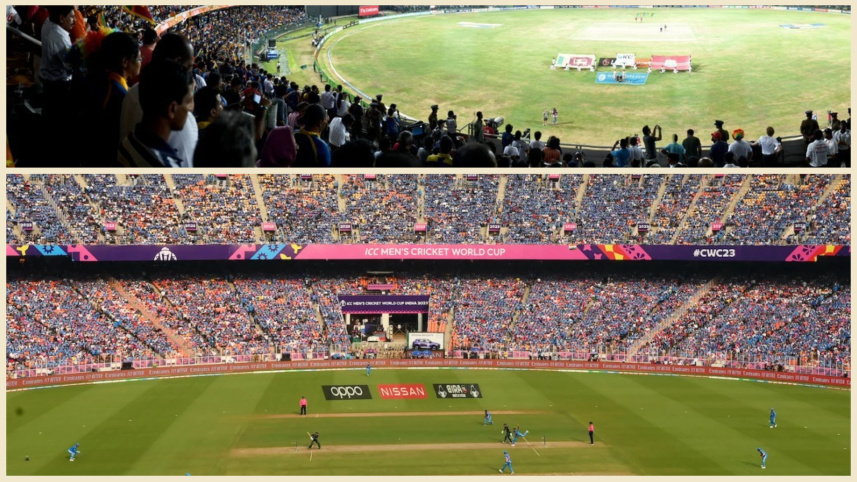
Cricket in the subcontinent carries an intensity that extends beyond the field. The game is shaped by conditions, crowd pressure and context, all of which influence how tournaments unfold. As the ICC Men’s T20 World Cup approaches its tenth edition, the contrast between events staged in Asia and those held elsewhere remains a recurring point of analysis.
With India and Sri Lanka set to co-host the 2026 edition, that contrast is back in focus.

Since its launch in 2007, the T20 World Cup has become a fixed part of the global calendar. Unlike the ODI World Cup’s four-year cycle, the shortest format’s flagship event has appeared as often as two years, reflecting its adaptability and commercial reach.
Across nine editions, hosting duties have been shared almost evenly. Five tournaments have been staged outside Asia and four within it. When the 2026 edition begins, that balance will be level.
While T20 cricket was initially viewed as a novelty -- entertaining, but secondary -- its rapid professionalisation has reshaped the sport’s priorities. The subcontinent, in particular, has emerged as a central hub for the format’s growth.
Conditions and adaptation
For years, the distinction between Asian and non-Asian venues appeared clear. Slower pitches and spin-friendly surfaces in the subcontinent contrasted with pace and bounce elsewhere. Modern T20 cricket has narrowed that gap.
The expansion of franchise leagues has produced players accustomed to varied conditions. Batters now prepare for both grip and bounce, while bowlers rely increasingly on variations rather than surface assistance. As a result, traditional assumptions about home advantage have weakened.
Tournament results underline this shift. Of the four T20 World Cups held in Asia, only one was won by an Asian team -- Sri Lanka in Bangladesh in 2014. India’s titles in 2007 and 2024 both came away from home, while Pakistan lifted the trophy in England in 2009.
Non-Asian teams have also adapted effectively in Asia. West Indies and Australia have won titles by leaning on pace options, athletic fielding and aggressive batting, rather than attempting to replicate traditional tactics.
Patterns under pressure
Asian teams have won four of the nine T20 World Cups to date, with non-Asian sides claiming the remaining five. On the surface, the split suggests balance. Over time, however, a different pattern emerges.
Following Sri Lanka’s 2014 triumph, Asian teams endured a lengthy title drought despite regularly advancing deep into tournaments. Knockout matches often highlighted familiar issues: cautious decision-making, reliance on top-order batting and limited flexibility under pressure.
By contrast, teams such as England, Australia and West Indies have consistently shown greater adaptability in high-stakes matches. Defined roles, deeper bowling resources and sharper fielding units have repeatedly proved decisive in tournaments held outside the subcontinent.
In a format decided by narrow margins, execution under pressure has mattered as much as conditions.
Context beyond the field
The most visible contrast between Asian and non-Asian tournaments often lies off the pitch. World Cups staged in England, Australia or South Africa tend to progress with limited administrative noise. In the subcontinent, major events are frequently accompanied by political and logistical debates that shape the build-up.
Cricket in South Asia remains closely tied to national identity, and scheduling or venue decisions can dominate pre-tournament narratives. Once the tournament begins, however, those factors usually fade.
History suggests that success in the T20 World Cup is determined less by location than by preparation, adaptability and composure. In 2026, amid the intensity that defines cricket in Asia, those qualities are likely to remain decisive.
 For all latest news, follow The Daily Star's Google News channel.
Comments