


Zidane's final act

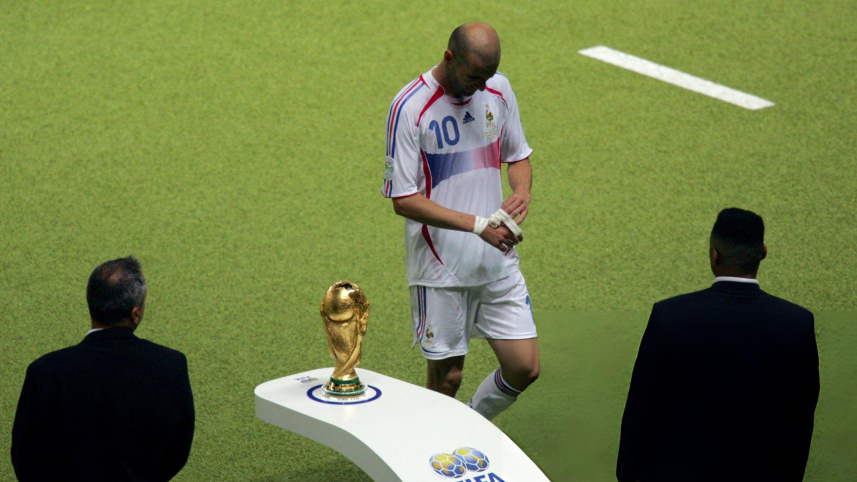
Like the heroes of ancient Greek tragedies -- triumphant, revered, yet ultimately undone by a single moment of human weakness -- the night of July 9, 2006 at Berlin’s Olympic Stadium felt like a modern retelling of a timeless drama. And at the centre of it stood one man: Zinedine Zidane, both the story’s unrivalled hero and its tragic villain.
The tale had begun two years earlier.

After the disappointment of the 2004 European Cup where France lost to Greece in the quarters, Zidane had stepped away from international football, exhausted and seemingly finished with the French national team. Without their talisman, France drifted dangerously in 2006 FIFA World Cup qualification, their hopes of reaching the tournament hanging by a thread.
Then came the extraordinary twist.
On a summer night in 2005, Zidane announced his return. He spoke of waking from sleep after hearing a mysterious voice urging him to come back and help his country. For a nation standing on the brink of failure, the message felt almost divine. France’s greatest son returned from retirement like a phoenix rising from the ashes, carrying a struggling team through qualification and onto the grandest stage.
The stage was the 2006 FIFA World Cup, and Zidane was 34.
Critics whispered that age might have dulled the magician’s wand. But once the knockout stage began, the world witnessed something extraordinary. Zidane was not merely playing football; he seemed to be composing poetry with every touch.
In the round of 16 against Spain, his control and elegance mesmerised spectators. Yet the true symphony arrived in the quarterfinal against the star-studded Brazil national football team. With legends like Ronaldo, Ronaldinho, Kaka, and Cafu on the pitch, Brazil seemed destined to dominate.
Instead, they were hypnotised by Zidane.
Every pass, every pirouette, every caress of the ball resembled the final masterpiece of a great artist. France moved on. In the semifinal against Portugal, Zidane calmly converted a penalty to send France national football team into the final. The world waited for the fairytale ending.
Berlin awaited.
The opponent was the formidable Italy. Just seven minutes into the final, France were awarded a penalty. Standing before him was the world’s best goalkeeper, Gianluigi Buffon.
In that moment of unbearable pressure, Zidane produced something audacious -- perhaps arrogance, perhaps art. He delicately chipped a Panenka penalty. The ball kissed the crossbar and bounced over the line. In a World Cup final, against a goalkeeper like Buffon, such nerve seemed almost superhuman.
But fate was quietly preparing its twist.
The match drifted into extra time. Fatigue gripped the players as the clock ticked towards the 110th minute. Then came one of the most shocking moments in football history.
After Gennaro Gattuso cleared the ball away, Zidane and Marco Materazzi jogged back towards midfield, exchanging words. Nothing appeared unusual. Zidane even seemed to smile.
Then, in a heartbeat, everything changed.
Zidane stopped, turned around, planted his golden boots firmly on the grass, lowered his head and drove it violently into Materazzi’s chest. The Italian defender collapsed onto the Berlin turf.
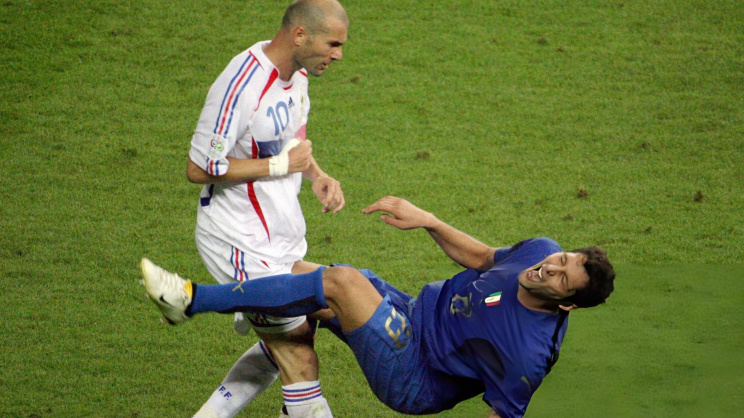
The stadium was strangely calm.
Many players and the referee had been following the ball and missed the incident entirely.
Zidane stood alone, isolated. Only Buffon rushed forward in protest toward the linesman, while Gattuso approached as well -- unusually composed.
 For all latest news, follow The Daily Star's Google News channel.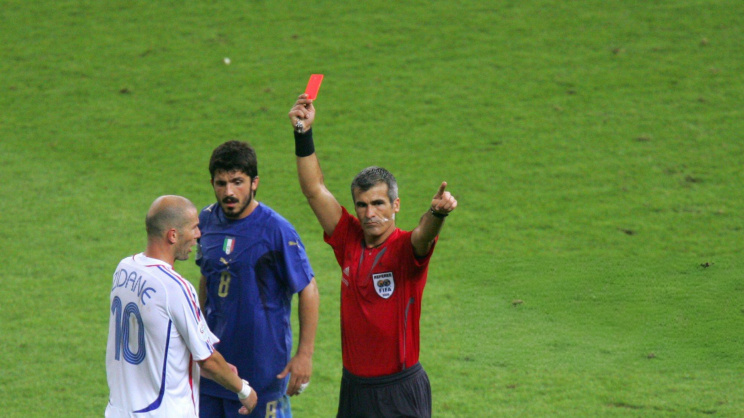
Moments later, referee Horacio Elizondo arrived and raised the inevitable red card. The magician’s final spell ended in a devastating fall. And then came the most haunting image of all.
Zidane walked off the field, the stadium lights reflecting off his bald head while his face remained buried in shadow. Near the entrance to the tunnel stood the golden FIFA World Cup Trophy -- the prize he had returned from retirement to win one last time. He walked past it without a glance.
The trophy remained still, gleaming in the light, while the emperor ignored it and disappeared into the darkness. In that single frame lived the full contradiction of human greatness -- towering genius, immense pride, and a heartbreaking moment of weakness.
Comments