


Shocking stories of those who said no to the World Cup
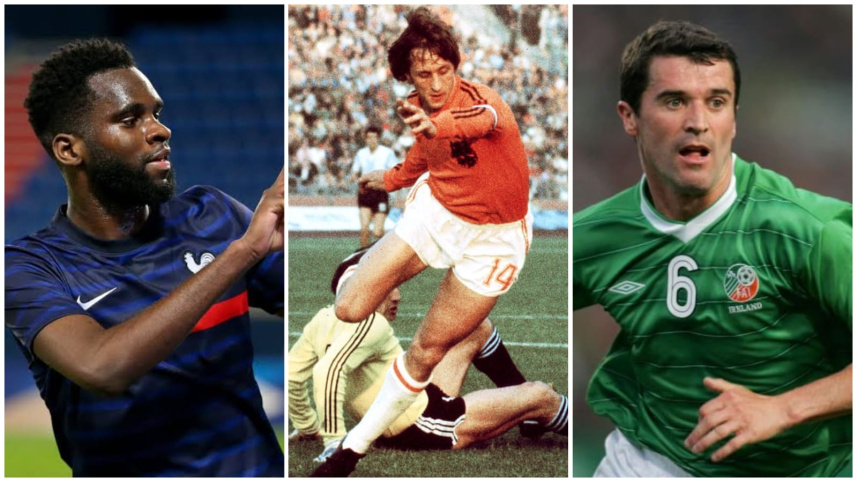
The FIFA World Cup is football’s grandest stage. Every four years, when the world's biggest sporting spectacle returns, even the game's greatest stars are willing to push themselves to the limit for a place in their national squad.
Tears from players ruled out by injury on the eve of the tournament have become a familiar image in football. Yet across nearly a century of World Cup history, there have also been players whose absence stemmed not from form or fitness, but from psychological scars, uncompromising principles, clashes of ideology, stubbornness, or extraordinary personal choices. Some were indispensable figures for their countries, yet never made it onto football’s biggest stage when the moment arrived.

As excitement builds ahead of the 2026 World Cup, history offers a fascinating collection of such stories. For some, it was family trauma; for others, conflict with a coach. In certain cases, cruel injuries intervened at the worst possible time, while one player turned down the dream of a World Cup out of sheer sporting integrity.
Here are six of the most remarkable World Cup absences football has ever witnessed:
Johan Cruyff (1978)
The 1978 World Cup in Argentina was missing one man everyone expected to see: Dutch football's greatest icon, Johan Cruyff.
When Cruyff did not board the plane to Buenos Aires, the football world was stunned. A political explanation quickly took hold. Many believed he had boycotted the tournament in protest against Argentina's military dictatorship, then under the rule of the junta.
For more than three decades, that theory endured.
Then, in 2008, Cruyff finally revealed the real reason.
In an interview, he disclosed that only months before the World Cup, he and his family had been victims of a terrifying robbery and kidnapping attempt at their home in Barcelona. Armed criminals tied up Cruyff and his wife and reportedly held rifles to their heads in front of their children.
The trauma left deep scars. Cruyff said he was simply not in the mental state to leave his family behind and travel thousands of miles away to play football.
"There are moments in life when other values become more important," he explained. "We wanted to end that situation and be a little wiser. It was time to stop playing football, and after what happened, it was impossible for me to play in the World Cup."
Ruud Gullit (1994)
Just three weeks before the 1994 World Cup in the United States, Dutch legend Ruud Gullit had finally returned to the national team after a self-imposed 13-month exile. He even played 45 minutes in a warm-up match against Scotland.
Then, suddenly, he walked out of the team's training camp.
The reason was a fundamental disagreement with coach Dick Advocaat. Advocaat intended to deploy Gullit on the right side of midfield, a role the Euro 1988-winning captain felt contradicted his attacking football philosophy.
Rather than compromise his footballing identity or accept the coach's tactical vision, Gullit chose to walk away from what would have been his final World Cup.
His farewell message was brief but unmistakable:
"This is the end of my career with the Dutch national team."
Roy Keane (2002)
Few World Cup controversies are as infamous as the "Saipan Incident" involving Roy Keane ahead of the 2002 World Cup in South Korea and Japan.
Ireland's captain and Manchester United midfield general was renowned for his uncompromising professionalism. Upon arriving at the team's training camp on the Pacific island of Saipan, Keane became furious at what he considered inadequate preparations.
He criticised the quality of the training facilities, claiming the hard, rocky pitches posed a danger to players.
 For all latest news, follow The Daily Star's Google News channel.
 Tensions escalated into a fierce confrontation with Ireland manager Mick McCarthy. During a team meeting, the dispute exploded in front of the entire squad.
Accounts of the confrontation quote Keane as telling McCarthy: "As a player I wouldn't rate you. As a manager I don't rate you. And as a person I don't like you."
The fallout was immediate. Before the tournament even began, Ireland sent their captain home.
One of the finest players in Irish football history missed the World Cup because neither side was willing to back down.
Nikola Kalinic (2018)
Croatia's remarkable run to the 2018 World Cup final remains one of football's great modern stories. Hidden behind that fairytale, however, was the saga of striker Nikola Kalinic.
During Croatia's opening match against Nigeria, coach Zlatko Dalic wanted to introduce Kalinic as a late substitute. Frustrated at not being included in the starting lineup, the striker refused to enter the field, citing a back injury.
Dalic was unmoved.
Accusing Kalinic of breaching team discipline, the coach expelled him from the squad and sent him home midway through the tournament.
Croatia eventually reached the final and finished as runners-up. The Croatian Football Federation later offered Kalinic a silver medal, but he declined.
His response was characteristically blunt:
"Thanks for the medal, but I didn't play in Russia."
Ben White (2026)
The story of Ben White is one of stubbornness, pride and cruel misfortune.
During the 2022 World Cup in Qatar, White left the England camp midway through the tournament following reports of tensions with a member of the coaching staff. Over the next four years, he repeatedly turned down opportunities to return to the national team.
Throughout the reign of coach Gareth Southgate, White consistently prioritised his personal life and time away from football over representing England.
The impasse finally ended when Thomas Tuchel took charge of England ahead of the 2026 World Cup. White accepted Tuchel's call-up and returned to the national team in March. He marked his comeback with a goal against Uruguay and also featured against Japan.
Just as he appeared set to board the plane for America, fate intervened.
In May, White suffered a serious ligament injury during a match against West Ham United. The setback ruled him out for the remainder of the season and ultimately cost him a place in England's 2026 World Cup squad.
After years of saying "no" to the national team, White was finally denied the World Cup by circumstances beyond his control.
Odsonne Edouard (2026)
The most recent story on this list belongs to striker Odsonne Edouard, and it is perhaps the most remarkable of all.
A standout performer for France's Under-21 side, Edouard found himself unable to break into the senior national team. Ahead of the 2026 World Cup, however, another opportunity emerged.
Because his parents are Haitian citizens, the Haiti Football Federation -- having qualified for the World Cup for the first time in 52 years -- approached him about switching allegiance. He could have become a key figure in Haiti's attack during group-stage matches against Brazil, Morocco and Scotland.
Many players would seize such a chance without hesitation.
Edouard chose differently.
His reasoning was neither emotional nor sentimental. Instead, it reflected a rare sense of sporting honesty.
While countless footballers dream of playing even a single World Cup match, Edouard recently explained why he declined the offer:
"No, I couldn't find any logical reason to play in this World Cup. Other players fought through the qualifiers to earn that place. I can't arrive at the last moment and take advantage of the opportunity. If I'm going to play there, I have to earn it."
In an era when reaching the World Cup is often considered the ultimate prize, Edouard's decision served as a powerful reminder that, for some players, principles still matter as much as glory.
Comments