


VAR heartbreak for Iran: Why Shoja Khalilzadeh’s late winner was disallowed
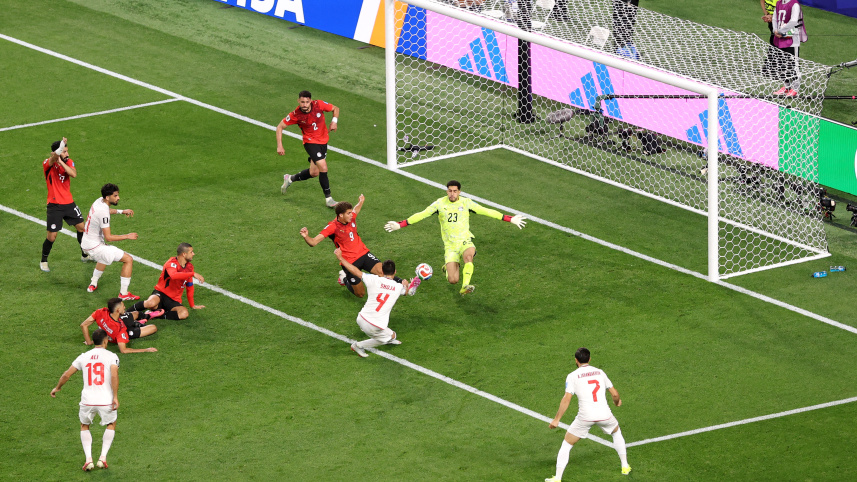
Absolute ecstasy turned to devastating heartbreak for Iran deep into stoppage time at Seattle Stadium, as a 93rd-minute potential match-winner from Shoja Khalilzadeh was dramatically ruled out by VAR against Egypt on Saturday. The decision left the match locked in a 1-1 draw, sending Egypt through to the Round of 32 and leaving Iran's World Cup fate hanging in the balance.
The stadium exploded when Khalilzadeh slammed home a loose rebound following a chaotic set-piece scramble. The veteran defender removed his shirt in celebration, picking up a caution in the process.

However, the celebrations were short-lived as Polish referee Szymon Marciniak was called to review the build-up.
Anatomy of the Offside Call
The key to understanding the decision is that offside is strictly judged at the exact microsecond a ball is played or flicked by a teammate, not when the final shot is taken. According to the official FIFA Law 11, "the timing of the offside is judged at the first point of contact of the play or touch by a teammate."
As seen during the gameplay, the drama began when a deep, high free-kick was floated into the Egyptian box. As the ball dropped, an Iranian player jumped high in the center of the penalty area to challenge the goalkeeper, getting a vital aerial touch that flicked the ball deeper into the six-yard box.
At that precise split second of the flick-on, the offside line was set.
While Egypt’s defensive unit had pushed higher up to clear the initial line of delivery, two Iranian attackers had already drifted past the second-to-last defender, standing right on the doorstep of the goal in an offside position.
Although simply standing in an advanced position is not an offense, it became an infraction the moment the ball entered their path.
FIFA’s rulebook dictates that a player in an offside position is penalised upon "becoming involved in active play by challenging an opponent for the ball or making an obvious action which clearly impacts on the ability of an opponent to play the ball."
Those offside attackers immediately became active participants, engaging in a frantic scramble that directly impacted the Egyptian defense and prevented a clean clearance.
Under FIFA's Law 11, because an offside player gained an unfair advantage by initiating that secondary goal-line chaos, the phase of play was corrupted from its very inception. Consequently, the referee had no choice but to disallow Khalilzadeh's subsequent low finish.
 For all latest news, follow The Daily Star's Google News channel.
Comments