


One mistake, six bullets and the lament of a stunned nation

Colombia. A country in Latin America where the aroma of coffee mingles with the acrid smell of gunpowder in every breath of air. There, football is not merely 22 players chasing a ball; it is an ancient religion, a ferocious obsession.
In the early 1990s, Colombia stood at a strange crossroads -- on one side the reign of terror of drug lord Pablo Escobar, on the other the magical rise of the national football team. At the heart of that rise was a tall, gentle young man: Andres Escobar, known across the football world as El Caballero del Futbol -- the Gentleman of Football.

But fate had a cruel irony in store; that very gentleman would write one of the darkest and most tragic chapters in football history with his own blood.
The expectations of Colombians ahead of the 1994 World Cup had climbed to its peak. The foundation for that hope had been laid a year earlier, on September 5, 1993, when Colombia faced Argentina at Buenos Aires’ Monumental Stadium. What unfolded that day was nothing short of magical. Colombia crushed Argentina 5–0, with the flowing golden curls of Carlos Valderrama and the explosive pace of Faustino Asprilla tearing through the Argentine defence.
After that victory, Pele himself predicted that Colombia would win the 1994 World Cup. After such a dominant qualifying campaign, the entire nation fell into a trance of belief. People began to think that the golden trophy could wash away the stigma of civil war and drug cartels that had long shadowed their country. Guarding the defence through it all was Escobar, a symbol of reliability. His elegance and humility both on and off the pitch made him a national hero.
June 22, 1994.
The Rose Bowl in Pasadena, California. The scorching sun burned the field, and the Colombian players felt the heat of pressure even more. Having already lost their opening match to Romania, they were on the brink of elimination. To make matters worse, threats from drug mafias and gamblers loomed. News circulated in the dressing room that if they lost, harm could come to their families. Under such suffocating tension, Colombia faced the host nation, the United States.
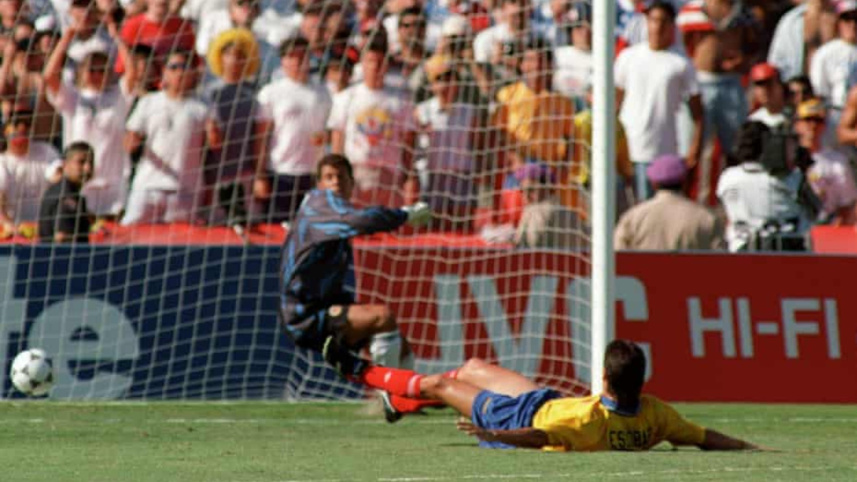
The 35th minute of the match. U.S. midfielder John Harkes delivered a cross into Colombia’s penalty box from the left. Escobar, the final line of defence, slid in to clear the ball. But in a fraction of a second disaster struck. The ball deflected off his boot, wrong-footed goalkeeper Oscar Cordoba, and rolled into Colombia’s own net. A devastating own goal.
Escobar collapsed onto the field, covering his face with his hands. The helpless look captured by the cameras seemed almost like a dark omen. In the stands, his young nephew asked his mother -- Escobar’s sister, “Mom, will they kill Andres now?” She replied, “No, son. Colombians are not that cruel.”
She did not know that in the dark alleys of Medellin, the executioner’s blade was already being sharpened.
Colombia exited the tournament in the group stage. While the team returned home shattered with fear, Escobar showed remarkable courage and honesty by returning to Medellín. He could easily have stayed abroad -- major European clubs, including AC Milan, were reportedly interested in him --but he wanted to face his people.
July 2, 1994.
Late that night, Escobar went out with friends to a nightclub called El Indio in Medellin, hoping to escape the sorrow that hung over him. Also present there were the notorious mafia brothers Pedro and Juan Gallon, who had lost huge sums of money betting on Colombia’s defeat against the United States.
Inside the club, they repeatedly mocked Escobar, hurling insults about that own goal. To avoid confrontation, around 3 a.m. Escobar left the club and sat in his car in the parking lot. He simply rolled down the window and calmly tried to explain to the Gallon brothers that the goal had not been intentional -- it had been an unfortunate accident on the field.
But logic meant nothing to men consumed by arrogance and rage. Their bodyguard, Humberto Munoz Castro, approached swiftly. Without a word, he pulled a 0.38-calibre revolver from his pocket and aimed it at Escobar.
The silent night was torn apart by gunfire.
Once.
Twice.
Three times.
Four times.
Five times.
Six times.
Six burning bullets pierced Escobar’s body. Blood flowed across the asphalt streets of Medellin. Just 45 minutes after reaching the hospital, Andres Escobar slipped into eternal silence.
Witnesses later said that with every shot, the killer shouted “Goooooooal!” in a grotesque imitation of South American football commentators.
 For all latest news, follow The Daily Star's Google News channel.
 The word became the most cruel irony in football history.
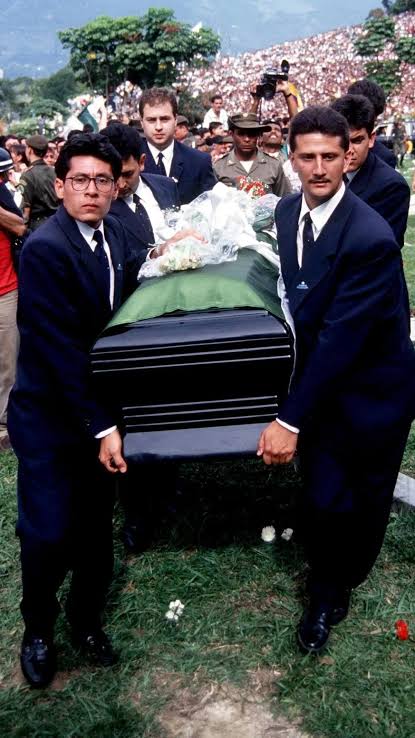
At his funeral, more than 100,000 mourners flooded the streets of Medellin. It was not merely the farewell of a footballer -- it was the collective cry of a grieving nation.
Even today, when the wind blows across the Rose Bowl in Pasadena, it sometimes feels as if that tall defender is still standing there. A man whose single mistake condemned him to immortality in tragedy—and whose blood remains etched into football’s green fields as an everlasting tale of sorrow.
Comments