


Nightmare in broad daylight
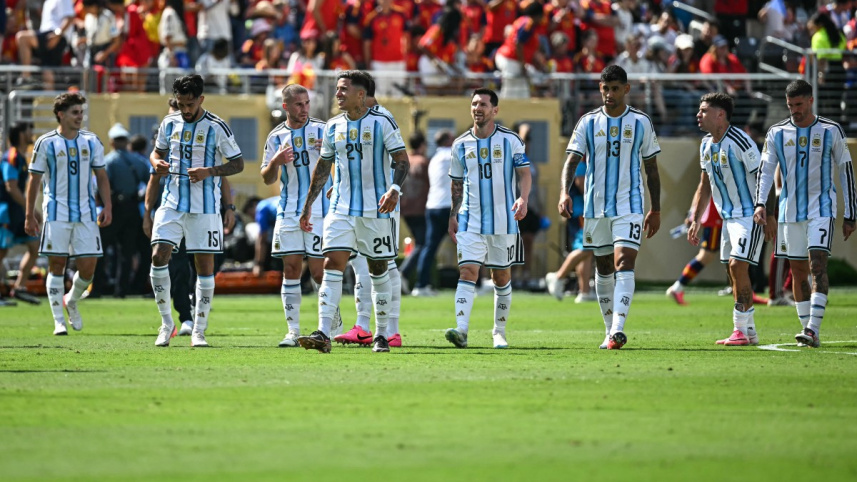
Pitch-black sky, blinding towers of light, shadows reaching clear across the grass -- there is a hypnotic, almost sacred architecture to a night-time final. Football’s crown jewels seem to shine brighter inside a floodlit cathedral built for drama.
In 2006, when Italy and France kicked off in Berlin as the evening sun dipped into twilight, the floodlights eventually took over to illuminate Zinedine Zidane's infamous headbutt -- an iconic flash in a century of World Cup history.

By contrast, MetLife Stadium offered no such romantic canvas yesterday. Not since Brazil and Italy wilted under the 1994 Rose Bowl heat -- before a tense penalty shootout rescued the spectacle with sudden-death drama -- had a World Cup final kicked off in full afternoon daylight.
Under that unsparing midday glare, the 2026 showpiece unfolded. The first-ever final between reigning European and South American champions exposed every heavy touch and basic flaw, leading to a 1-0 scoreline masking a deeply uninspired contest.
The slipstream trap and Gonzales gambit
For Argentina, it was a tactical nightmare from the jump. Lionel Scaloni’s men appeared so thoroughly clueless in possession -- looking like they were still hungover from their epic, draining victory over bitter rivals England -- that completing a simple five-yard pass looked like solving a complex mathematical equation, or navigating the bureaucracy of a government office without the right paperwork. Neither Enzo Fernandez nor Alexis Mac Allister seemed to have brought their glasses for the task.
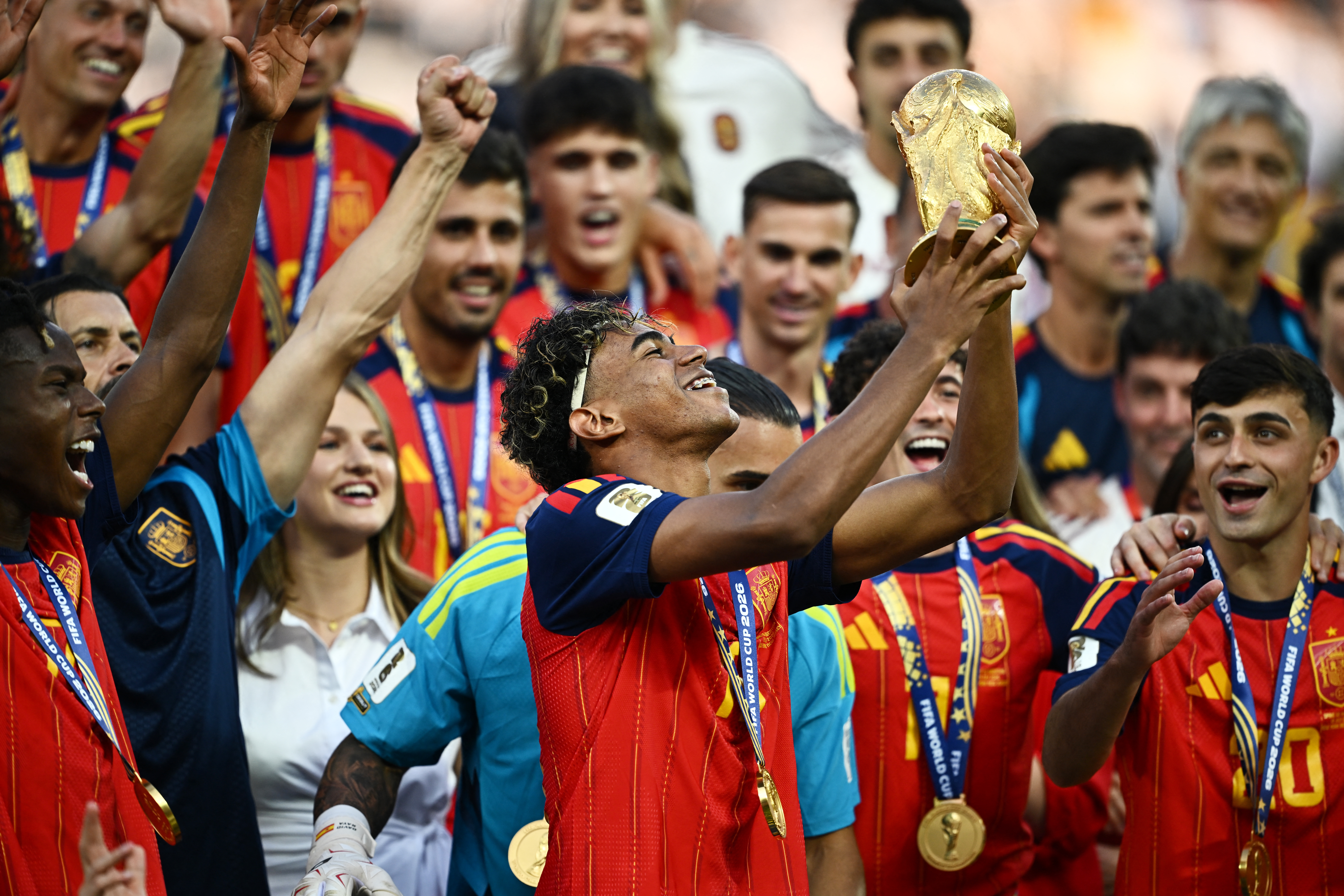
Scaloni’s selection choices only deepened the paralysis. Opting for three changes right after playing their best game this edition, and especially to start Nico Gonzalez was genuinely baffling. For 45 minutes, Gonzales, who has featured as a late substitute this tournament, was more concerned with the defensive transitions on the flank where Spain’s wonderkid Lamine Yamal was stationed, while his first touches made him a liability.
When Scaloni finally yanked him for Leandro Paredes -- one of Argentina’s standout performers against England -- the situation somehow managed to deteriorate. Rather than stabilising the engine room, Paredes played with such wildly uncalibrated aggression from the get go that it felt less like a World Cup final appearance and more like a man urgently in need of a court-mandated anger-management therapy session.
Argentina spent the opening half like nocturnal, party animals showing up for work without having taken a power nap. If it were a chess board, Scaloni’s pieces moved back and forth without territorial gain while leaving their Queen, Lionel Messi, entirely isolated. Although the Scaloneta prioritised maintaining a rigid pawn structure to preserve their shape, it was inevitable that Spain's agile Knights would eventually find a fork and break the deadlock.
Messi and teammates’ signature mechanism seen throughout this edition -- slipstreaming -- is only activated when they fall behind; and confirmed when backs are against the wall. Borrowed from cycling and motorsport, slipstreaming is simple: you ride directly behind the leader in their wake, letting them break the wind so you save energy, waiting for the right moment to pop out and overtake.
When trailing, opponents naturally sit back, creating that exact low-resistance vacuum where Argentina pull up and catch up, much like their frantic comeback against England, Egypt, and Cape Verde.
Spain, buoyed by an extra rest day after a masterclass against France in the opening semifinal, carried the heavy burden of expectation; anything short of lifting the trophy would have been viewed as a monumental failure.
Thus it was not that big of a surprise to see even Spain's passmasters fumbling in the first quarter. Rodri and Fabian Ruiz -- players celebrated for their flawless composure -- uncharacteristically surrendered possession without much provocation.
Paradoxically, despite spending the first 45 minutes looking like eleven strangers who met in the parking lot before kickoff, the Albiceleste were likely the happier side at the interval. Spain, on the other hand, despite holding the cards, risked letting frustration creep in.
The magnetic bottle
Once the second half began, however, the dynamic shifted decisively. Dani Olmo began rewiring Argentina's neural network, drifting into dangerous pockets with meandering movements that left defenders chasing shadows. His replacement, Pedri, relished in the environment that facilitated their short-passing and seamless movement in between the lines.
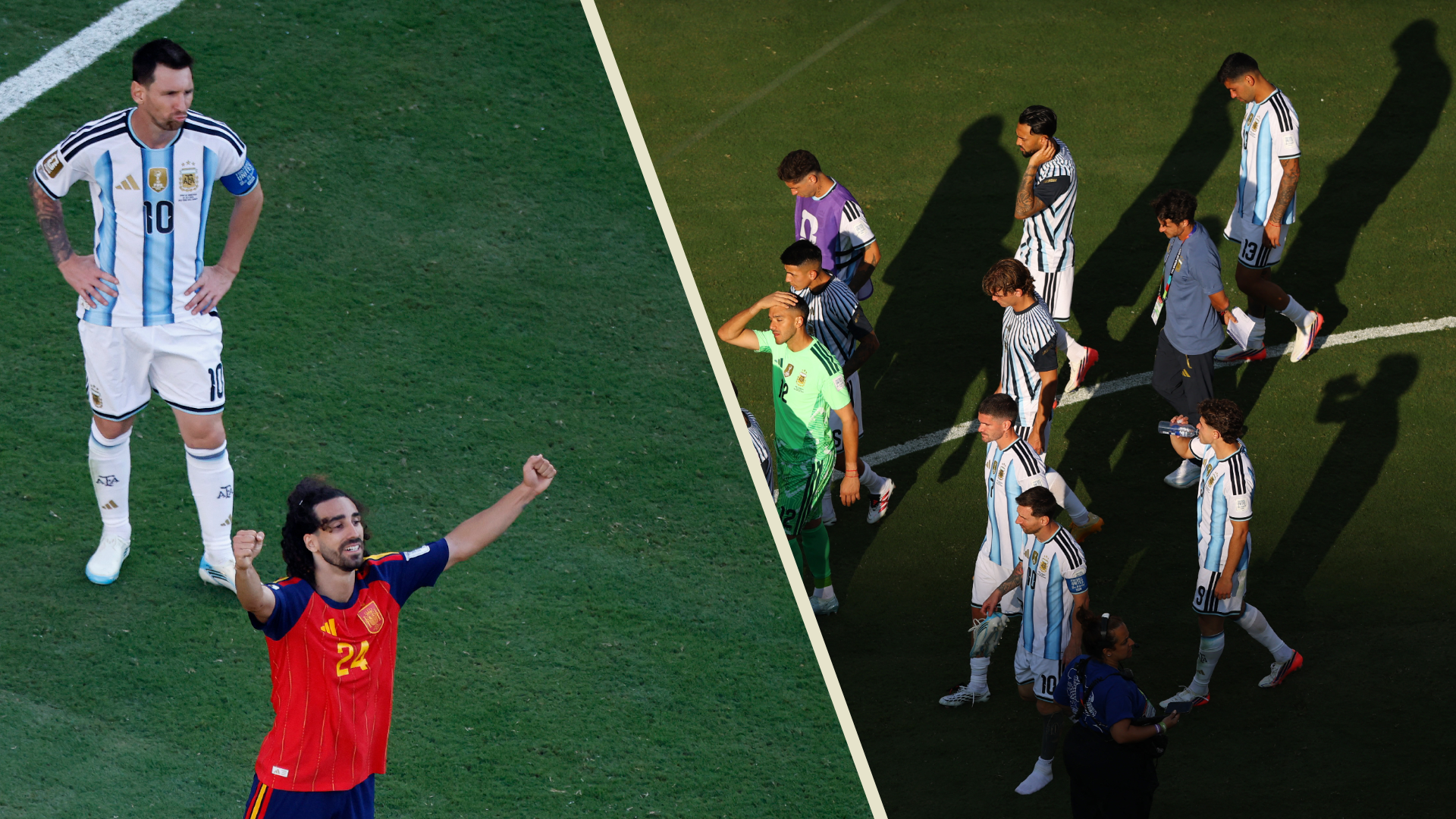
Spain tamed Argentina across every department, succeeding precisely where England and others had failed. Luis de la Fuente’s side maintained their composure when refereeing decisions didn't go their way, refused to take the bait when rattled by physical challenges, and crucially, never poked the lion by provoking Messi.
Knowing this Argentine team treats conflict as high-octane fuel to get their juices flowing, Spain simply denied them a spark.
Part of Argentina's paralysis stemmed from how intimately Spain understood Messi. Several Spanish stars raised in Barcelona’s academy grew up watching the Argentina captain train during his absolute prime, and on the pitch, it appeared they knew Messi’s movements better than his own teammates.
It was as if Spain constructed a magnetic bottle around him -- the physics concept where invisible magnetic fields create an inescapable cage that traps charged particles in the centre. Messi was locked in that bottle, entirely isolated and undiscoverable by Enzo -- sent off before extra time after two yellow cards -- Mac Allister, or Rodrigo De Paul, up until the slipstreaming was initiated in the last 14 minutes as La Roja focused on not conceding.
So comprehensive was Spain’s dominance that Argentina became the first team in World Cup final history to go 120 agonizing minutes without a single shot on goal – and around 110 minutes without any shot at all -- reduced to helpless bystanders as their crown slipped away.
 For all latest news, follow The Daily Star's Google News channel.
 Between the sticks, Emiliano Martinez was forced to work overtime while his counterpart Simon had little to do other than the interception that prevented Messi from cutting loose off a counterattack early in the encounter.
From the start, Argentina perhaps gave far too much respect to a man-for-man superior Spanish side, falling back on a medieval modus operandi -- a blind reliance on one Messi miracle too many.
Unconditional absolution and 1990’s shadow
Conceding in the 106th minute to Ferran Torres finally forced Argentina out into the open, but the awakening came far too late.
When the final whistle blew on Messi’s sixth World Cup campaign, the arena carried a poignant resonance. It was at this exact ground in 2016, after Copa América heartbreak, where a devastated Messi announced his brief international retirement. A decade later, he wept again as fans sang his name.
Back in Russia 2018, commentators prematurely wrote his international obituary, openly questioning if a 31-year-old Messi had just played his final World Cup match. Eight years after those doubts, having already delivered ultimate glory, he received something far rarer in a football-mad nation where unconditional love is seldom expressed after defeat.
In falling at the final hurdle, Messi and Diego Maradona now share yet another inescapable parallel: leading Argentina to ultimate glory, only to see their title defence crumble in the final four years later.
The post-1990 fallout saw Argentina sink into a quarter-final ceiling that lasted nearly a quarter of a century until Messi’s resurgence in 2014. And as Spain -- the premier flagbearers of modern football -- lift their second World Cup title of the millennium, Argentina are left facing an uncomfortable mirror.
Instead of a smooth transition into a new era, this ever-increasing heavy reliance on a veteran in the twilight of his career suggests La Albiceleste may need to brace themselves for another long, success-starved drought before they ever reach these heights again.
The actual nightmare is not merely the defeat at MetLife, but the prospect of a terrifying chasm opening up between Argentina and modern football’s elites -- primarily France and, of course, Spain -- despite a historic arc featuring three finals in four editions and a 2022 crown.
Back in Qatar 2022, Scaloni possessed a secondary trump card in Angel Di Maria -- a footballer capable of conjuring lightning from clear skies when tactics failed. Julian Alvarez, for all his tireless running and pressing prowess, simply does not offer that anarchic genius; he is a different beast entirely, lacking that singular threat once provided by the likes of Claudio Caniggia and Mario Kempes beside Maradona.
In New Jersey, Di Maria’s absence hung over the pitch like a missing limb. When Enzo Fernandez lost his head -- scything into a harmless pocket of space with all the restraint of a commuter fighting for the last seat on a rush-hour bus -- Argentina were reduced to ten men. Messi was left stranded as a lone forward, while an exhausted Alvarez spent the closing stretch looking less like a world-class striker and more like a bewildered chicken caged in a rondo drill.
Qatar 2022 was fuelled by Messi’s supreme alchemy, supported by an unheralded core. Four years later, that same core returned infinitely more mature, yet paradoxically hampered by reverence. For many, the intoxicating high of sharing a pitch with Messi one last time seemed to eclipse the cold, ruthless demand of winning a fourth star.
Argentina only truly looked like champions when backed into a corner against England; for the rest of the tournament, they defaulted to treating Messi as the golden goose who would lay one more miracle.
Ultimately, Argentina’s campaign was defined entirely by Messi’s shadow -- just as this World Cup as a whole bore his unmistakable footprints.
Yet, in the long run, 2026 will be remembered as the definitive triumph of upgraded, high-velocity possession football. Spain’s future looks terrifyingly secure, anchored by a 19-year-old Yamal and the Young Player of the Tournament, Pau Cubarsi, who defended with the unflappable serenity of an experienced diplomat.
This modern iteration of Spain has survived by evolving, injecting vertical speed and ruthless directness into their traditional control. Yet the frightening reality for the rest of the world is that De la Fuente’s frontline didn't even need to hit top gear to claim the trophy.
The historical pattern is unmistakable: whenever a world champion clings blindly to an expiring icon or an outdated formula, a decades-long wilderness awaits. Argentina fell into this exact trap after 1990 by putting all their eggs into a fading Maradona’s basket, just as Spain did after 2014 by stubbornly clinging to a stagnant tiki-taka template.
To avoid repeating that thirty-year cycle of boom and bust, Argentina face a stark choice from here on: modernise their system to match the demands of the modern game, or wander straight back into the wilderness for another quarter-century of soul-searching.
Comments