


Iron wall vs iron will: Argentina, Spain set for epic final
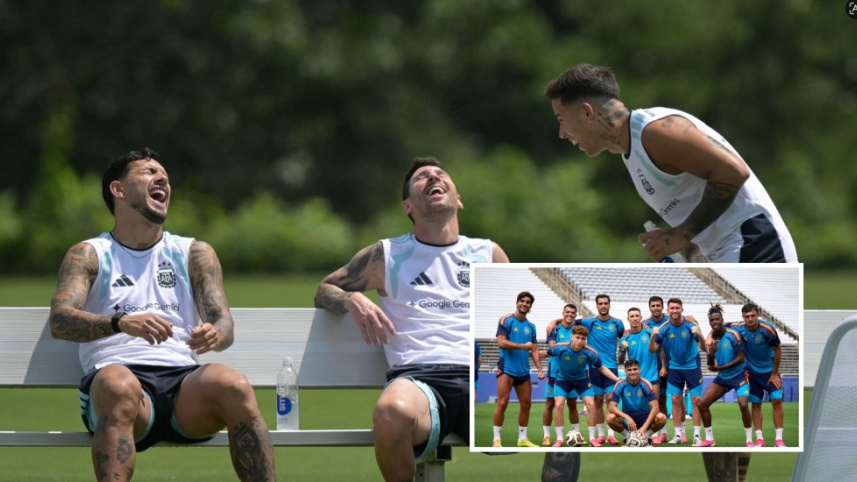
The FIFA World Cup 2026 final offers a compelling contrast in footballing philosophies as Spain's watertight defence prepares to take on Argentina's remarkable resilience. With Lionel Messi chasing back-to-back World Cup titles, Monday's showdown [1am, Bangladesh Time] at the MetLife Stadium promises to be a battle between the tournament's stingiest backline and a team that has repeatedly found a way to overcome adversity.
If Argentina are to retain the trophy they won in Qatar in 2022, they must first break down a Spanish defence that has been virtually impenetrable throughout the competition. Luis de la Fuente's side has conceded just one goal in seven matches, making defensive discipline the cornerstone of its run to the final.

While Spain's midfield quartet of Rodri, Dani Olmo, Pedri and Fabian Ruiz has received widespread acclaim for controlling games with precision passing and intelligent movement, the back four of Marc Cucurella, Aymeric Laporte, Pau Cubarsi and Pedro Porro has quietly delivered one of the finest defensive performances in World Cup history.
A clean sheet against Argentina would see Spain establish a new record for the fewest goals conceded by a World Cup-winning team. The current benchmark of two goals is jointly held by France in 1998, Italy in 2006 and Spain's own victorious side in 2010.
Marc Cucurella, who recently completed his move to Real Madrid after successful spells with Brighton and Chelsea in the Premier League, believes that championships are built on defensive solidity.
"Great teams are the ones that dominate both penalty areas," Cucurella said earlier in the tournament. "Obviously, the fewer goals you concede, the better your chances of winning. Hopefully, we can keep this up. If we defend well, we'll be closer to winning."
The Spaniards' defensive excellence has been driven by the experienced Aymeric Laporte and teenage sensation Pau Cubarsi at the heart of the backline. Laporte, who spent more than five seasons under Pep Guardiola at Manchester City before joining the Spanish national setup, has been full of praise for his 19-year-old defensive partner.
"He's a fantastic player. At 19, he's already played a lot of matches for Barca and the national team. Time will tell, but he's got real quality," Laporte said.
Cubarsi has displayed maturity beyond his years throughout the tournament. His only blemish came when Belgium's Charles De Ketelaere scored with a header during Spain's 2-1 quarter-final victory. Otherwise, the Barcelona youngster has looked every bit the commanding defender.
"I like being imposing and aggressive," Cubarsi said. "I like making my presence felt because it's a position where you can't back down against anyone. You can't let yourself be taken out of the game. Above all, you need that character to be a difference-maker."
Spain coach Luis de la Fuente believes Laporte perfectly embodies his tactical philosophy.
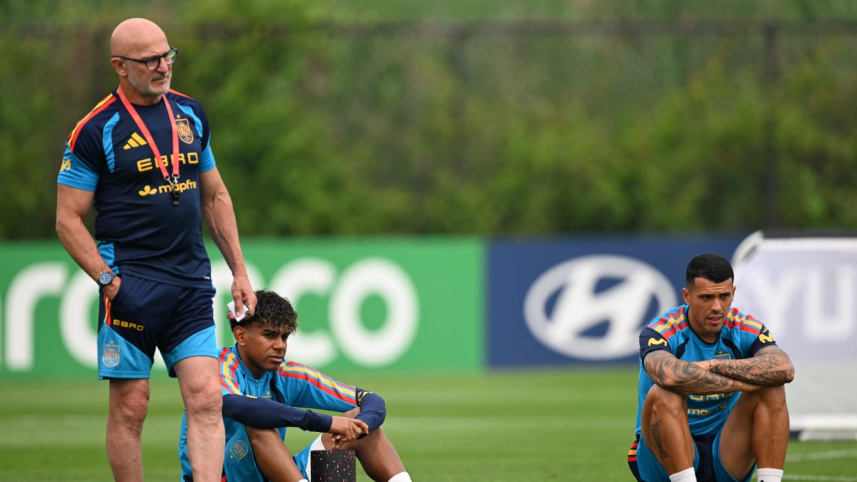
"He is one of the centre-backs who best executes the philosophy we have," De la Fuente said. "It's a luxury to have him. He offers us great ball distribution, threads passes through the lines, and possesses real authority. He is a very complete player."
Pedro Porro has also emerged as one of Spain's biggest success stories. Left out of the squad that won the European Championship in 2024 and coming off a difficult season with Tottenham Hotspur, where the club narrowly escaped Premier League relegation, the right-back has flourished on football's biggest stage. His well-taken goal in Spain's 2-0 semi-final victory over France underlined his impact at both ends of the pitch.
Porro now hopes to recreate the celebrations he witnessed as a child when Spain won their first World Cup in 2010.
"In 2010, when we won the title, I was splashing around in the town square," he recalled. "That World Cup was spectacular, especially for the way it united the country. It would be great to do it all over again."
Standing opposite Spain is an Argentina team whose greatest strength has been an extraordinary ability to recover from difficult situations. Lionel Scaloni's side has made a habit of staging dramatic comebacks during the knockout rounds, often inspired by their captain Lionel Messi.
Argentina needed two goals in extra time to defeat Cape Verde 3-2, rallied from 2-0 down against Egypt with three late goals, and avoided a penalty shootout against Switzerland by scoring twice during the second period of extra time in the quarter-finals. Their semi-final followed a similar pattern as they recovered from conceding first to beat England 2-1.
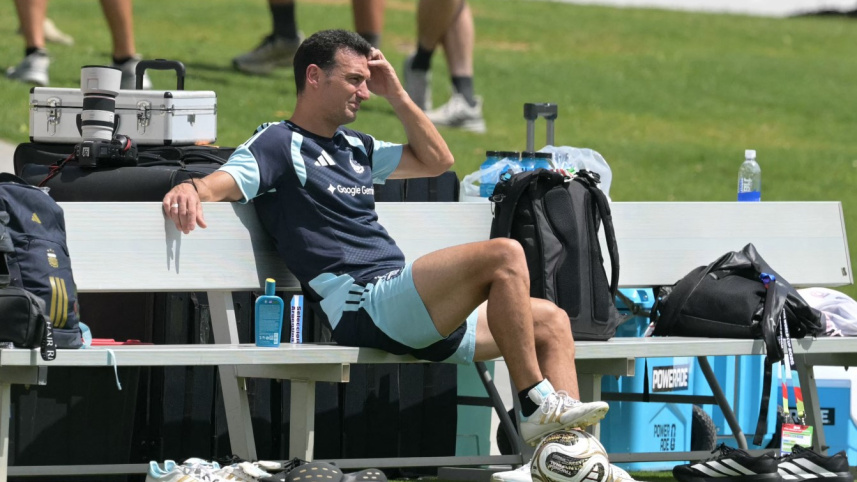
"I think this team plays its best when it's in trouble," Scaloni said after the semi-final victory.
Supporters believe the team's resilience reflects Argentina's national character.
"It's a group of people who, despite adversity, never give up," said Buenos Aires lawyer and football fan Matias Cirelli. "Argentines are never going to consider a battle lost, even if the outlook is completely unfavorable."
 For all latest news, follow The Daily Star's Google News channel.
 Many also credit Scaloni's leadership since taking charge in 2018. By building a strong support system around eight-time Ballon d'Or winner Messi, now 39, he has transformed Argentina into one of international football's dominant forces, winning consecutive Copa America titles around the country's World Cup triumph in Qatar.
Pablo Nigro, president of the Argentine Sport Psychology Association, believes the team's mentality has been carefully cultivated over several years.
"This team sees pressure as an opportunity for self-improvement, for excellence," Nigro said, adding that Argentina is "a very success-driven country" where the desire to win is ingrained from a young age.
Anthropologist Federico Czesli attributes the players' mindset to Argentina's youth development system, where sacrifice and humility are deeply embedded values, particularly among youngsters from modest backgrounds.
"The typical fan demands from the Argentine footballer not so much good play as giving everything," Czesli said. "As long as that happens, you leave with your head held high."
Monday's final therefore promises far more than a contest between two outstanding teams. It will pit Spain's relentless defensive discipline against Argentina's refusal to surrender, setting the stage for a fascinating battle between football's strongest defence and one of its most resilient champions.
Comments