


Germany vs Germany: The duel that happened only once

Have you ever wondered what it would be like to see Brazil play against Brazil? Or France facing France? Or perhaps Argentina versus Argentina? The thought may seem bizarre and surreal, but in the annals of football history, such an unimaginable event actually occurred.
The date was June 22, 1974. The Volksparkstadion in Hamburg played witness to a match layered with drama, politics, and a nerve-shredding test of will.

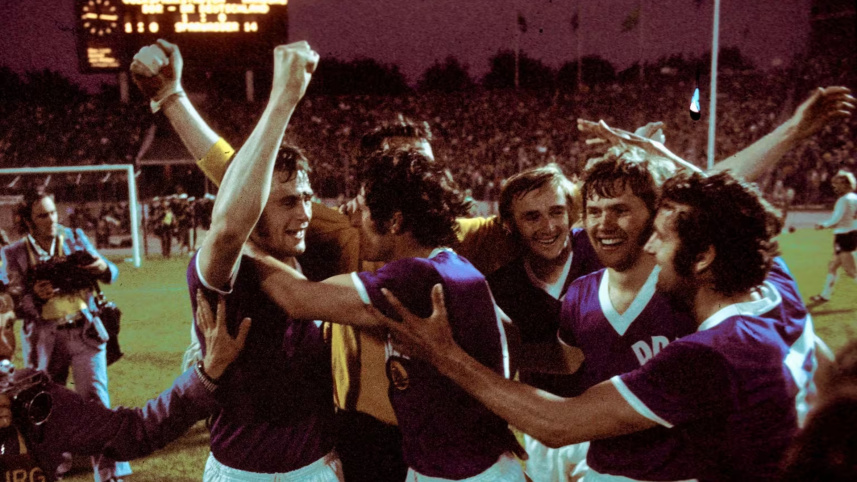
In that first-round World Cup group match, two severed parts of the same land – East Germany and West Germany – collided. It was the first and only encounter between the two Germanys on a football pitch following the division after the Second World War. The fairytale that unfolded that night before 60,200 spectators is still considered one of the greatest upsets in football history. The underdogs, East Germany, stunned the mighty West 1-0. Jürgen Sparwasser’s magical goal in the 77th minute transcended the sport, becoming a fleeting victory for Communism over Capitalism.
Curiously, both teams had already secured their passage to the second round before the match kicked off, so there was no pressure to survive in the tournament. Yet, the significance of this fixture was sky-high. Beyond vying for top spot in Group 1, it was an unofficial war of pride and ideology.
For West Germany, having dispatched Chile and Australia, a draw would have sufficed to top the group; for Georg Buschner’s East German side, nothing short of a win would do.
Deep-seated political rivalry and the chill of the Cold War simmered beneath the surface of the match. Since the post-war division, the political divide had become so extreme that West Germany did not even officially recognise East Germany as a sovereign state.
The famous West German tabloid Bild would famously write the name "East Germany" inside quotation marks in their reports.
As hosts of the 1974 World Cup, West Germany was hardly at ease. Just two years prior, the Munich Olympics had been marred by the killing of Israeli athletes and coaches by the Palestinian militant group 'Black September.'
Furthermore, with bomb attacks on the Chilean consulate, threats from the Irish Republican Army (IRA), and letters from the notorious Baader-Meinhof gang threatening to blow up the Volksparkstadion, the entire tournament was under watertight security. Defender Paul Breitner famously described the West German training camp in Malente, north of Hamburg, as a "fortress." While the mood outside the pitch was militant, surrounded by barbed wire, guard dogs, and armed sentries, the battle on the pitch remained a contest of sport.
The days leading up to the match were dramatic for both camps. When the East German team arrived at Hamburg airport in ash-grey jackets, green shirts, and yellow ties, they wore broad smiles. But those smiles faded slightly when the bus meant to collect them mysteriously "went missing." Such incidents were not exactly surprising on Western soil.
At their camp in Quickborn, the East German team was shadowed constantly by agents of the country's notorious intelligence agency, the Stasi. However, even they were swayed by the glamour of the West. Taking advantage of the situation, the owners of the Sporthotel arranged a night of entertainment in Reeperbahn. The West German organisers wanted to gift a television set to every member of the East German team. Under the rigid rules of their socialist regime, the officials publicly rejected the offer – any fraternisation with the West was strictly forbidden.
Yet, ironically, when the players were leaving Quickborn, they noticed all the televisions had vanished. It appeared the very officials who had forbidden contact with the West had secretly claimed the sets for themselves.
On the other side, chaos reigned within the camp of the tournament favourites and European champions, West Germany. Manager Helmut Schön was under immense pressure. Born in Dresden, East Germany, he had defected to the West for political reasons; for him, this match was a war of honour that had to be won at all costs. But his team was busy revolting over bonuses. Captain Franz Beckenbauer demanded a bonus of 100,000 DM (Deutsche Mark) per head. After a long negotiation with the vice-president of the West German Football Association (DFB), they settled on 70,000 DM, but a furious Schön exploded: "All you talk about is money, money, and money!"
Then came the night of June 22. 60,200 spectators packed the stands, among them a select group of only 1,500 die-hard East German supporters, waving small flags bearing the hammer and compass. Uruguayan referee Ramón Barreto blew the whistle to signal the start of this historic battle.
From the beginning, the match was a tactical, nerve-shredding affair. Neither side was willing to concede an inch. While West Germany pressed like favourites, East Germany kept their defence compact and continued to create chances. In the first half, if Gerd Kische and Hans-Jürgen Kreische had not squandered easy opportunities, East Germany might have taken the lead earlier.
On the other hand, West Germany’s best chance came in the 40th minute; "Der Bomber" Gerd Müller received the ball in the box and unleashed a trademark turn and shot, but unfortunately, the ball struck the post and rebounded.
The match remained goalless. In total, 481 minutes had passed in the tournament without anyone breaching the West German net. As the clock ticked towards the 78th minute, everyone assumed the "two brothers" would share the points. Then, the epic moment arrived.
Following a West German corner, East German goalkeeper Jürgen Croy expertly caught the ball from a header. Without wasting time, he quickly sent it to substitute Erich Hamann on the right flank – he had only been on the pitch for ten minutes. Making the most of his fresh legs, Hamann surged forward for nearly 30 yards. The sluggish Beckenbauer could not stop him.
Hamann took his time and played a superb diagonal pass just outside the box. The onrushing midfielder Jürgen Sparwasser controlled the ball with his head, before bringing it under his spell with a deft touch of his chest and shoulder. He left two formidable West German defenders, Berti Vogts and Horst-Dieter Höttges, completely bamboozled – literally sitting them on the turf. Sparwasser surged into the box and, leaving goalkeeper Sepp Maier no chance, buried the ball into the net from just five yards out!
The Volksparkstadion fell silent. Sparwasser dived onto the pitch in sheer joy, his teammates piling on top of him. In the stillness of the night, only the cheers of those 1,500 East German fans could be heard: "Heia, heia DDR!"
 For all latest news, follow The Daily Star's Google News channel.
 When the final whistle blew, the scenes on the pitch were different. Due to strict political directives, swapping jerseys was forbidden. But the players spoke the universal language of football. In the darkness of the tunnel, Breitner approached the match-winner, Sparwasser. They silently exchanged shirts. Those jerseys remained hidden from public view for 28 years until they were auctioned in August 2002 to raise funds for the victims of the devastating floods in Germany.
East German defender Gerd Kische later said, "The fight between the amateurish East and the glamorous professionals of the West – that is how the match was viewed. We wanted to prove everyone wrong." The scene in the West German dressing room was the complete opposite.
According to Müller, "It was as if hell had broken loose in our camp. Coach Schön was in a foul mood. We stayed awake until dawn trying to figure out how we had lost."
This historic 1-0 victory was the last great surprise in East German football history and their final win on the World Cup stage. They were subsequently eliminated from the tournament after defeats to Brazil and the Netherlands and a draw with Argentina. East Germany would never be seen on the world stage again.
On the other hand, this unexpected defeat turned out to be a blessing in disguise for West Germany. The legendary Beckenbauer later admitted, "Sparwasser’s goal was a wake-up call for us. Without that goal, we would never have become world champions."
Indeed, after that shock, West Germany regrouped and went on to win the 1974 title, becoming world champions for the second time.
Although the two Germanys reunited in 1990, the night of June 22, 1974 will forever be etched in history under Sparwasser’s name.
His immortal quote serves as the perfect summary of that match: "If one day they only write 'Hamburg 74' on my gravestone, everyone will still know who is lying beneath."
Comments