


Gazza’s tears: A ‘child’s’ dream spilled on the grass of Turin

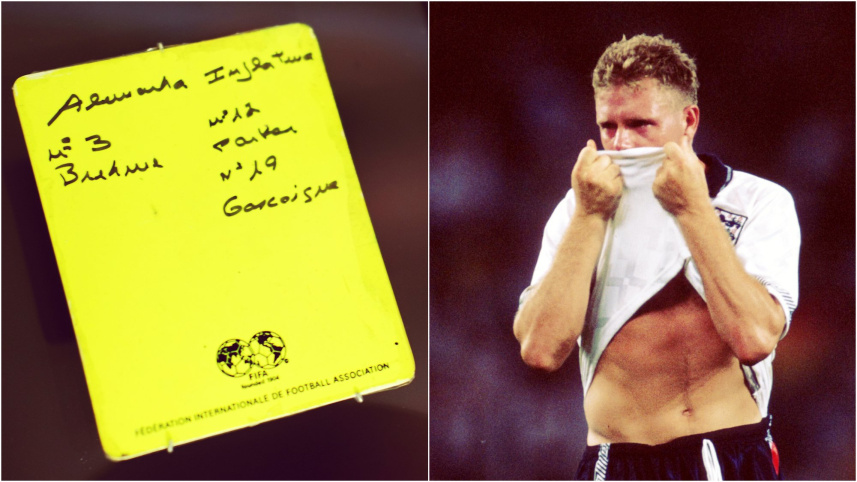
That night, the sky over the Italian city of Turin was cloudless. Yet, upon the green carpet of the Stadio delle Alpi, an eerie, invisible rain of sorrow seemed to descend. July 4, 1990 -- a nerve-shredding World Cup semifinal. The deafening roars cascading from the stands, beads of sweat trickling down the players’ faces, and an explosive tension hanging in every particle of air -- it was a suffocating spectacle.
Amid that thunderous chaos, there unfolded a moment of heartbreaking silence, one that etched itself instantly into the hearts of millions across the world. It was the moment an indomitable warrior suddenly turned into a helpless child -- it was the moment of Paul Gascoigne, beloved to all as ‘Gazza’, his nickname.

At just 23, Gascoigne was a whirlwind of energy and joy. With the ball at his feet, he seemed like a wandering poet, composing the finest verses of life in his own rhythm. The heartbeat of England’s midfield, his control and magical dribbling had already captivated the world.
There was no complexity within him -- only a raw, untamed joy. Like a boy playing in a neighborhood field, simply in love with running with the ball. Throughout the tournament, he played in a trance-like state, as if this World Cup was the living embodiment of a childhood dream. But who knew that the culmination of that dream would be written in such devastating tears?
The opponents, West Germany, were organised, powerful, experienced. Every minute of the match felt like a psychological war. England pushed forward, Germany resisted, and time marched steadily toward an inevitable conclusion.
Then came that moment.
The match had drifted into extra time. The clock ticked toward the 99th minute. Exhaustion burned through every breath the players took. In a desperate bid to win possession, Gazza lunged toward Thomas Berthold, throwing himself into a sliding tackle. It wasn’t vicious or reckless, but under the strict interpretation of the rules, the Brazilian referee Jose Roberto Wright blew his whistle. The roar of the stadium seemed to freeze.
His hand reached into his pocket.
Out came that cursed sliver of yellow.
A yellow card is routine in football. But for Gazza, that small piece of paper was no mere warning -- it was the death warrant of his lifelong dream, a spear tearing through his soul. Under the tournament’s unforgiving rules, it was his second booking. The meaning was cruelly simple: even if England reached the final, Paul Gascoigne would not be able to play. He would have to watch from the sidelines, a spectator to his own dream.
What followed became one of football’s most unforgettable tragedies.
The muscles in Gazza’s face stiffened, as if turned to stone. His wide eyes carried an unfathomable emptiness. Then, that emptiness shattered into a silent scream. His lower lip began to tremble -- the way a child’s does just before breaking into tears.
The thousands in the stadium, the formidable opponents, the countless camera lenses -- all seemed to vanish from his world. He forgot he was a professional footballer, forgot the hardened mask of adulthood.
The first tear fell quietly, almost invisibly.
But it broke the dam within him.
Tears streamed down his face. He tried to hide them, covering his face with his jersey, wiping his eyes again and again -- but the flood would not stop. In those tears lay the agony of losing everything at the very brink of ultimate fulfillment. Like a parched traveler, denied a sip of water just as it touched his lips.
Nearby stood teammate Gary Lineker. Witnessing Gazza’s collapse, he froze. Then he looked toward the dugout and made that now-famous gesture to manager Bobby Robson -- pointing to his eyes, signaling, “Keep an eye on him, he’s completely broken.”
Through tear-blurred vision, Gazza fought to carry on. His legs moved, but his mind remained scattered across the grass of Turin, among the shattered fragments of a dream.
In the end, England fell in the penalty shootout. But more enduring than the result was the image that stayed with the world -- Gazza’s childlike tears, forever etched into football’s soul.
 For all latest news, follow The Daily Star's Google News channel.
Comments