


Four stars: Italy’s World Cup glory story
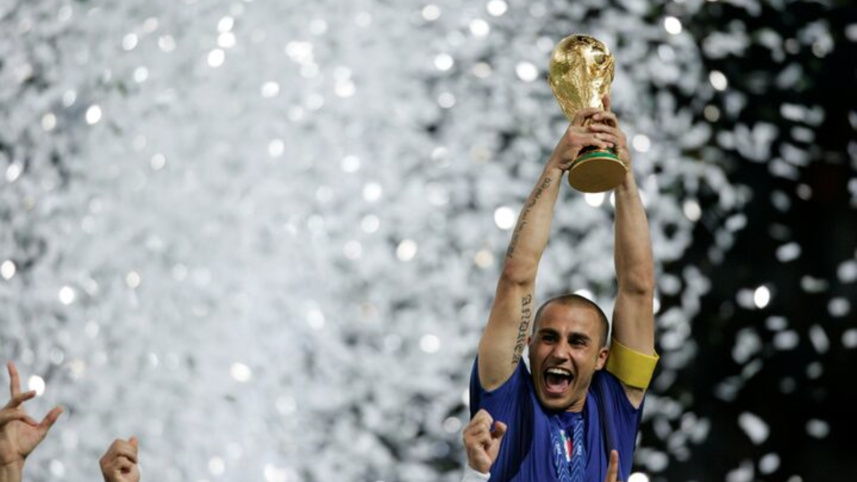
In the pantheon of FIFA World Cup history, Italy sit second only to Brazil. Alongside Germany, they have hoisted the golden trophy four times -- a towering achievement that makes their current predicament all the more baffling.
Despite their storied past, the footballing world remains in shock as the Azzurri face a third consecutive absence from the finals, having failed to qualify since 2014.

As the world prepares for 2026, Italy will once again be mere spectators. However, an analysis of the statistics behind their triumphs between 1934 and 2006 reveals a fascinating legacy. Let us look back at the seminal moments that stitched those four stars onto the famous blue shirt.
Italy’s World Cup roll of honour:
1934: Champions on home soil
1938: Champions in France
1982: Champions in Spain
2006: Champions in Germany
Europe’s inaugural conquerors
The 1934 edition was the first World Cup hosted on European soil. Even as hosts, Italy were required to navigate a qualifying round to secure their place. The tournament was notably marked by the absence of the inaugural champions, Uruguay, who boycotted the event in protest of the European nations' reluctance to travel to South America four years prior.
This tournament followed a strict knockout format: round of 16, quarterfinals, semifinals, and final. With only 17 matches played in total, it still holds the record for the shortest World Cup in history. Italy’s path to glory spanned five matches, including a bruising quarter-final against Spain that ended in a draw and required a replay the very next day.
Italy’s debut on the world stage was a 7-1 demolition of the United States – the only time in World Cup history they have scored more than four goals in a single match. Under the watchful and demanding eye of Prime Minister Benito Mussolini, the pressure to win at home was immense.
Ultimately, amidst the stifling Roman heat, Angelo Schiavio struck in extra time to secure a 2-1 victory over Czechoslovakia, making Italy the first European nation to be crowned world champions.
Supremacy on the brink of war
Vittorio Pozzo remains the only manager in history to win two World Cups, a feat cemented in 1938. Italy became the first nation to successfully defend their crown -- a milestone later matched only by Brazil.
Their campaign began with a laboured extra-time victory over Norway, setting up a quarterfinal clash against the hosts, France, in Bordeaux. After an early exchange of goals, the legendary Silvio Piola took command, scoring a brace in the second half to eliminate the French and propel the holders into the semi-finals.
After dispatching Brazil 2-1, Italy faced Hungary in the Paris final. Piola was again at the double, supported by two goals from Gino Colaussi, as the Azzurri triumphed 4-2. With a staggering average of 4.67 goals per game, it remains the second highest-scoring tournament in history.
That 1938 squad is one of only four teams to win every single match of a World Cup campaign. Due to the outbreak of the Second World War, Italy would hold onto the trophy for a record 16 years, until 1950.
From pariah to protagonist
The 1982 World Cup is etched in the memories of football purists. Spain played host to some of the greatest squads ever assembled, including the iconic sides of Brazil, West Germany, and France. Yet, it was Italy who emerged from a 44-year drought to claim their third title, defying all expectations.
Their strategy was a slow burn. Italy reached the second round without winning a single match, recording three consecutive draws against Poland, Peru, and Cameroon. Their "reward" was a group of death alongside South American giants Brazil and Argentina. Incredibly, the side that had looked toothless in the opening round found their rhythm, defeating Argentina 2-1.
What followed -- Italy vs. Brazil -- is regarded as one of the greatest matches ever played. Paolo Rossi gave Italy the lead, only for Socrates to equaliser. Rossi struck again, but Falcão pulled Brazil level in the second half. With 15 minutes remaining, Rossi completed his hattrick. Having only recently returned from a suspension related to a match-fixing scandal, the striker’s royal comeback was complete.
Rossi’s magic didn’t stop there; he scored twice in the semifinal against Poland and opened the scoring in a 3-1 final victory over West Germany. Walking away with both the Golden Boot and the Golden Ball, Rossi ensured Italy joined Brazil as three-time champions.
A masterclass in unity
In 2006, Italy were far from the favourites, yet they navigated the group stages with clinical ease. As the tournament reached its crescendo, the Azzurri truly ignited. In the semifinal, they faced the hosts, Germany, who were buoyed by a wave of national fervour.
 For all latest news, follow The Daily Star's Google News channel.
 The encounter is remembered as one of the finest matches in history. With the game seemingly destined for penalties after a scoreless 118 minutes, Italy struck twice in the dying moments to stun the home crowd and reach their first final since 1994.
The final in Berlin will forever be overshadowed by Zinedine Zidane’s unfathomable headbutt on Marco Materazzi, which earned the French captain a red card. France felt Zidane’s absence dearly in the ensuing penalty shootout. While David Trezeguet missed his effort, all five Italian kickers were flawless.
Fabio Grosso, the hero of the semifinal, dispatched the winning spot-kick. Italy became only the second team to win four World Cups (Germany would later join them).
Perhaps the most telling statistic of their collective strength was that 10 different players scored for Italy throughout the tournament -- a record that stands as a testament to their unparalleled team unity.
Comments