


Beyond the clean sheets: How Golden Glove winner Simon became Spain's silent hero

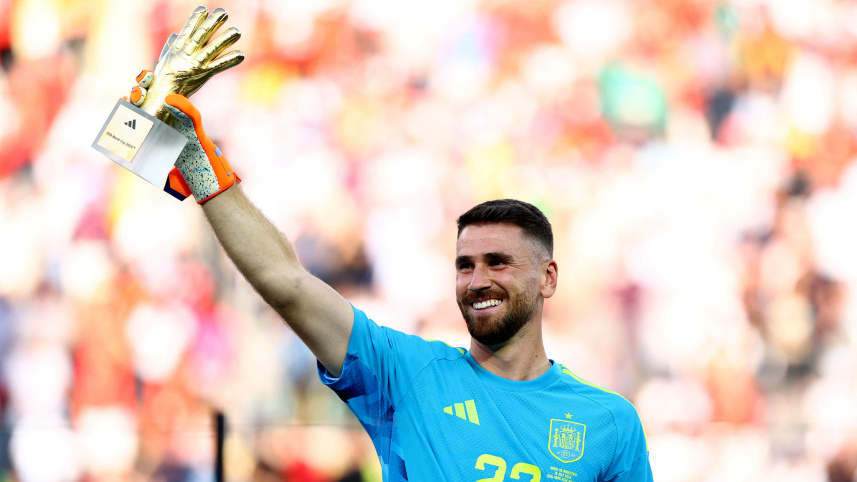
After Spain goalkeeper Unai Simon collected the Golden Glove following La Roja's 1-0 extra-time victory over Argentina in Monday's World Cup final in New York, there was little debate over whether he deserved to be recognised as the tournament's best goalkeeper.
What followed instead was a debate over what exactly the award had recognised. Simon had kept three more clean sheets than any other goalkeeper at this World Cup, yet many still struggled to understand what else had set him apart, particularly when several of his rivals were called into action far more often and finished the tournament with significantly more saves.

Was Simon rewarded because Spain produced one of the greatest defensive campaigns in World Cup history, or was Spain's extraordinary defensive record largely a reflection of the goalkeeper himself?

Unlike the Golden Boot, which is decided strictly by raw statistics, or the Golden Ball, which is determined through a media vote after FIFA’s shortlist, the Golden Glove is exclusively awarded by FIFA's Technical Study Group. Their assessment extends well beyond save totals, taking into account a goalkeeper's overall performances throughout the tournament, including consistency, command of the penalty area, leadership, clean sheets, decisive interventions and impact in key moments.
Hence, much of the debate centred on the perception that Simon simply did not have enough to do throughout the tournament, with many arguing that the award was more a reflection of Spain's defensive dominance -- primarily a product of the back four in front of him -- than that of the goalkeeper's individual brilliance.
Paraguay's Orlando Gill made 23 saves -- the most at this World Cup. Switzerland's Gregor Kobel and Argentina's Emiliano Martínez each made 20. Portugal's Diogo Costa finished with 19 and Cabo Verde's Vozinha 18. Simon, meanwhile, had only 10 attempts to deal with.
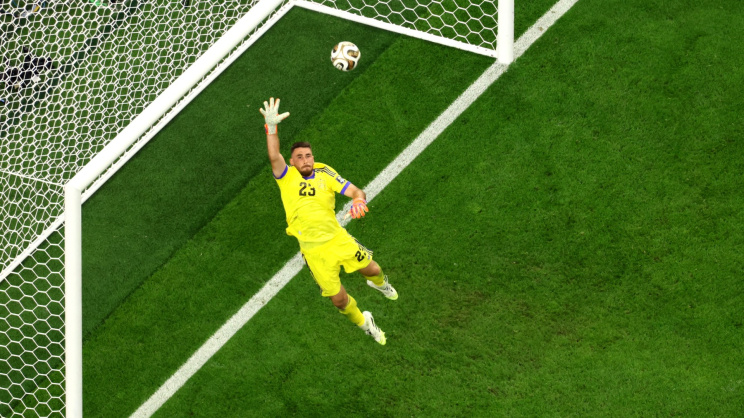
Simon helped Spain concede just one goal in eight matches -- the fewest ever by a men's World Cup-winning side. He kept seven clean sheets, another tournament record, while his 91.7 save percentage was the best of any goalkeeper in the competition.
He also made a new World Cup record by going 650 consecutive minutes without conceding, surpassing Walter Zenga's long-standing mark of 517 minutes, set at the 1990 World Cup.

Simon’s streak spanned two World Cups, beginning after Japan's goal against Spain in Qatar in 2022 and lasting until Belgium’s Charles De Ketelaere finally breached him with a header in this year's quarterfinal. By then, the Athletic Bilbao goalkeeper had gone 650 consecutive World Cup minutes without picking the ball out of his net.
Even after De Ketelaere's goal, Simon responded with clean sheets against France in the semifinal and Argentina in the final, with the latter failing to register a single shot on target in over two hours of football.
Even Zenga, whose record had stood for 36 years, could only applaud.
"Records aren't eternal, but memories are," the Italian wrote on Instagram. "I had the honour of holding the record for the longest run without conceding at the World Cup for many years. That record now belongs to Unai Simón. I congratulate him and Spain on an extraordinary achievement.
"Being surpassed by someone who is writing football history is far from a defeat. It's simply the natural continuation of the story itself. Congratulations, Unai. As a fellow goalkeeper and a football man, I take my hat off to you."
Many believed Luis de la Fuente's biggest selection dilemma before the tournament would come in goal. David Raya had just completed another outstanding season for Arsenal, while Joan García had also emerged as one of Spain's brightest goalkeeping prospects.
De la Fuente, however, never seemed to have a dilemma. Having coached Simon throughout Spain's youth system before promoting him to the senior side, the Spain boss knew exactly what his goalkeeper offered. Together they had already won the Under-19 European Championship, the Under-21 European Championship, the UEFA Nations League and Euro 2024 before adding the World Cup to an already glittering collection.
Modern goalkeeping is increasingly judged not only by the most obvious statistics -- saves that make the highlights, goals conceded and clean sheets -- but also by the attacks that never develop because the goalkeeper has already snuffed out the danger by preventing those chances from ever becoming shots. That is precisely where Simon separated himself from the rest.
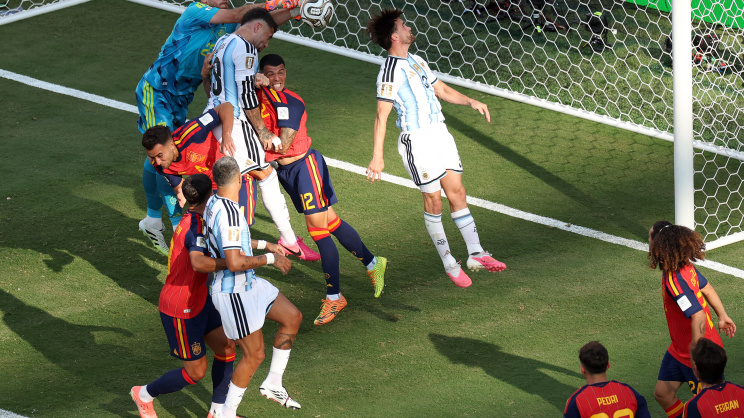
His influence extended into every aspect of Spain's defending, nowhere more so than inside his own penalty area. He finished the tournament with eight aerial claims, more than any other goalkeeper, underlining his authority when dealing with crosses and relieving pressure. Those interventions rarely command the same attention as spectacular saves, yet they are every bit as valuable because they extinguish danger before it becomes a shooting opportunity, particularly at a time when attacking through set-pieces and with crosses has once again come back into the meta.

On the other hand, nor was Simon content to remain rooted to his goal line. He constantly anticipated danger before it fully developed. He attacked crosses, sprung beyond his lines to intercept through balls before they reached opposing forwards and repeatedly smothered attacks at an opponent's feet before a shot could even be taken.
One of the defining features of his tournament was his work as a sweeper-keeper -- a role he was not born into but developed over time. Whether it was inviting pressure before calmly beating the opposition press with his distribution, sweeping behind Spain's aggressive defensive line or racing from his goal to extinguish danger, Simon quietly displayed the complete repertoire of a modern goalkeeper while never neglecting the traditional fundamentals of the position.
France provided perhaps the clearest demonstration of why De la Fuente's faith in him has never wavered.
 For all latest news, follow The Daily Star's Google News channel.
 Facing a speedy player like Kylian Mbappe naturally encourages defenders to retreat while tempting goalkeepers to remain closer to their goal. Simon did the opposite.
Throughout the tournament, Spain trusted him to defend the enormous spaces behind their high defensive line. He finished the World Cup with 22 sweeper interventions, more than any other goalkeeper in the competition.
Against France, that proactive approach was evident from start to finish. Time and again, Simon sniffed out danger before anyone else, racing from his goal to sweep behind Spain's defence to smother attacks.

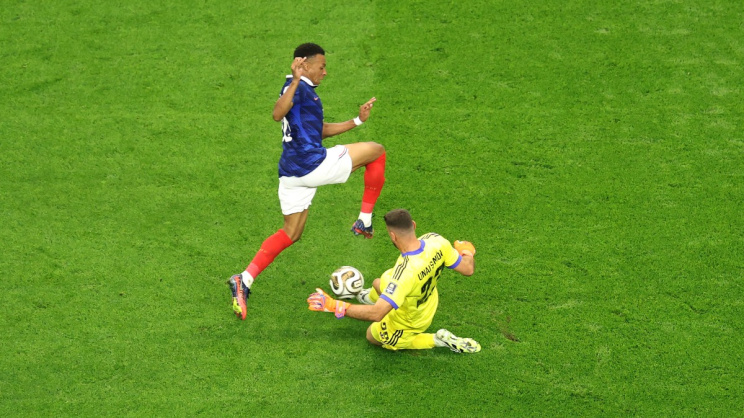
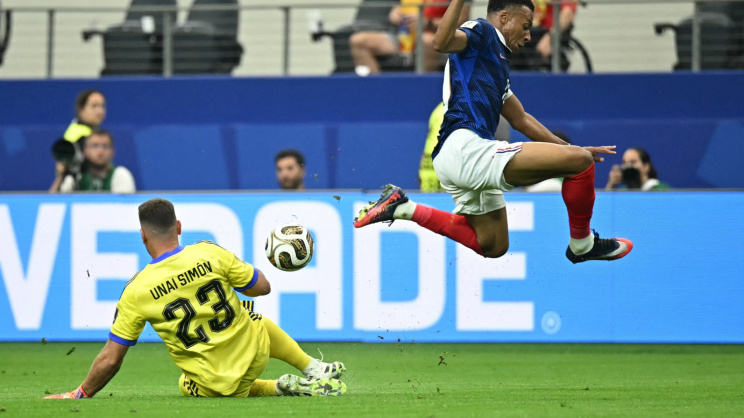
The final against Argentina produced another reminder that these interventions were no isolated moments but a defining characteristic of Spain's campaign, particularly in matches where teams tried to have a go at the 2010 champions.
Barely five minutes had elapsed when Simon sprinted almost 40 yards from his goal to intercept a through ball before an onrushing Lionel Messi could reach it.
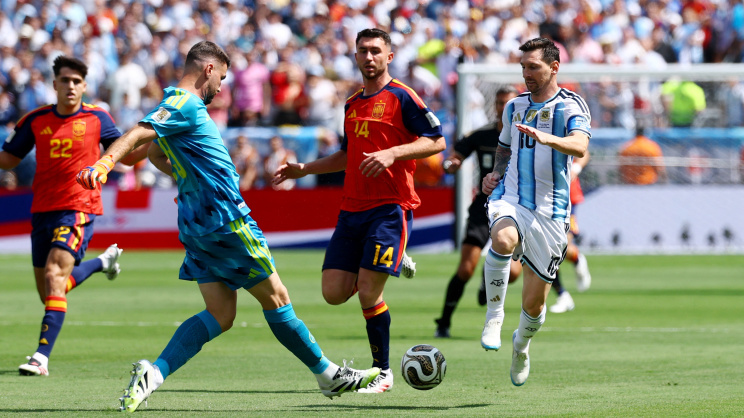
Every successful intervention reinforced Spain's aggressive defensive approach. It gave the defenders confidence to hold their high line, secure in the knowledge that Simon would attack the space behind them.
It is almost impossible to measure how many attacks never materialised because of that trust. And at this World Cup, it became one of the defining pillars of Spain's defensive success.
Simon had already helped Spain win the UEFA Nations League and Euro 2024. This summer he added the World Cup and the Golden Glove to a growing collection of honours.
Those achievements alone would have marked this as an exceptional tournament. Yet, as remarkable as the statistics were, they captured only part of Simon's impact.
Spain ask far more of their goalkeeper than simply making saves. Statistics explain why Simón won the Golden Glove. They cannot fully explain how he won it. Spain's extraordinary defensive record was built on far more than blocks, tackles and interceptions. It depended on a goalkeeper willing to defend 40 yards from his goal, extinguish danger before it developed and give an entire back line the confidence to play on the front foot.
Great goalkeepers make spectacular saves. The very best ensure many of those saves never become necessary. That is perhaps the lesson to take from what Simon displayed throughout the tournament.
Comments