


16 yellows, 4 reds: The chaos of the iconic 'Battle of Nuremberg'

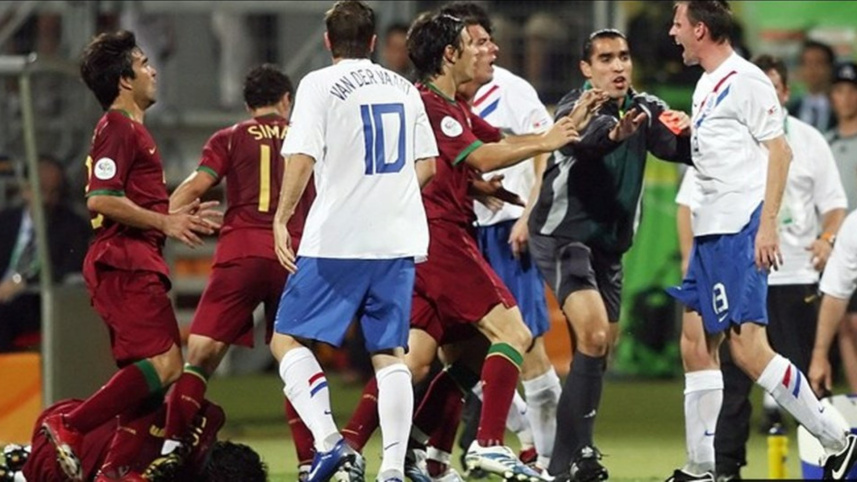
Football is often called the beautiful game. But what unfolded on that night in 2006 at the Frankenstadion in Nuremberg, (now the Max-Morlock-Stadion) could hardly be described as beautiful.
It was a raw exhibition of physicality, stubbornness, and aggression taken to the extreme. On the pitch, it resembled a battlefield, where both sides seemed intent on overpowering one another. Trip after trip, elbows driven into ribs, needless shoving -- the aesthetic beauty of football was seemingly sacrificed before thousands of stunned spectators in the stands.

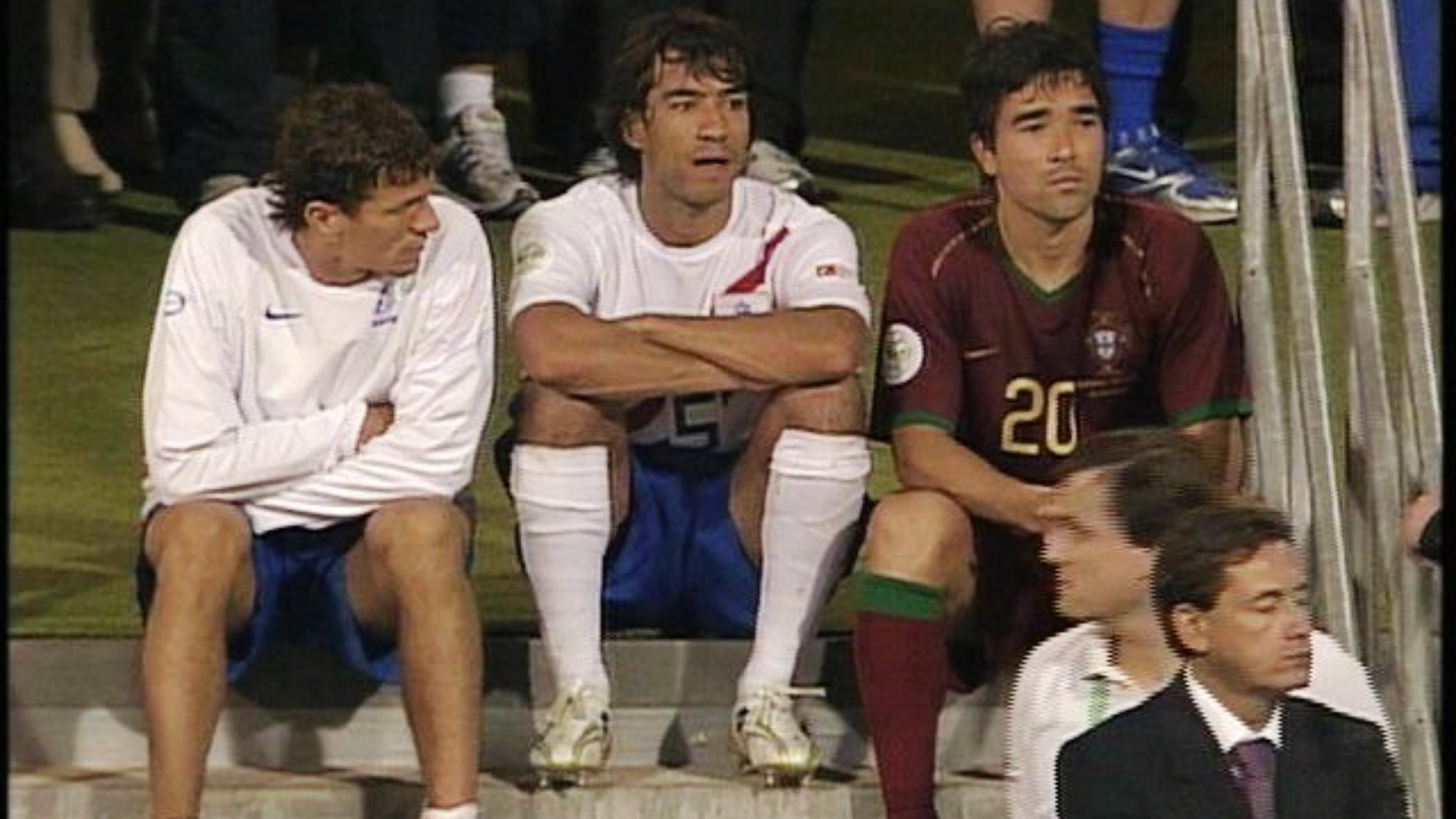
Amid the chaos and fiery tension, however, television cameras captured an extraordinary moment of calm. Portugal’s midfield maestro Deco and the Netherlands’ dependable left-back Giovanni van Bronckhorst were seen sitting side by side on the steps, quietly chatting. Just moments earlier, both had been sent off by the referee. While their teammates continued to battle fiercely on the pitch, the two Barcelona colleagues appeared to have set aside all hostility, finding a rare pocket of peace in what commentator Gary Bloom famously dubbed the “bad boys’ corner” -- a phrase that has since become an enduring part of football folklore.
June 25, 2006 -- the night of the World Cup Round of 16 clash between Portugal and the Netherlands -- is one football will never forget. On paper, it promised a showcase of flair and artistry. Instead, it went down in history as the infamous Battle of Nuremberg.
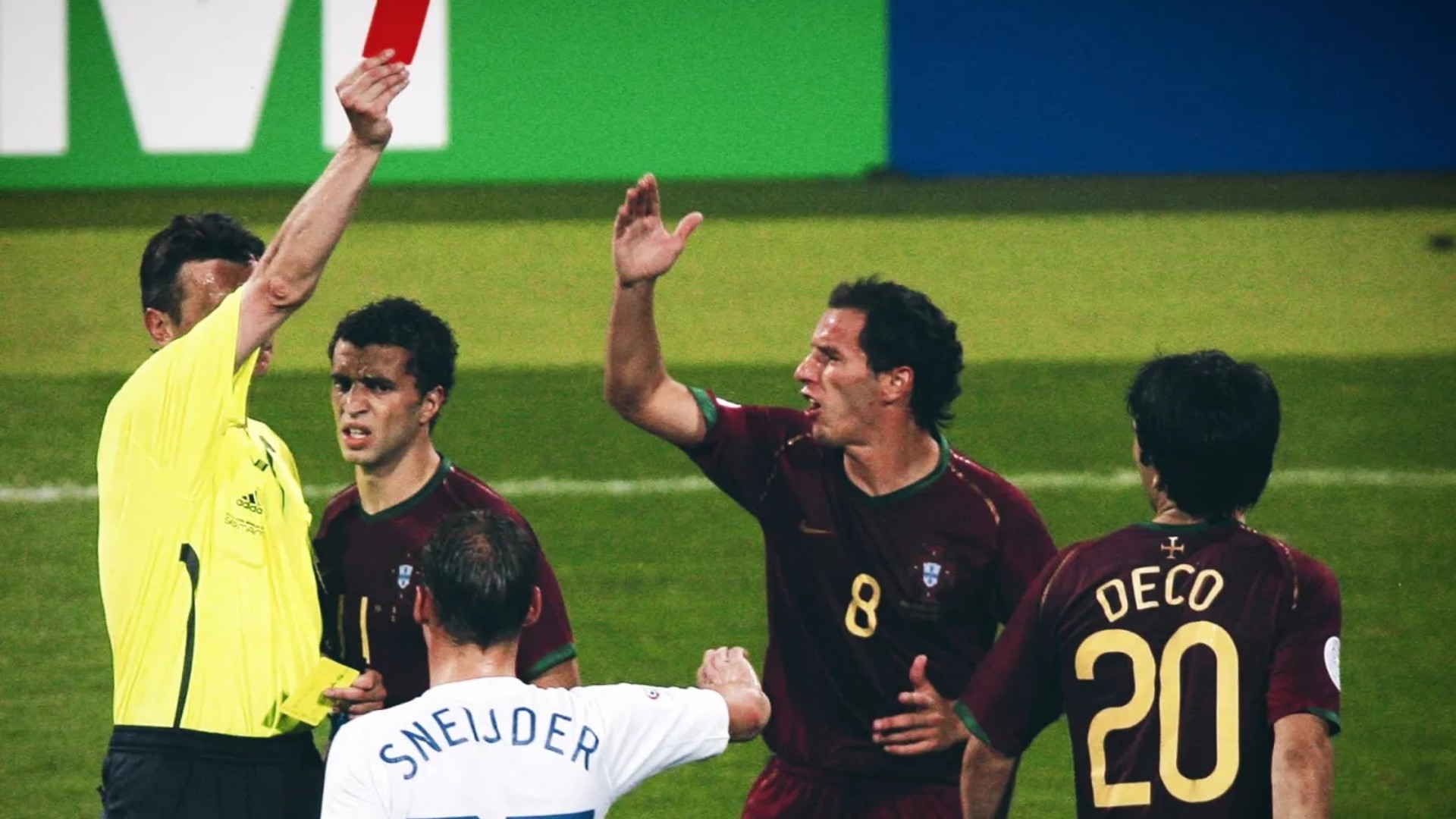
On that night, showing cards became almost routine for Russian referee Valentin Ivanov. Over the course of the match, he brandished a staggering 16 yellow cards and four red cards, setting a world record that still sends shivers down the spines of football fans.
Portugal (9 yellow cards, 2 red cards):
Maniche: Opened the floodgates in the 19th minute with a foul on Mark van Bommel.
Costinha: Booked in the 31st minute for a sliding challenge on Phillip Cocu, then sent off in first-half stoppage time after a needless handball earned him a second yellow card.
Petit: Lost his temper and was booked in the 50th minute.
Luis Figo: Shown a yellow card in the 60th minute for clashing with van Bommel and headbutting him.
Deco: Booked in the 73rd minute for a harsh foul on John Heitinga, then sent off just five minutes later for time-wasting while blocking a free-kick.
Ricardo: Even the goalkeeper was not spared, receiving a yellow card in the 76th minute for time-wasting.
Nuno Valente: Booked in the same minute for a reckless foul.
Netherlands (7 yellow cards, 2 red cards):
Mark van Bommel: Set the tone with an early booking in just the second minute.
Khalid Boulahrouz: Received a yellow card in the seventh minute for a brutal challenge on Cristiano Ronaldo, and was later sent off in the 63rd minute after fouling Figo.
Giovanni van Bronckhorst: Booked in the 59th minute, then dismissed in stoppage time for a second yellow after fouling Tiago—joining Deco on the sidelines.
 For all latest news, follow The Daily Star's Google News channel.
 Wesley Sneijder: Booked in the 73rd minute after pushing Petit in a moment of frustration.
Rafael van der Vaart: Shown a yellow card in the 74th minute for protesting the referee’s decision.
The number of red cards could have been even higher. In the 60th minute, Figo headbutted van Bommel -- an offence that typically warrants a straight red card. Yet, in a controversial decision, referee Ivanov showed only a yellow. Portugal coach Luiz Felipe Scolari later defended his captain with a philosophical and contentious remark: “Jesus Christ might have turned the other cheek, but Figo is not Jesus Christ.”
The tension spilled over into the post-match press conference, where the clash extended into a war of words. Scolari openly criticised FIFA’s ideals, saying, “FIFA always talks about fair play. But there was no fair play in Nuremberg.”
Netherlands coach and legendary footballer Marco van Basten responded sharply, implying tactical hypocrisy: “If you speak of fair play, then look in the mirror first. Portugal are very experienced in dirty tactics and time-wasting.”
Years later, Scolari would reflect that the atmosphere that night resembled South America’s Copa Libertadores -- where winning is everything, and beauty comes second.
In the aftermath, much of the blame fell on referee Ivanov. Even then FIFA President Sepp Blatter mocked his performance, saying, “I think the referee was not at the level of the players. Ivanov himself should have been shown a yellow card. It was a match full of emotion and drama, but his interventions lacked consistency.”
Blatter later apologised for his harsh comments, but FIFA took no chances -- Ivanov was not assigned another match for the remainder of the 2006 World Cup. The referee, however, stood firm, insisting that the players’ provocations and unsporting behaviour had forced him into such strict action.
The record of 16 yellow cards matched the tally from the Cameroon vs Germany group-stage match in the 2002 World Cup and stood as a joint record for 16 years. It was eventually surpassed at the 2022 Qatar World Cup, when Spanish referee Antonio Mateu Lahoz issued 18 yellow cards in the heated quarterfinal between Argentina and the Netherlands.
While the yellow card record has since been broken, the grim milestone of four red cards in a single World Cup match remains uniquely etched in history under the name Battle of Nuremberg. For football fans, that night endures as a haunting epic -- defined not by brilliance with the ball, but by the relentless flash of cards from a referee’s pocket.
Comments