


Abdus Sadeque: The best and the nicest

Bangladesh lost one of its finest sporting icons on Saturday.
Abdus Sadeque, the legendary hockey player who represented both Pakistan and Bangladesh and left an indelible mark on the country’s football landscape, breathed his last at a hospital in Dhaka in the early hours of the morning after battling cancer for more than a year. He was 79.

A towering figure of Bangladesh’s sporting history, Sadeque leaves behind two sons, a daughter, countless former teammates, students, admirers, and generations of sports lovers who grew up inspired by his achievements.
Yet, beyond his extraordinary accomplishments on the field, Sadeque stood apart for another reason -- his humility, warmth and kindness. Those who shared the dressing room with him remember not only a brilliant athlete but also a man whose ever-present smile and gentle personality touched everyone around him.
Ashraf Ali Sheikh, a member of the famed Swadhin Bangla Football Team, first played alongside Sadeque and later under his guidance in Abahani’s football team.
“I have known him since 1972, when we started playing together for Abahani. For the last 54 years, we remained in close contact. I have never seen a more decent and loving individual than him. I never saw him without a smile,” recalled the veteran footballer, who formed a formidable defensive partnership with Sadeque in Abahani’s backline.
Although he captained and coached Abahani’s football team after independence, it was his achievements in hockey that elevated him to legendary status.
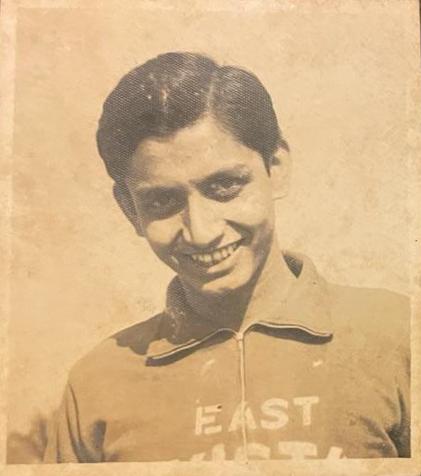
Born in 1946 in Old Dhaka’s Armanitola -- a cradle of many of the country’s greatest hockey talents -- Sadeque became the only player in history to represent both Pakistan and Bangladesh in international hockey.
His contemporary Pratap Shankar Hazra, another iconic sportsman who played both hockey and football alongside Sadeque, believes the late great deserved even greater international recognition.
“No other Bengali hockey player could be compared to him,” Hazra said. “Ajit Singh, Anwar Ahmed and Abdus Sadeque -- these three were the legends of that era. The only reason Sadeque did not receive greater recognition was because he was not Punjabi.”
Hazra’s final words perhaps best captured the emotion of an entire sporting community.
“He was the pride of Armanitola School, he was the pride of Bangladesh, and he was my pride.”
Even after retiring from active sports, Sadeque never walked away from the game he loved. The national sports award winner remained deeply involved with hockey administration and served twice as the general secretary of the Bangladesh Hockey Federation, dedicating his life to the development of the sport until his final days.
The man may have departed, but the memories of his graceful stickwork, his leadership, and above all, his humanity will continue to live on in Bangladesh’s sporting folklore for generations to come.
 For all latest news, follow The Daily Star's Google News channel.
Comments