


Driving the future: Why Bangladesh golf needs greater investment

Bangladesh's professional golf landscape has undergone a remarkable transformation over the past decade.
Once considered a niche sport with limited opportunities for career advancement, golf is gradually establishing itself as a viable profession for talented athletes willing to dedicate themselves to the game.

While challenges remain, the progress made in recent years suggests that Bangladeshi professional golf is entering a new era – one defined by improved standards, stronger competition, and growing ambitions on the international stage.
At the heart of this transformation stands a new generation of professional golfers. Players such as Badal Hossain, Md. Razu, Akbar Hossain, and Md. Somrat Sikdar are consistently demonstrating their abilities in domestic and regional competitions. Alongside established professionals like Siddikur Rahman and Jamal Hossain Mollah, they represent a growing pool of talent capable of carrying Bangladesh's golfing aspirations forward.
The journey has not been easy. Professional golf remains one of the most demanding and expensive sports in the world. Unlike team sports where organizations often cover operational costs, golfers must frequently shoulder expenses related to coaching, equipment, fitness training, travel, accommodation, tournament entry fees, and international competition. Success requires not only talent and dedication but also financial stability and access to opportunities.
A decade ago, many Bangladeshi professional golfers faced significant obstacles simply to continue competing. For most players, sponsorship was not merely helpful – it was essential for survival. Opportunities to participate in overseas tournaments were limited, and many professionals relied heavily on sponsors to fund travel expenses and support their careers. Without external backing, even highly talented golfers struggled to gain the exposure and experience needed to compete internationally.
Today, the situation has improved considerably.
The domestic professional circuit has become more active, prize funds have increased, and players have access to more competitive events than in previous years. Many professionals now compete regularly and earn significantly more prize money than their predecessors. While golf is still far from being a financially secure profession for most players, there is a growing sense that professional golf can provide a sustainable career path for those who consistently perform at a high level.
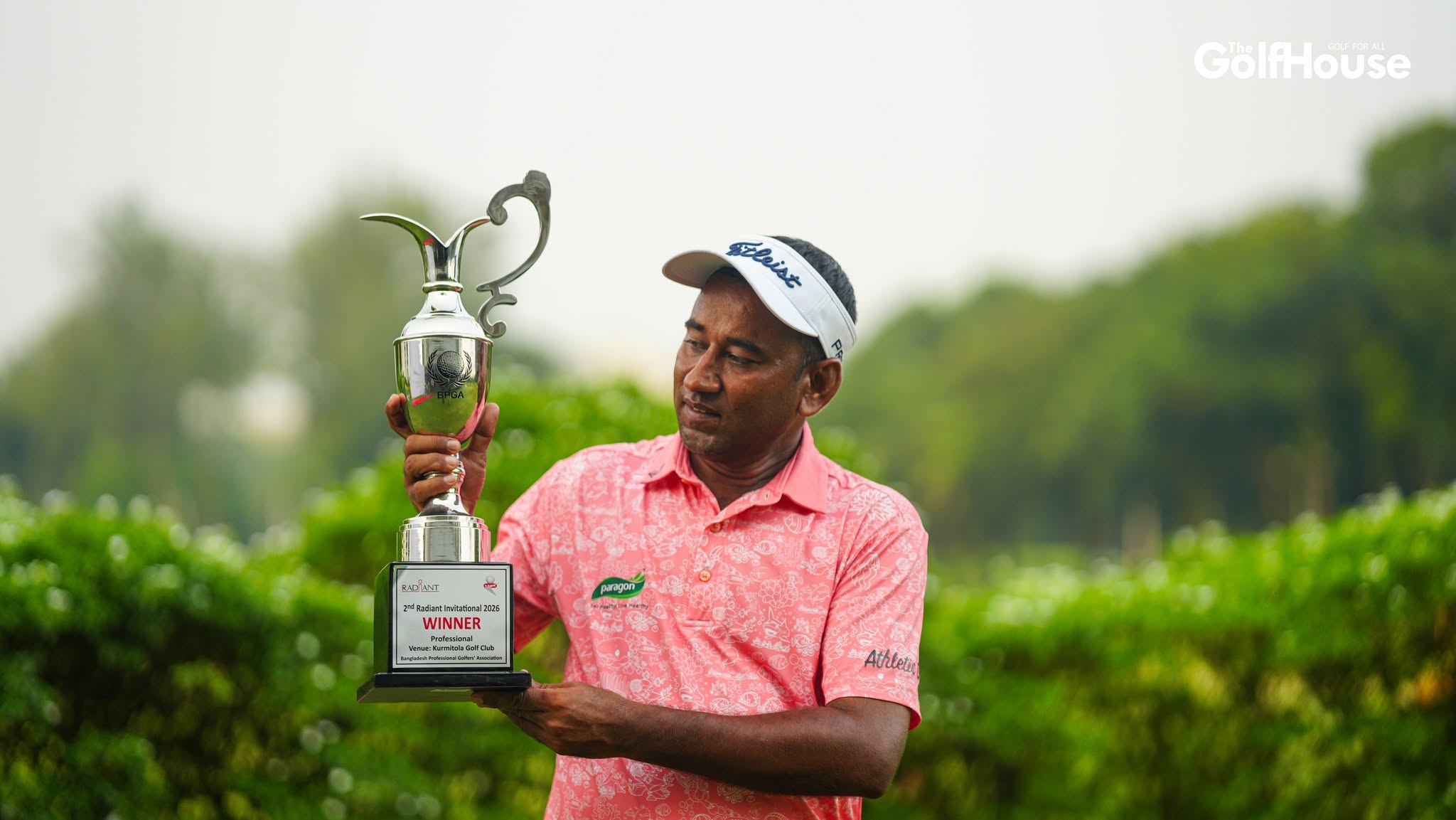
This evolution reflects the increasing maturity of Bangladesh's professional golf ecosystem.
No discussion of professional golf in Bangladesh would be complete without acknowledging the pioneering contribution of Siddikur Rahman. His success on the Asian Tour transformed perceptions of what Bangladeshi golfers could achieve. By winning internationally and competing against some of Asia's finest golfers, Siddikur became a symbol of possibility for an entire generation.
His achievements extended beyond trophies and rankings. He demonstrated that a golfer from Bangladesh could compete successfully on the international stage through hard work, discipline, and perseverance. For countless young golfers, Siddikur's journey provided inspiration and proof that professional golf could become a legitimate career rather than merely a passion.
Today, that foundation is being strengthened by players such as Jamal Hossain Mollah and the emerging generation of professionals who continue to raise competitive standards across the country. Their performances indicate that Bangladesh possesses the talent necessary to remain competitive within the region and potentially achieve greater international success in the years ahead.
However, talent alone is not enough.
If Bangladesh's professional golfers are to take the next step in their development, greater investment from the corporate sector will be essential. Sponsorship remains one of the most influential factors in professional sports development worldwide, and golf is no exception.
Too often, sponsorship is viewed solely as a financial transaction. In reality, its value extends much further. Sponsorship provides stability, confidence, and the freedom for athletes to focus on performance rather than financial uncertainty. A golfer who knows that travel costs, tournament expenses, and training requirements are covered can dedicate more time and energy to improving their game.

This psychological advantage is often overlooked. Confidence plays a crucial role in elite sports, and long-term support allows athletes to compete with greater focus and ambition. Sponsorship helps create an environment where performance can flourish.
 For all latest news, follow The Daily Star's Google News channel.
 Several organizations deserve recognition for their ongoing commitment to golf in Bangladesh. Companies such as BTI, Runner Group, Paragon Group, Radiant Pharmaceuticals, and other corporate supporters have played an important role in sustaining professional tournaments and creating opportunities for players. Their continued investment has helped strengthen the foundation of professional golf and provided valuable support during critical stages of the sport's development.
Yet the future growth of professional golf will require broader participation from the business community.
Long-term partnerships are particularly important. Sustainable progress cannot be achieved through occasional support alone. Professional golfers require consistent backing that allows them to plan their careers strategically, participate in stronger tournaments, and pursue international opportunities. As the quality of Bangladeshi golfers continues to improve, the return on such investments becomes increasingly attractive.
There is also a significant branding opportunity for local companies.
Athlete endorsements have become a cornerstone of sports marketing globally. Golfers often embody qualities that businesses seek to associate with their brands – discipline, integrity, consistency, professionalism, and excellence. In Bangladesh, Siddikur Rahman remains one of the country's most recognizable sporting figures. His reputation extends beyond golf, making him a valuable ambassador for brands seeking authentic connections with consumers.
The same principle can eventually apply to the next generation of successful professionals. As players achieve greater recognition through strong performances, they become powerful platforms for brand visibility and engagement. Companies that invest early in promising golfers may benefit not only from positive publicity but also from long-term partnerships built around shared values and success.
Perhaps the most important outcome of professional golf's growth lies in its ability to inspire future generations.
Young athletes need role models. When they see Bangladeshi golfers succeeding nationally and internationally, they begin to believe that similar achievements are possible. Families become more supportive, junior participation increases, and golf gradually gains acceptance as a viable professional pathway.
This process has already begun. Siddikur Rahman's success inspired many of today's professionals. Future achievements by players such as Jamal, Razu, Badal, Akbar, and Somrat could inspire countless others to pursue the sport with greater determination.
Bangladesh professional golf has reached a promising stage in its development. The talent is evident, the competitive environment is improving, and corporate interest continues to grow. What is needed now is sustained investment, long-term vision, and collective commitment from sponsors, governing bodies, clubs, and stakeholders.
The progress achieved over the past decade proves that Bangladeshi golfers possess both the skill and determination to compete at higher levels. With stronger support and greater opportunities, the coming years could mark the most exciting chapter yet in the history of professional golf in Bangladesh.
**The author is the editor and publisher of TheGolfHouse magazine
Comments