


Why Chelsea keep losing control of games
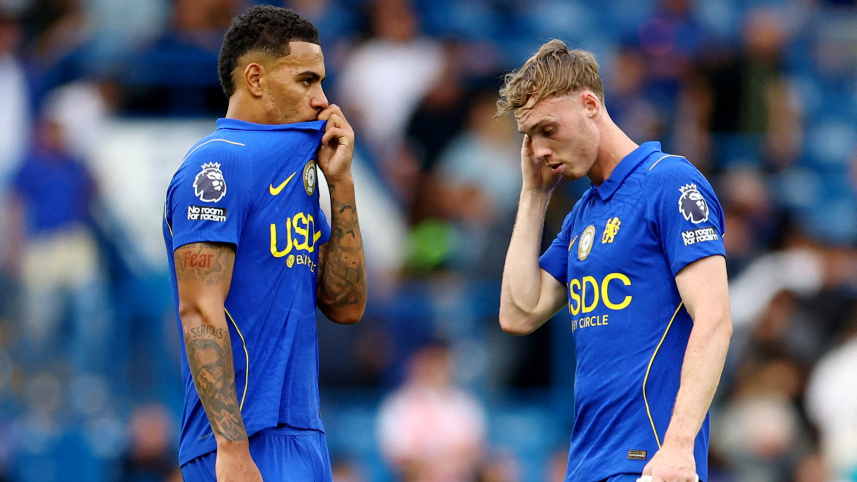
Chelsea have made a habit of starting games brilliantly. The problem is what happens next.
For the fourth time in six matches this season, they took the lead but failed to turn control into victory, held to a 2-2 draw by promoted Hull City at Stamford Bridge.

Morgan Rogers gave Chelsea the perfect start in the seventh minute on Saturday, driving into the area before finding the bottom corner with a crisp left-footed finish.
The hosts were in complete control. Yet, within six minutes, they had somehow gone from one goal ahead to one behind.
Mohamed Belloumi scored twice, with both goals exposing the defensive fragility that has followed Chelsea into the new season.
For the first, Jorrel Hato failed to deal with a long ball into the area, allowing it to bounce before Belloumi finished. The second came from a Hull corner. Emiliano Martinez came for the cross but failed to reach it, and although Semi Ajayi’s header struck the bar, Oli McBurnie kept the move alive before Belloumi’s shot took a deflection off Levi Colwill on its way in.
Joao Pedro eventually rescued a point for Xabi Alonso’s side, but the bigger concern remains the same.
Chelsea have conceded in 20 consecutive Premier League games, a run that tells its own story. Opponents now have every reason to believe they can score against them, regardless of how well Chelsea begin.
They have taken the lead in five of their six matches this season. Only Luton Town, in the Carabao Cup, have failed to score against them.
There is a recurring pattern.
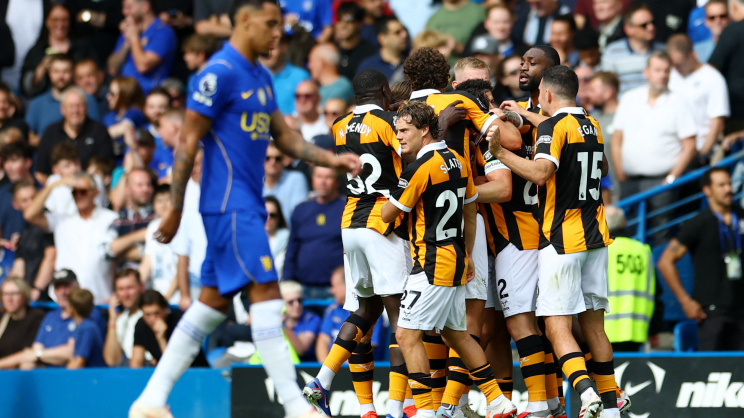
Chelsea dominated after Rogers’ opener, with their passing and movement earning loud applause around Stamford Bridge. Then came a stoppage while Hull goalkeeper Konstantinos Tzolakis received treatment.
From the resulting restart, Tzolakis sent a long ball forward. Chelsea failed to deal with it, Ryan Giles hooked it into the area and Hato misjudged the bounce. Belloumi did not need a second invitation.
The goal was a reminder that Chelsea can go from looking completely in control to making elementary defensive errors in a matter of moments.
And once Hull equalised, Chelsea lost their composure. Six minutes later, they were behind.
That inability to respond calmly to setbacks has been a recurring problem at Stamford Bridge in recent seasons, and Alonso is discovering that changing the manager does not automatically change the habits.
Chelsea even had warning signs before falling behind for a second time. Martinez had already produced a fine save to deny Lewie Coyle, while Ajayi headed against the bar.
Hull were not simply hanging on. They believed they could win.
That may be the most concerning part for Chelsea.
A team with title ambitions should not allow a newly promoted side to sense that a game is there for the taking after going behind early.
Alonso had already made one notable selection call by leaving Maxence Lacroix on the bench after five consecutive starts, but changing personnel has not yet solved Chelsea’s defensive problems.
 For all latest news, follow The Daily Star's Google News channel.
 Until they learn how to control the difficult periods of matches, the same mistakes will continue to cost them points.
Can Chelsea really challenge for the title?
That is where the optimism surrounding Chelsea needs to be tempered.
There is plenty to like about Alonso’s team going forward. They are aggressive, entertaining and capable of creating chances at will.
But title contenders also need to know when to slow a game down, protect a lead and kill off an opponent’s momentum.
Chelsea are not doing that.
A 2-1 defeat at Arsenal last week was hardly embarrassing. Arsenal are among the favourites for the title and Chelsea competed well.
But dropping two points at home to newly promoted Hull immediately afterwards is a different matter.
Depending on the other results this weekend, Chelsea could already find themselves five points behind the champions and Manchester City.
There are mitigating factors. Alonso is still building his team, and the absence of Moises Caicedo has deprived Chelsea of an influential presence in midfield.
His return cannot come soon enough.
Chelsea’s realistic minimum target remains Champions League qualification, whether through a top-four or top-five finish.
That is still well within their reach.
But talk of Chelsea going toe-to-toe with Arsenal for the title looks premature.
Before they can challenge for the biggest prize, they need to solve a much simpler problem: when they have control, they need to learn how to keep it.
Comments