


What irregularities did the NSC probe find in the BCB elections?
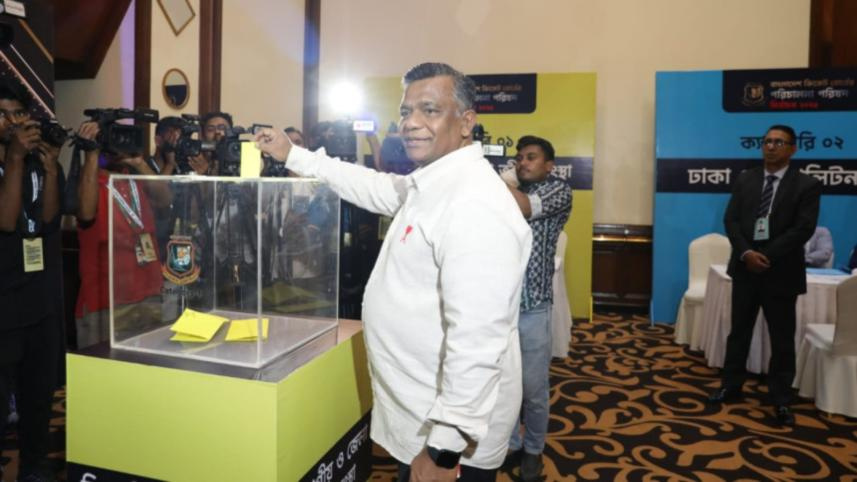
The National Sports Council (NSC) on Tuesday dissolved the Aminul Islam Bulbul-led Bangladesh Cricket Board's (BCB) elected body, and former national team captain Tamim Iqbal was named president of ad hoc committee.
NSC Sports Director Aminul Ahesan informed the media at a press conference this afternoon, and before that, he presented the report submitted by the investigation committee formed by the council, where they found several irregularities during last year's BCB elections on October 6.

Below are the complaints and findings of the five-member investigation committee, led by retired Supreme Court justice AKM Asaduzzaman, which was formed by NSC on March 11 to investigate alleged irregularities in last year’s BCB elections.
6.2 Complaints from Category 1 (District/Divisional Sports Associations)
Source of complaint: Mr. Shariful Alam and others (on behalf of former councillors)
Date of complaint: 10 March 2026
(a) Extension of deadline for submission of councillor names
Findings: The deadline for submission of councillor nomination forms was initially set as 17.09.2025, and letters in this regard were sent to the relevant authorities on 01.09.2025 and 02.09.2025. Subsequently, it was observed that BCB first extended the deadline until 19.09.2025 at 4:00pm and later until 22.09.2025 at 6:00pm. Upon overall consideration, the committee believes that this extension was made without proper justification and with hidden intent, in order to replace previously nominated councillors with preferred individuals and create opportunities for them to be elected as directors.
(b) Instruction to resend councillor names from the ad hoc committee
Findings: BCB instructed district and divisional associations to resend councillor names from ad hoc committees. The National Sports Council influenced district association presidents in various ways. Additionally, Mr. Saiful Islam, private secretary to the then Chairman of the National Sports Council and Youth and Sports Adviser Asif Mahmud Shojib Bhuyain, influenced relevant individuals, which was confirmed through testimonies of the then Deputy Commissioners of Bogura, Mrs. Hosna Afroza, and Chattogram, Mrs. Farida Khanam. Although this appears to be unjustified central interference in the local nomination process, the committee refrained from commenting as the matter is pending before the Honourable High Court Division.
(c) Pressure to nominate specific individuals
Findings: Through interference by government authorities, particularly NSC officials and Mr. Saiful Islam (PS to the then Sports Adviser), pressure was applied on district/divisional presidents to nominate specific individuals as councillors. According to the committee, this was a coordinated effort to influence election outcomes.
(d) Legitimacy of ad hoc committees
Findings: Most ad hoc committees had expired, yet councillor names were submitted through them. According to the constitution, such committees are required to complete elections within 90 days and hand over responsibilities to the executive committee. As the matter is sub judice in the High Court, the committee refrained from making comments.
(e) Publication of final voter list
Findings: The final voter list was not published on time, and multiple versions were released. The voter list dated 23.09.2025 excluded voters from six districts, while the revised list dated 26.09.2025 included voters from five of those six districts. This raises questions about transparency.
(f) Unjustified intervention through inclusion of new members in ad hoc committees to influence Category 1
Findings: The committee observed that on 08.09.2025, the Chattogram District ad hoc committee was restructured by adding two new members, increasing membership from seven to nine. On the same day, four new members were added to the Chattogram Divisional ad hoc committee, increasing it from seven to 11 members. Later, on 11.09.2025, the Rangpur Divisional ad hoc committee was approved with 11 members. According to the relevant provisions, ad hoc committees should consist of seven members. Therefore, the committee believes that the government, through NSC, influenced the inclusion of new members to affect the upcoming BCB election, ensuring their inclusion as councillors and enabling them to vote for preferred candidates.
(g) Intervention by former Sports Adviser Mr. Asif Mahmud Sajeeb Bhuiyan
 For all latest news, follow The Daily Star's Google News channel.
 Findings: Based on multiple interviews, the committee found that the former Sports Adviser unjustifiably interfered in the election process. He personally, and through his PS Mr. Saiful Islam, influenced changes in ad hoc committee members and voting in favour of preferred candidates. The committee believes this interference compromised the independence of the election. However, unfortunately, neither of them appeared for interviews nor provided statements regarding the allegations.
(h) Manipulation of e-voting with assistance of the Sports Adviser
Findings: The committee found that the BCB President, in coordination with the former Sports Adviser and his PS Mr. Saiful Islam, was involved in controlling and manipulating the e-voting process. Most interviewed councillors opined that the e-voting system was pre-planned.
(i) Casting e-votes from specific locations without secrecy
Findings: The committee found that e-votes were cast from specific locations without maintaining secrecy, violating fundamental democratic principles and the BCB constitution. Most e-voters were also physically present at polling centres. Despite having the opportunity for direct voting, gathering at Hotel Sheraton in Dhaka on the night of the 5th and casting votes collectively appeared to the committee as manipulation.
(j) Inclusion of Mr. Aminul Islam Bulbul and Mr. Nazmul Abedin Fahim in ad hoc committees and undue influence to secure their councillorship
Findings: The committee found that, with assistance from the Sports Adviser and NSC officials, Mr. Aminul Islam Bulbul and Mr. Nazmul Abedin Fahim were included in the Dhaka Divisional and District ad hoc committees on 08 September 2025 to ensure their councillorship and later election as BCB directors. This reflects bias and influence by NSC/Sports Adviser and constitutes serious abuse of power.
(k) Control of the election process
Findings: The committee found that the 2025 BCB election was controlled by the BCB President, former Sports Adviser, and their associates. The election process was neither independent, fair, nor transparent.
6.3 Complaints from Category 2 (Metropolitan Clubs)
Source: 55 presidents/secretaries/councillors
Date: 09 March 2026
(a) Election manipulation involving metropolitan clubs
Findings: The committee found that the 2025 BCB election was manipulated through coordinated efforts by Mr. Aminul Islam Bulbul and government officials, undermining election integrity. Club councillors reported threats and unlawful coercion.
(b) Misuse of e-voting system
Findings: Councillors were influenced to vote via e-voting and encouraged to vote at Hotel Sheraton, Banani, where BCB Vice President Mr. Md. Shakhawat has interests. Voting secrecy was not maintained. The system was designed to control results and failed to meet transparency standards.
(c) Acceptance of nomination after deadline (Mr. Faruque Ahmed)
Findings: According to the Chief Election Commissioner, the final councillor list was received on 23.09.2025, although the deadline was 22.09.2025. However, the delay was not investigated. Meanwhile, BCB CEO Mr. Nizam Uddin Chowdhury stated that the list was sent on 22.09.2025. Conflicting statements and lack of records led the committee to conclude that Mr. Faruque Ahmed received illegal advantage.
(d) Unethical advantages to preferred candidates
Findings: Preferred candidates received benefits such as late nomination acceptance, early access to voter lists, and illegal campaign support.
(e) Influencing e-voters to vote at specific locations
Findings: E-voters were directed to vote from specific locations, compromising secrecy and independence.
(f) Forcing voters to vote in presence of officials
Findings: Voters were forced to vote in the presence of government officials, violating principles of free and fair elections.
(g) Overall voting environment
Findings: The environment was not suitable for a free and fair election. Lack of transparency, threats, and procedural irregularities were widespread.
(h) Violation of BCB constitution
Findings: The identified activities violated multiple constitutional provisions, including ballot secrecy, equal opportunity, and independent election process.
6.4 Complaints from Clause 3 (Former cricketers and others)
Source: Mr. Kazi Md. Yusha and others
Date: 10 March 2026
(a) Whether board meeting was held before nomination
Findings: The 21st BCB Board meeting recorded nomination of 10 former cricketers as councillors, authorising Mr. Aminul Islam Bulbul to select them. However, other directors denied this. Requested audio/video records were not provided. The committee believes BCB was unwilling to provide them, and objections regarding approval are valid.
(b) Whether BCB President exceeded authority
Findings: Conflicting statements and lack of records suggest Mr. Aminul Islam Bulbul was not properly authorised. Under Article 9.3, the President cannot unilaterally nominate 10 former cricketers. This constitutes abuse of power and constitutional violation.
(c) Impact of nominations on election
Findings: The unilateral nomination significantly influenced the election, benefiting the President and affecting outcomes.
6.5 Systemic Findings -- Constitutional Deficiencies
(a) Inadequacy of BCB Constitution
Findings: The constitution is insufficient to ensure free, fair, and transparent elections. Structural weaknesses enabled irregularities.
(b) Incomplete election rules
Findings: Election Rules 2025 are incomplete. Lack of provisions for e-voting, oversight, and ballot secrecy created vulnerabilities.
To prevent future occurrences, the report also suggested a few recommendations:
Recommendations for Reform
1. BCB Constitution Reform
a. Separate executive and electoral functions clearly
b. Establish independent Governance and Ethics Committee
c. Clearly define powers and responsibilities of officials
d. Introduce whistleblower protection mechanism
2. Election Rules Reform
a. Create comprehensive election regulations covering all stages
b. Ensure security, secrecy, integrity, and auditability of e-voting
c. Introduce transparent candidate eligibility verification
d. Establish time-bound dispute resolution system
3. Election Commission Reform
a. Clarify constitutional provisions on elections
b. Establish independent permanent election commission
c. Publish voter list at least 60 days prior, with 30 days for objections
d. Mandatory third-party security audit for e-voting systems
Comments