


BCB polls: Legality intact, legitimacy questioned

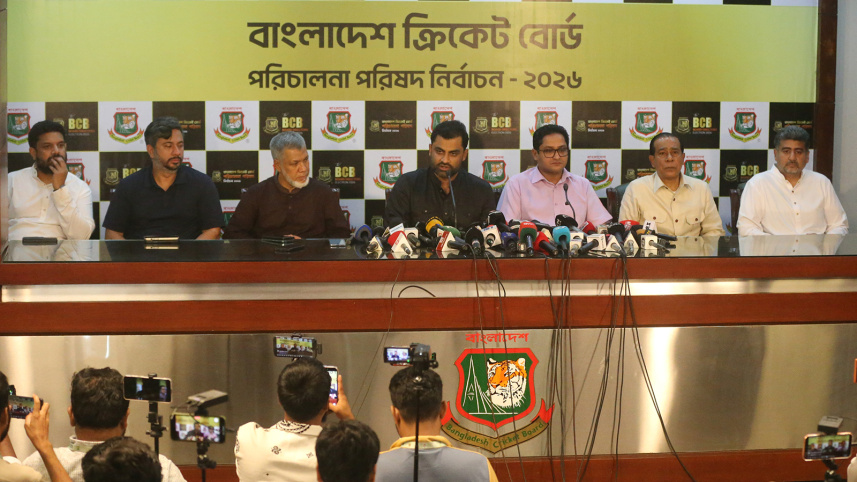
In the polished corridors of the Sher-e-Bangla National Stadium in Mirpur, where cricket is meant to be played, celebrated, and governed, the Bangladesh Cricket Board (BCB) has once again produced an election that feels less like a contest and more like a coronation dressed up as process.
Former Bangladesh captain Tamim Iqbal has been elected uncontested as president of the BCB, after no rival candidate stepped forward to challenge his nomination. On paper, it is presented as a smooth consensus. In reality, it raises an old and uncomfortable question in Bangladesh cricket: how much of this was ever truly open to competition?

In Bangladesh cricket governance, the term “uncontested” rarely signals unity -- more often it suggests the outcome was settled long before the ballots were cast, and the formalities merely followed.
Tamim’s rise from ad hoc committee chief to elected president is being projected as a natural transition of leadership. Yet the shift feels less like a democratic handover and more like a carefully managed handoff, shaped by alignments of influence that were visible well before election day.
An ad hoc committee had been appointed with the stated mandate of ensuring a free and fair election.
Instead, it oversaw the formation of a 25-member board where many of the key positions were filled by figures already embedded within the same administrative ecosystem. Procedurally, everything appears intact. Politically and institutionally, however, questions linger about whether process alone can guarantee fairness when influence remains concentrated.
And that is where the unease begins -- not in legality, but in legitimacy.
Observers have long argued that the BCB operates within a structure where influence often travels faster than regulation. This latest election has only reinforced that perception, with recurring allegations of political proximity, informal backing, and behind-the-scenes alignment resurfacing once again -- not as isolated whispers, but as a familiar pattern that refuses to fade.
A closer examination of the councillorship and board composition adds texture to that concern. Several elected directors, according to widely reported accounts, are connected through family or institutional ties to influential political figures or state-linked networks.
In the club category, Israfil Khosru and Saeed Ibrahim Ahmed each secured 72 votes, placing them among the highest vote-getters. Both were previously part of the ad hoc structure. Israfil, councillor of Exium Cricketers, is the son of Finance Minister Amir Khosru Mahmud Chowdhury, while Ibrahim of Fear Fighters Club is the son of Home Minister Salahuddin Ahmed.
Another prominent name is Asif Rabbani, who received 64 votes and is the son of Golam Mohammad Siraj, Member of Parliament from Bogura-5 constituency. Yasir Abbas, also elected, is the son of Mirza Abbas, MP from Dhaka-10 and political adviser to the Prime Minister. Sakif Ahmed Salam, a businessman by profession, and Sarkar Mahbub Hossain Shamim, associated with the pro-government doctors’ organisation DAB, further reflect the wide mix of business, political, and organisational backgrounds represented in the board.
In the district and divisional categories, the pattern continues in different forms across regions. In Khulna, BNP leader Shofiqul Alam and Shantonu Islam -- brother of Jashore’s State Minister for Power and Energy Anindya Islam Amit -- were elected from among competing candidates. In Dhaka, Sayed Bin Zaman, son of Aviation and Tourism State Minister Rashiduzzaman Millat, secured a position unopposed.
From Chattogram, Moin Uddin Chowdhury of Lakshmipur, uncle of Water Resources Minister Shahid Uddin Chowdhury, was elected a director. In Rangpur, Mirza Faisal Amin, brother of Local Government Minister and BNP Secretary General Mirza Fakhrul Islam Alamgir, also secured a directorship. Rajshahi’s Mir Shakhrul Alam, son of State Minister Mir Shahae Alam, also entered the board, while Abdul Quiyum Choudhury of Sylhet -- a former BCB director and current city corporation administrator -- returned once again.
Taken individually, these affiliations may appear as routine intersections between public life, business, and sports administration. Taken together, they reinforce a perception that access to cricket governance is often shaped as much by proximity to power as by sporting credentials or administrative expertise.
That is where the central tension sits: not whether politically connected individuals can or should participate in sports administration, but whether the system offers an equally open pathway for those without such networks to rise to the same table.
Tamim now stands at the apex of this structure, carrying both the credibility of a national sporting icon and the burden of leading an institution that repeatedly struggles to convince its stakeholders that outcomes are not predetermined.
And so, the question remains, unavoidable and unresolved: is this truly an elected leadership -- or an institution reflecting itself, then calling that reflection democracy?
 For all latest news, follow The Daily Star's Google News channel.
Comments