Why have Nihar Koli and Samrat been sent back to their alleged abusers?

In 2024, the Forest Department rescued two captive elephants, Nihar Koli and Samrat, following serious allegations of abuse and mistreatment, and placed them under government custody. Nihar Koli was rescued after a viral video drew attention to the severe physical abuse she had endured. Samrat was taken into custody following an incident in Gopalganj in which he reportedly killed a mahout after suffering prolonged mistreatment.
For nearly two years, Nihar Koli and Samrat remained under government custody at Gazipur Safari Park. But on 12 August this year, the Forest Department returned both elephants to their former owners — the same people from whose custody they had been removed following allegations of abuse and mistreatment.
The decision came just days after two other captive elephants under the supervision of Gazipur Safari Park died within two days. According to Sanaullah Patwari, Conservator of Forests (Wildlife and Nature Conservation Unit), one had been receiving treatment for an extended period, while the other died about 12 hours after suddenly falling ill. Patwari said the deaths were unrelated and rejected suggestions that they resulted from negligence.
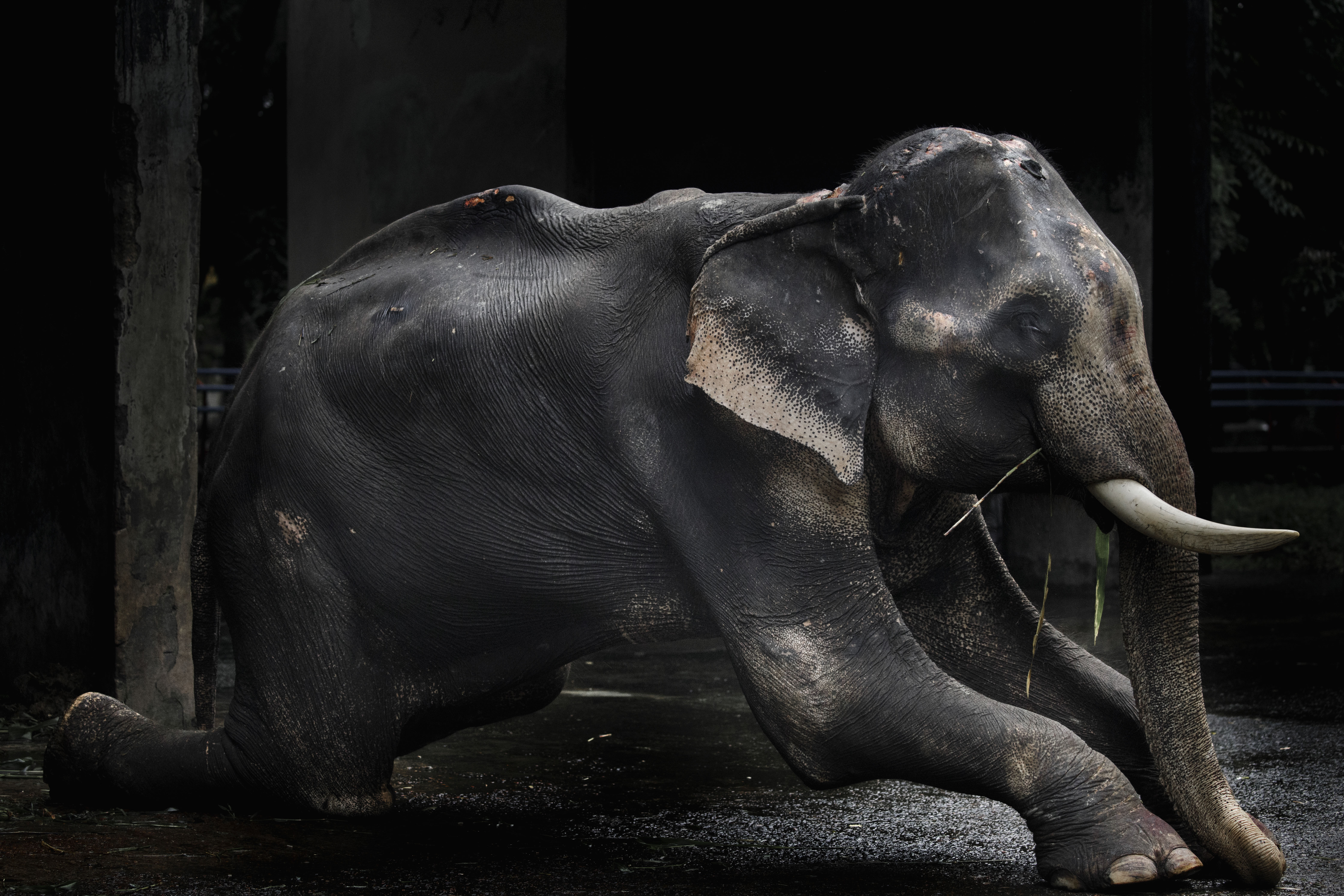
The incidents draw attention to a larger problem. If government facilities lack the capacity to provide long-term care for rescued captive elephants, where should those animals go? More importantly, how can an elephant rescued from alleged abuse be returned to the custody of the very person from whom it was rescued?
The Forest Department says its decision was made under an established mechanism known as jimma, or custody. Patwari said wildlife can be entrusted to an individual when the government lacks the capacity or logistical facilities to retain it. With captive elephants, he argues, owners or custodians are often among the few people with the experience and infrastructure required to handle them.
According to the department, Nihar Koli and Samrat were not handed back without conditions. The officer in charge of Gazipur Safari Park, Tareq Rahman, said the owners submitted undertakings and muchleka (legal bonds), promising that the animals would not be subjected to cruelty, used for illegal or unethical activities, or used in ways that cause a public nuisance. A veterinary professional was present when the elephants were released, and both were reportedly in good health. Patwari said the department could take them back if they were abused again.
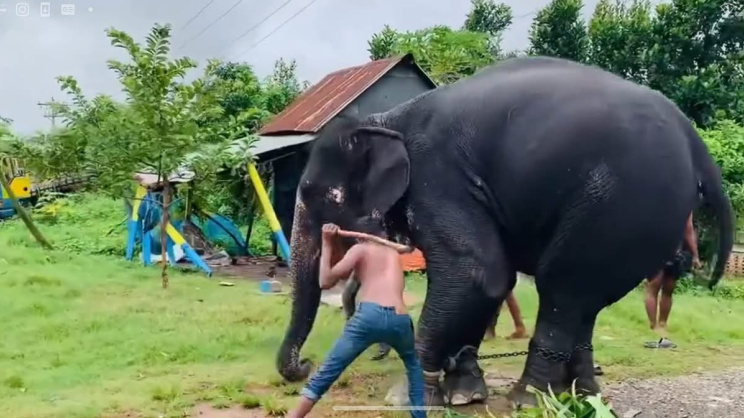
But wildlife experts, lawyers and animal rights activists question whether a written undertaking provides sufficient protection for animals previously rescued following allegations of mistreatment.
Dr Mohammad Ali Reza Khan, a wildlife expert and member of the Wildlife Conservation Commission under the Ministry of Environment, Forest and Climate Change, strongly criticised the decision.
“I consider returning elephants rescued by the government after evidence of abuse by their owners to those same owners a failure of the law and a grave injustice,” Dr Khan said.
He also raises a broader institutional question: if the Forest Department lacks adequate facilities, specialised personnel and veterinary services to provide long-term care for rescued wildlife, what happens to animals after they are rescued? For him, the recent elephant deaths at Gazipur Safari Park expose a fundamental failure in the system: the state can rescue wildlife from abuse, yet appears unable to guarantee their safety and welfare once they are in its custody.
The concerns are particularly acute in Samrat's case. After the elephant was recently returned to private custody, his current custodian, Monir, said Samrat would need to undergo hadani again. “The elephant has been under the care of different mahouts (caretakers) in the safari park; now it needs to go through hadani, a traditional process of training or breaking an elephant, once again for reintegration into its current environment,” he said.
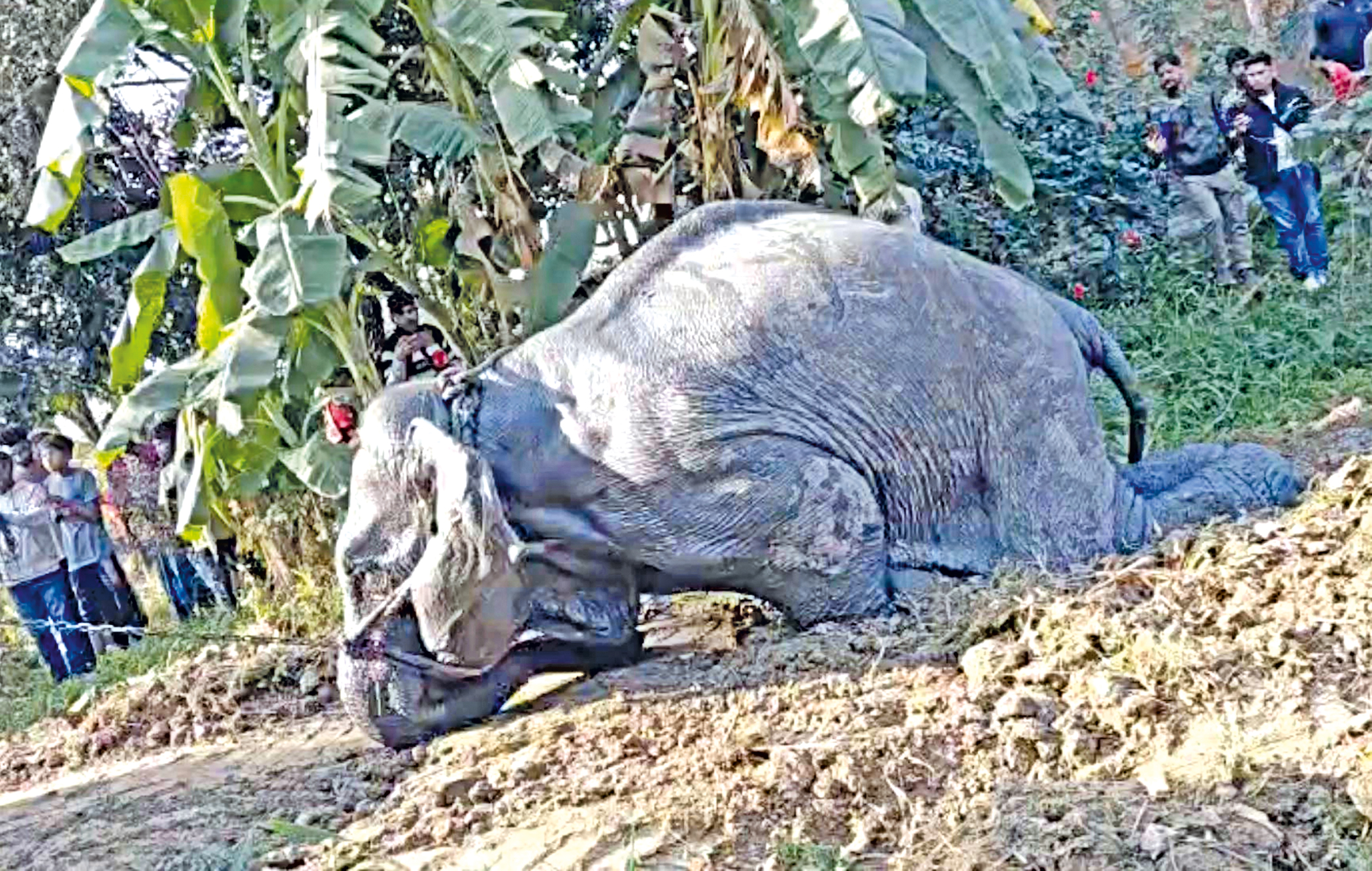
The prospect has alarmed animal rights activists. Rakibul Haq Amil, an animal
rights activist, warns that hadani, which can involve restraint and forcible control, could further traumatise Samrat and expose him to the same kind of treatment from which he was rescued. He argues that no such training should take place without a proper behavioural and welfare assessment.
This points to a central weakness in the arrangement: a legal bond is not the same as an independent assessment of an elephant's welfare or the suitability of its custodian.
Amirul Rajiv, an elephant rights activist and coordinator of the Bangladesh Tree Protection Movement, says authorities should assess whether the person receiving an elephant has sufficient land, financial resources, trained mahouts, veterinary support and facilities to care for it safely.
“Nihar Koli and Samrat were not seized under ordinary circumstances. They were removed because of alleged offences and abuse. What is the proof that if they are given back to the old owners, they won't end up in that kind of situation again?” Rajiv asks.
Rajiv says the authorities have provided no public evidence showing that the conditions that led to the elephants’ rescue have changed or that returning them to their former owners is now safe.
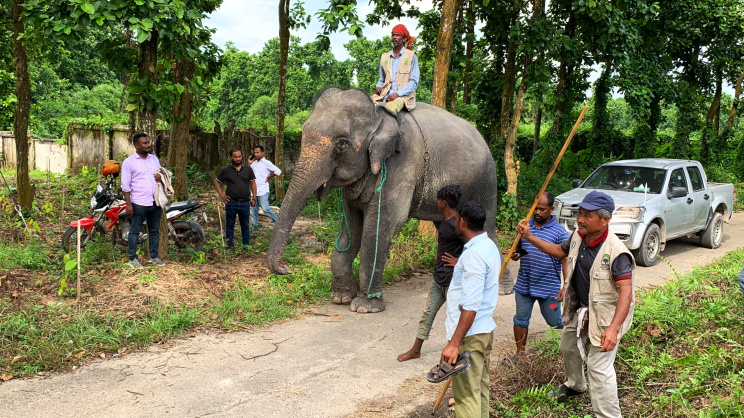
The legal position is more complicated than simply determining whether the return was “legal” or “illegal”. Bangladesh’s Wildlife (Conservation and Security) Ordinance, 2026 places primary responsibility for wildlife protection, welfare, conservation and security on the Forest Department. Section 5 allows the department to entrust rescued wildlife to another person, provided appropriate protection is ensured, and to return the animal to government custody when necessary.
The law therefore appears to give the Forest Department discretion to place rescued elephants in private custody. But that does not resolve the crucial question in these cases: how does the department determine whether a former owner is a suitable custodian when the elephant was previously removed following allegations of abuse?
Much depends on the conditions attached to jimma, how rigorously they are assessed and how closely they are monitored. Patwari said monitoring may ordinarily occur once or twice a year, but acknowledged that these elephants should be regularly monitored through nearby Forest Department offices. Animal rights activists question whether occasional inspections provide adequate protection for animals with histories of alleged mistreatment.
Monitoring is complicated by another problem. Rajiv says Bangladesh lacks a reliable, updated national database of captive elephants and that microchipping has not been properly implemented despite provisions for it in earlier regulations. He estimates that only a small proportion of captive elephants are formally registered. Without reliable identification and regular welfare inspections, authorities may struggle to know where elephants are, how they are being used and whether conditions attached to their custody are being followed.
Supreme Court advocate Jyotirmoy Barua also questions whether returning Nihar Koli and Samrat is compatible with the government's responsibility to protect wildlife.
“Return of the elephants to their so-called owners is not only a breach of the government's obligation but also a clear negligence in protecting and ensuring the welfare of the animals,” Barua said. “This is seriously objectionable and likely to encourage further cruelty to animals in future.”
Barua said he had served a legal notice demanding measures to ensure the safety of captive elephants but had received no response from the government. “If I don't see any positive action from the government, then I will be forced to take the matter to court,” he said.
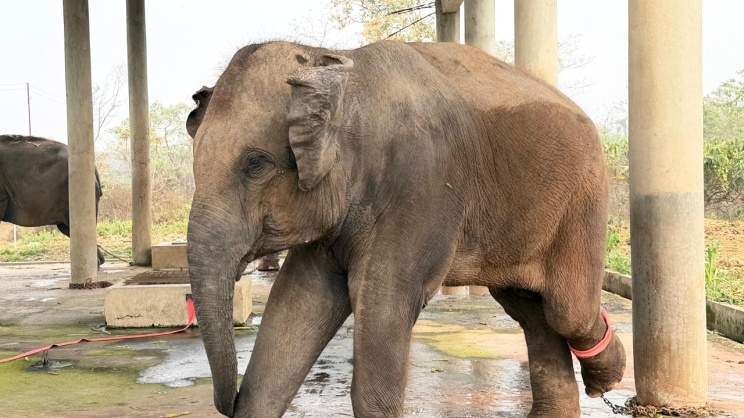
For Dr Reza Khan, the problem extends beyond Nihar Koli and Samrat. Wildlife management requires specialised personnel, veterinary expertise and institutions designed to deal with rescued and captive wildlife, rather than being treated as an extension of conventional forest administration.
The two cases expose the consequences of those institutional limitations. The state can rescue an elephant, remove it from private custody and keep it at a government facility for years. Yet it can later return the animal under a custody arrangement without publicly demonstrating that the circumstances responsible for the original intervention have materially changed.
That does not mean every rescued elephant should remain permanently inside a safari park. Keeping elephants indefinitely in inadequately equipped government facilities is hardly a satisfactory solution either. But if private custody is considered the better option, the decision should rest on more than a signed bond. It requires a transparent assessment of the custodian, living conditions, veterinary care, handling practices and the elephant's physical and psychological welfare, followed by regular monitoring.
The fundamental question is therefore not simply who legally holds Nihar Koli and Samrat. It is whether the conditions that led to their rescue in 2024 have actually disappeared.
A rescue can only provide meaningful protection if it addresses those conditions. Otherwise, government custody becomes an interlude rather than a solution — and an elephant removed from danger may eventually find itself returned to the same uncertainty from which it was rescued.
Ystiaque Ahmed is a journalist at The Daily Star.
Send your articles for Slow Reads to slowreads@thedailystar.net. Check out our submission guidelines for details.

The reality of vocational training for Bangladeshi women

Can we save young Bangladeshis from deadly Mediterranean crossings?

Breastfeeding in Bangladesh: What is holding mothers back?

Fidel Castro at 100 / Why Fidel Castro’s legacy still haunts Washington

Thirst in the Sundarbans: The water crisis facing Munda women

Which female-dominated jobs are actually the most exposed to AI?

What remains of Bangladesh's fading ethnic traditions

Good intentions are not enough: Why Bangladesh should rethink orphanages

Are we eating microplastics with our fish?