Why extreme heat hits girls hardest in Dhaka’s informal settlements
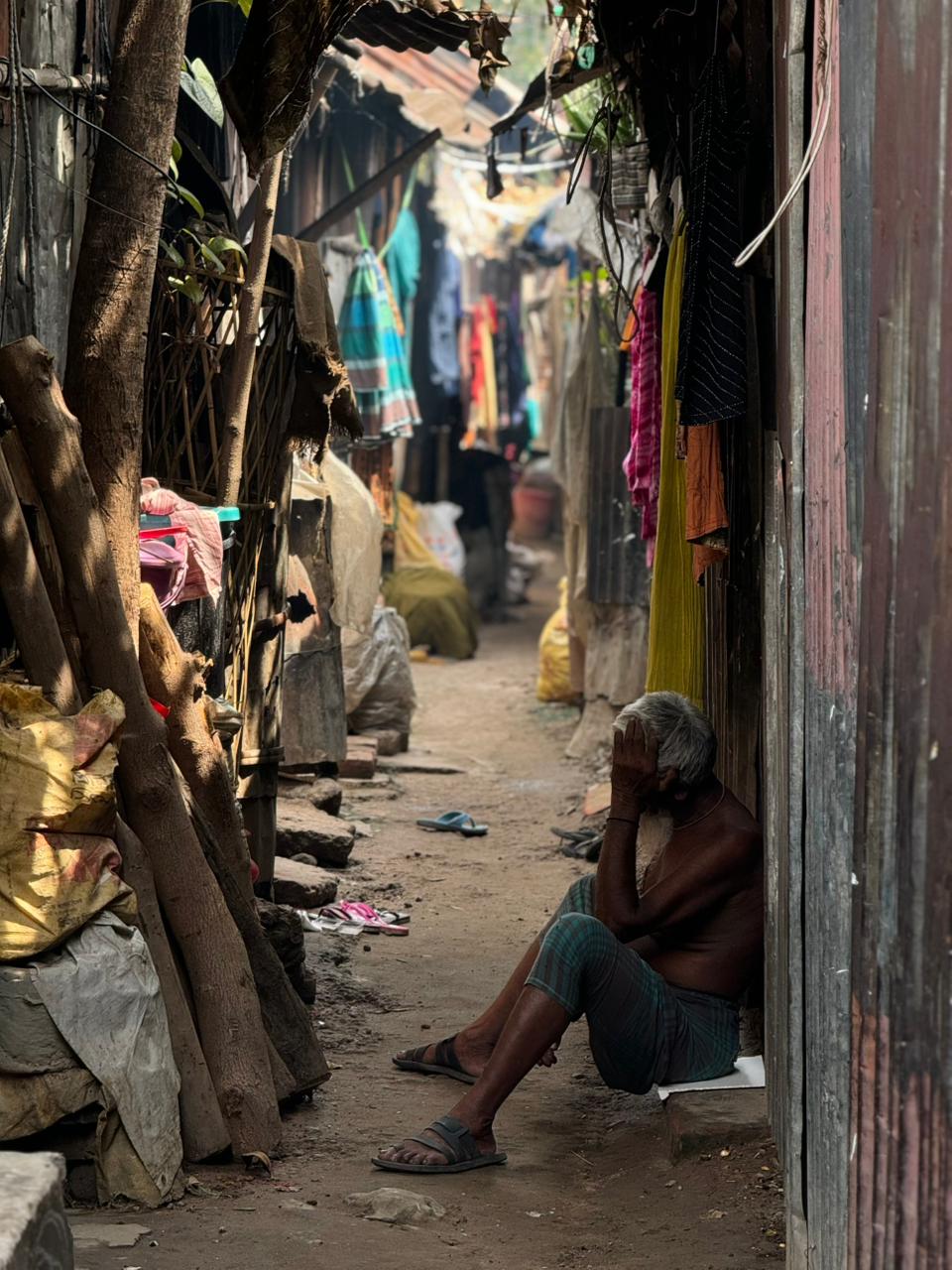
Under the scorching sun and along dusty, unpaved roads, young girls make their way home from school in Shyampur. Located in the south of Dhaka, Shyampur is a privately owned urban informal settlement housing around 173,000 people, of whom one-fifth are adolescents. With sparse trees and no shade, the goal is to spend as little time as possible under the sun, rushing home in search of whatever shade a tin roof can provide. Community members with whom we were in contact guided and helped us reach families living in Shyampur. Homes here mirror income and inequality. Some families of four or five share a single 100 sq ft room within a compound of ten to fifteen rooms. Others live across two or three of those small rooms, still sharing bathrooms and water points with neighbours. Space is limited, privacy is rare, and relief from the heat feels out of reach.
In Shyampur, heat is not seasonal; it is constant. During periods of extreme heat, movement is reduced and girls remain indoors. Unlike boys, who have easy access to tea stalls and open fields, girls in Shyampur have no space for fresh air or socialising. They are limited to their compound alleyways and rooftops, the only spaces considered acceptable for them to cool themselves.
Heat affects women of all ages in Shyampur. One young mother told us she often gets headaches in the heat and finds that eating tamarind helps her cool down. Other coping mechanisms include drinking chilled water stored in the refrigerator and using fans and rechargeable handheld fans, all of which depend on a stable electricity supply. For many residents, these coping strategies can become very expensive as electricity bills rise quickly during the hottest months.
Similarly, cooking becomes another burden. With gas frequently unavailable, these women are forced to prepare food on clay stoves using firewood. They can only cook within their small rooms, where smoke and additional heat surround the already stagnant air. Ventilation is poor, and often a small door or window is kept closed to keep out mosquitoes and foul odours. Breathing becomes difficult as constant heat, smoke, and confinement take a toll not only on their bodies but also on their mood and ability to focus. However, the strain does not end here.
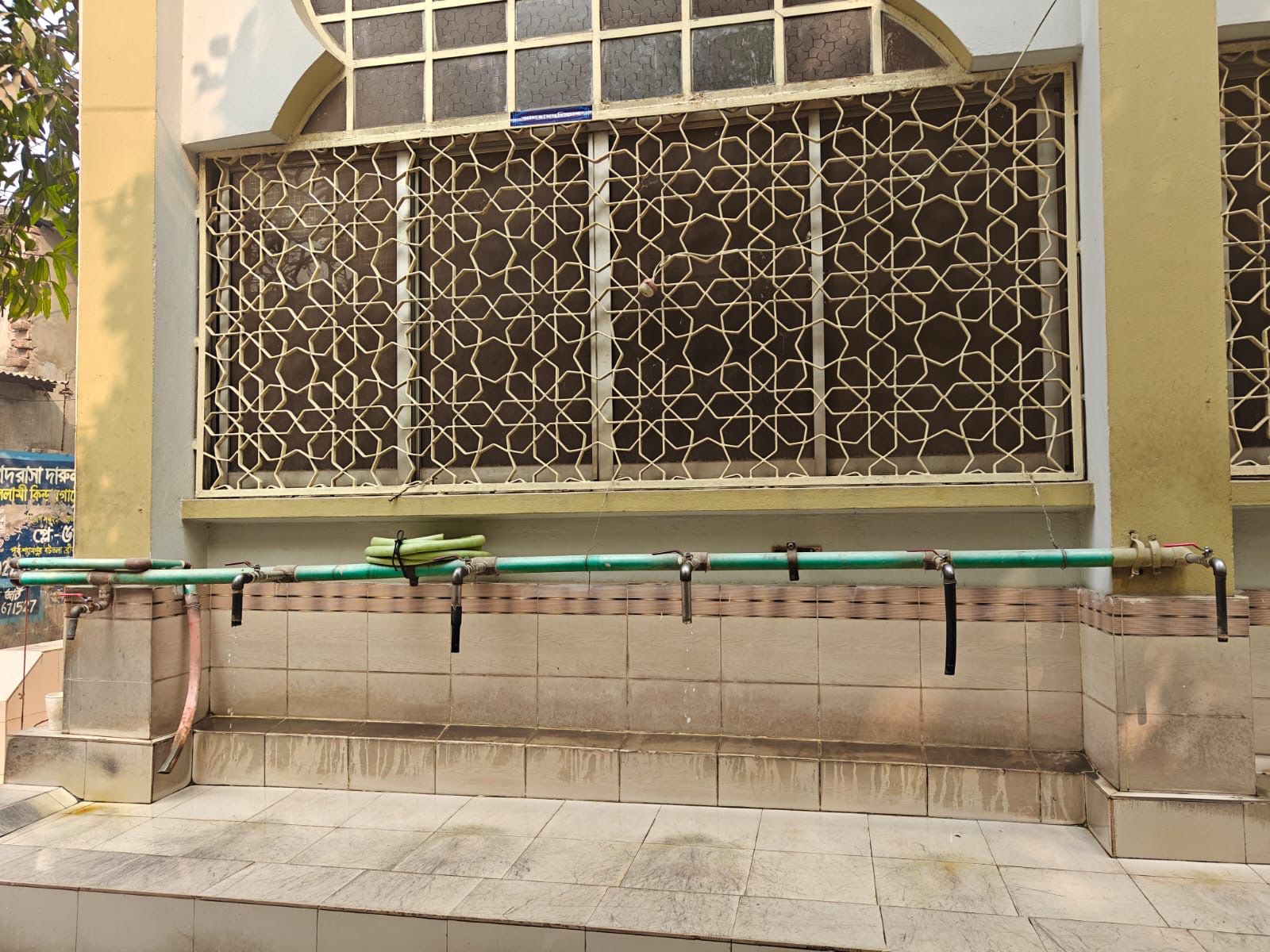
For most of us, safe and clean water is often taken for granted, but in Shyampur it is not. Most families collect water from mosque tube wells, paying five to ten taka per kolshi (clay pitcher), which often lasts a day or less. The supplied water in homes is often discoloured and used mainly for washing. A young mother said, “Je line er pani ache eta bhalo na, laal laal dekhte. Oije tang er moton laal thaake” (The piped water is not that good; it looks reddish, red like Tang). In extreme heat, limited and unclean water makes it harder for families to stay cool and hydrated.
In these cramped and overheated homes, the cost shows up on their bodies. When asked whether ghamachi (heat rash) occurs specifically among adolescents, a hopeless young mother replied, “It happens to everyone”. Ghamachi, sore spots, and skin infections have become common as heat, combined with dirty water and overcrowding, makes rashes almost unavoidable. Scratching is constant, and treatment is often limited to temporary relief. Families rely on local pharmacies, using powders for itching and ointments for rashes, which become band-aid solutions to recurring conditions that continue to worsen with heat and poor water quality.
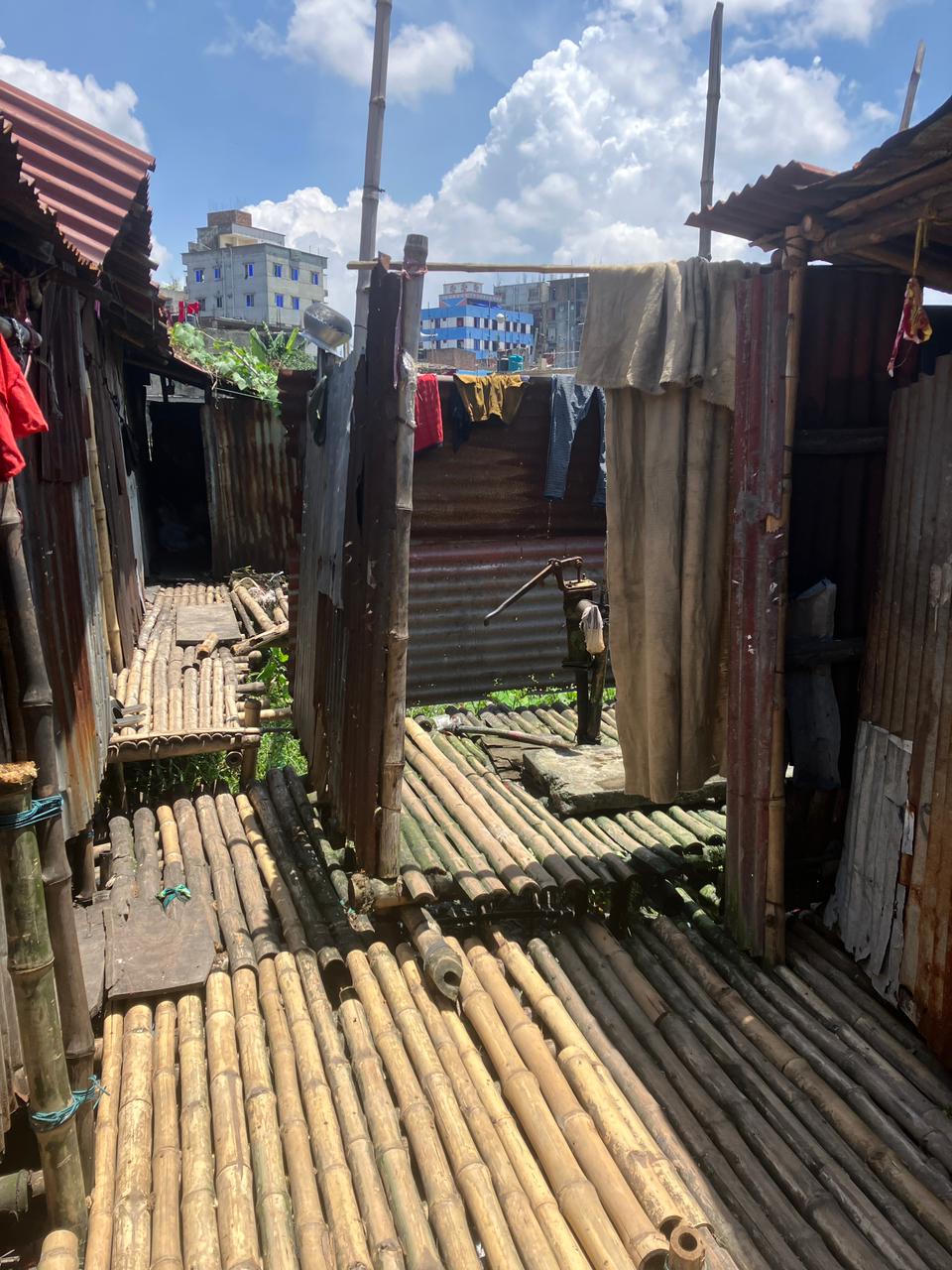
Even clothing feels oppressive and restrictive in the growing heat. One young mother told us she used to dampen her clothes in the village to cope with the heat. In the city, surrounded by male relatives and limited privacy, she can no longer do so. Rooms that should be resting places and safe havens are not the same for informal settlement dwellers. From inside her tin-roofed room, scratching her rash-covered arms, the young mother tells us, “It is much cooler to sit outside with everyone than under the fan inside the room.” Unlike concrete roofs, tin roofs absorb more heat from the sun, making the rooms hotter than they would otherwise be.
During our visit, we had the opportunity to speak to two adolescent sisters, who confirmed that April and May are the hottest and most difficult months for them. At home, they can still rely on simple remedies to cope with the heat, such as pouring water on the tin roofs or taking multiple showers, provided there is enough water available, as the supply can be erratic.
At school, coping becomes harder. Just like their homes, schools also have tin roofs. With load shedding and an unstable electricity supply, it becomes difficult for students to learn in such an environment. During periods of extreme heat, some students bring small handheld fans from home to cope, though not everyone does.
Furthermore, school taps are often dirty, so many girls avoid drinking from them. Two out of three adolescent girls told us that holding their urine to avoid using the toilet had led to recurrent urinary tract infections. Feeling drained, anxious, or embarrassed, they find it difficult to attend school, and learning becomes a daily struggle rather than a safe experience.
Moreover, students are not the only ones suffering. Teachers too seek relief, sometimes at the expense of their students’ well being. One of the sisters, frustrated, told us, “I would take a bottle of lemonade to help cope with the heat, but when my teachers saw it, they would drink it themselves. This happened several times, and I stopped taking it.” Hydration, like comfort, becomes something they are made to give up.
The heat in cities like Dhaka is not only changing the weather; it affects people differently depending on where they fall on the socio-economic scale. While it may be a mere nuisance for the privileged, in settlements like Shyampur it can completely alter people's ways of life. Climate stress manifests itself in limited access to basic necessities, skin infections, and disrupted school days. It is changing how these girls live, study, and care for their bodies. These are not separate problems; they are daily realities shaped by how our cities are planned and whose needs are prioritised. Until their health, dignity, and education are treated as essential components of urban planning and climate responses, the cost of heat will continue to be paid by those with the least power to speak and the fewest means to withstand it.
Nuriya Sadaf Moin is a Senior Research Assistant at the BRAC JPG School of Public Health, BRAC University. Her research focuses on climate change, heat-related health impacts, and the challenges faced by vulnerable populations in Bangladesh’s informal settlements. She can be reached at nuriya.moin@bracu.ac.bd.
Fariha Nowshin is a Senior Research Assistant at the BRAC JPG School of Public Health, BRAC University. Her work includes qualitative research, and documenting community experiences in public health and social development including climate change, heat and salinity.
Send your articles for Slow Reads to slowreads@thedailystar.net. Check out our submission guidelines for details.
Unsafe pesticide use in Bangladesh: Are we poisoning our food in the name of productivity?

Bangladesh's Article 26 challenge: Reforming laws, protecting workers' rights

The double burden behind women’s empowerment
Pets, companions, kin: Rethinking the human-animal relationships
Between Gabura and India: Work, loss and unequal choices
Fewer fish, higher costs: The struggle of Bangladesh’s Hilsa fishermen

Duli to Baaji: Whose gaze shapes indigenous representation?

The everyday resistance of Rohingya women the world rarely sees

The banyan tree that became a restaurant for birds