What the government can really do for returnee women migrants
Fatima (alias), in her late thirties, navigates the daily challenges of life as the sole earner of a family of six, including her 4 children and a husband. Her husband lost his legs after an accident at work. Since then, she has been bearing his medical expenses, with some support from the local Social Welfare office.
Fatima is also a returnee woman migrant worker, whose harrowing journey abroad came to light when she was interviewed as part of a project by iSocial, which identified productive investment opportunities for returnee women migrant workers in Bangladesh and examined pathways for their effective reintegration.
Like many other women in her area of residence, Fatima believed that migrating to the Middle East would bring higher income, a higher standard of living, and greater honour. A local dalal (middleman) had helped her sort through the documents, which she could barely comprehend, and determine whether they were real or forged.
Despite this ordeal, like many of her counterparts, she succeeded in migrating to Saudi Arabia and securing a job as a housemaid at a local family’s residence. Fatima spent one and a half years there, a time period that traumatised her for all the abuse she endured during that period.
Her employer also took away her passport and forbade her from speaking to anyone or going anywhere. She was constantly monitored through a CCTV camera. Besides the constant inhumane attitude, Fatima also encountered physical assaults, which included boiling water being thrown on her hands.
Luck showed her some mercy when she was able to run away from her employer’s household and find refuge in the Embassy of Bangladesh in Riyadh. After reclaiming some of her due salary and passport, she returned to Bangladesh. However, Fatima had to spend a huge portion of her salary on her return ticket, leaving out only meagre savings, which were insufficient to restart her life in Bangladesh.
Upon return, she was unaware of any available services for returnees. She also faced humiliation from the community for not “making it” abroad. However, some well-wishers advised her to get acquainted with a local NGO which provided her with the support she needed to rebuild her economic resilience to some extent. They assessed her skills and assets and then provided her with entrepreneurship training to run a small grocery store. After completing this residential training, she received some non-cash capital to operate the store. The NGO regularly monitors the store’s performance and guides her in operating it. Fatima now manages to secure at least three meals a day for her family. Despite this progress, she still struggles to meet further expenses required for her husband’s treatment and family needs.
Fatima’s accounts are of hope, which many returnee women migrant workers are still struggling to find. Many returnee women continue to face abuse from family members and are often ousted from their communities, suffering a loss of their remaining wealth that they had left behind.
One of the biggest hurdles the country faces is the lack of adequate data on migration, particularly data on returnee migrants, both men and women.
According to a study by the Bangladesh Institute of Labour Studies, 38% women migrant stated that society considered them characterless upon return, 28% faced marital problems, and 17% experienced unwarranted behaviour from their families.
As per the latest skills profiling survey, conducted under the ILO’s Reintegration for Migrants project, with support from the Embassy of Switzerland in Bangladesh and implemented by DEVCOM, 48.40% of the returnee women migrant workers are unemployed or not a part of the labour force, indicating a need to enhance their economic opportunities. Additionally, returnee women have been primarily engaged in livestock and/or poultry rearing, entrepreneurship, agriculture, and fish farming. However, obtaining loans is one of the biggest hurdles returnee women face. Even if they obtain loans from Probashi Kallyan Bank, the default rate is around 70%. Financial illiteracy among women is also higher among returnees than among their male counterparts.
According to a study by the Bangladesh Institute of Labour Studies (2021), approximately 55% of returnee women migrants were physically ill, 29% suffered from mental illnesses, 38% were physically tortured abroad, and 7% were sexually abused. Additionally, 38% stated that society considered them characterless upon return, 28% faced marital problems, and 17% experienced unwarranted behaviour from their families. Regarding economic hardships, 60% were unemployed, 65% had no regular monthly income, 75% had no savings, and 61% were in debt.
The concept of reintegrating returnee migrant workers came into fruition when increasing numbers of migrants were returning to Bangladesh during COVID-19. Reintegration refers to the use of whole-of-government and whole-of-society approaches to reintegrate returnees through the four pillars: social, economic, labour market, and psychosocial. These approaches indicate that all relevant actors, along with the government, need to be involved in the reintegration process.
A project titled Recovery and Advancement of Informal Sector Employment (RAISE) was developed in February 2022, funded by the World Bank, and led by the Wage Earners’ Welfare Board (WEWB) of MoEWOE, along with the implementing partner, Palli Karma-Sahayak Foundation (PKSF). Under this project, WEWB has established 35 Probashi Kallyan Centres (formerly known as Welfare Centres) covering 64 districts of Bangladesh. Under this project, more than 200,000 returnees, both men and women, have been provided with benefits, including counselling, skills development and entrepreneurship training. Each registered returnee migrant also received BDT 13,500 under this initiative as remuneration for partaking in this process.
However, iSocial’s research indicates a significant gap between the services offered by the Probashi Kallyan Centres and the diverse needs of returnees, especially those of returnee women.
The reintegration process should begin upon arrival at the airport to establish a holistic referral mechanism that includes all relevant stakeholders—private sector organisations, Civil Society Organisations (CSOs), NGOs, and INGOs. Currently, services are being delivered in fragmented methods and with inadequate coordination among stakeholders. Fatima’s case shows how much more her life can improve if she receives support through an effective referral mechanism.
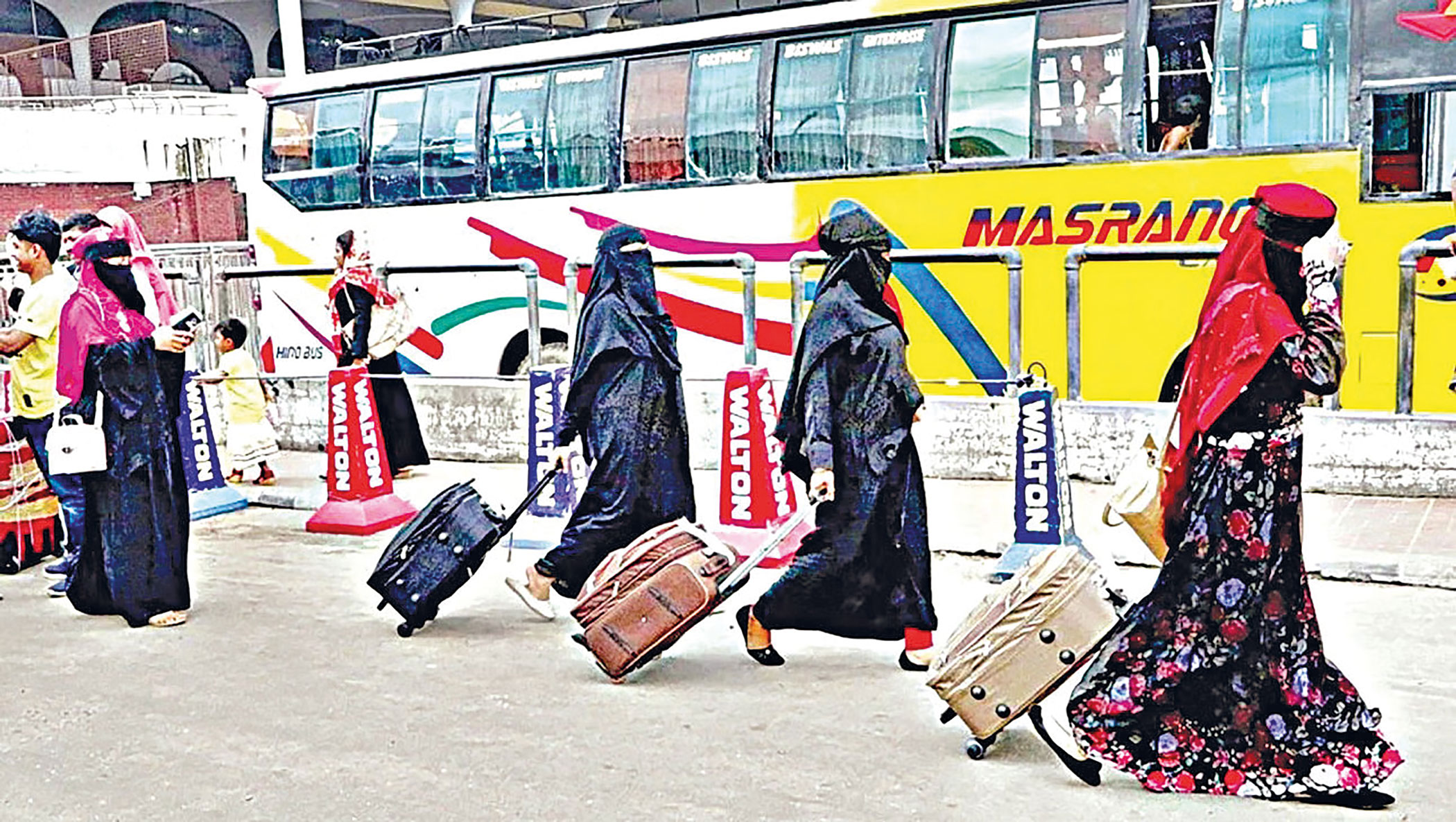
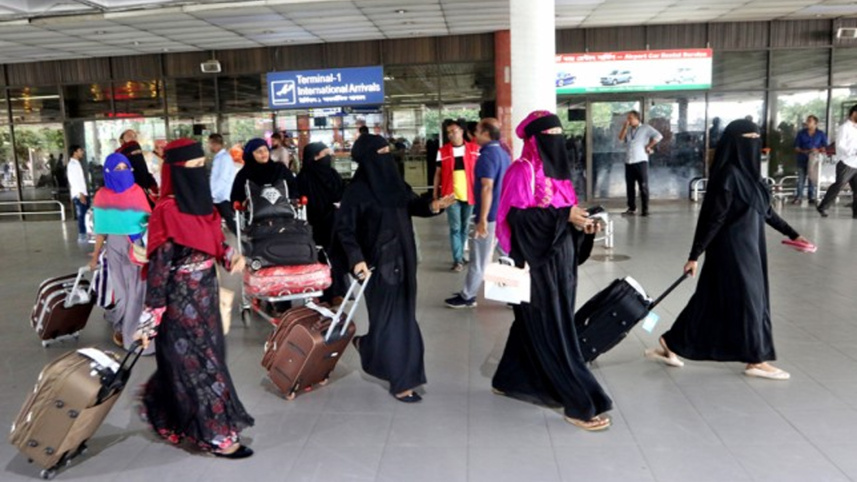
A coordinated system is urgently needed to prevent forged documents before departure, along with increased literacy training on migration issues. Additionally, when returnee migrants arrive at the airport, separate queues can be established at the airport welfare desks by WEWB for women, so that their unique needs can be recorded, such as those related to skills, reproduction, childcare, and accounts of abuse.
Assessments must also be made of whether every returnee woman who is willing to become an entrepreneur or become self-employed has access to adequate finances, training, and other resources.
Information must be available at the airport welfare desks about the returnees of the Probashi Kallyan Centres. Equipping Probashi Kallyan Centres adequately to offer psychosocial counselling by professionals with the capacity to guide returnee migrants effectively, especially women returnees, is vital. They can then be referred to different service points, such as healthcare, skills development, legal aid, shelter, and childcare, as part of an effective referral mechanism.
A Standard Operating Procedure to meet the needs of returnee women migrant workers can be utilised by WEWB for operating the Probashi Kallyan Centres. Gender-responsive training modules can be utilised to train government officials and other public and private sector stakeholders. WEWB is developing a Management Information System (MIS) that can record gender-specific data. It can be used to design gender-sensitive service delivery for returnee migrant workers.
Some of the relevant departments in various ministries identified by ILO in Bangladesh, in coordination with several other partners, which can provide services to the referred returnee migrant workers include, WEWB; Bureau of Manpower, Employment and Training (BMET); Bangladesh Overseas Employment and Services Limited (BOESL); Department of Social Services; Department of Women Affairs; National Women’s Organisation; Joyeeta Foundation; Department of Youth Development; National Youth Development Institute; SME & Special Programmes Department, Financial Inclusion Department, Foreign Exchange Operation Department of Bangladesh Bank; Microcredit Regulatory Authority (MRA); Agricultural Credit and Special Programs Department; Employment Division; Department of Labour; Bangladesh Workers’ Welfare Foundation; Minimum Wages Board.
WEWB can provide subsidies to the returnee service recipients, while CSOs can deliver the services consistently with a suitable revenue model. MoEWOE has also recently launched the Overseas Employment Platform (OEP) to automate the entire migration lifecycle gradually. Incorporating a dedicated reintegration module would streamline the referral and case management processes. Including women-specific services is vital as this platform continues to improve. Initiatives can be undertaken to sensitise communities towards returnee women to reduce social stigma.
It is encouraging to see that migrant workers were included in the election manifestos of the participating political parties. It is expected that the new government will prioritise reintegration, address the special needs of returnee migrant workers, and emphasise the establishment of customised approaches to cater to the diverse needs of returnee women migrant workers.
Raisa Binte Hossain is the Lead Program Manager at iSocial.
Maisha Zaman is a Research and Communication Associate at iSocial.
Send your articles for Slow Reads to slowreads@thedailystar.net. Check out our submission guidelines for details.
The Price of Labour
Those who remain invisible in Bangladesh’s political imagination
Interview / “Don’t reduce garment workers to victims—recognise their struggles”
The weight of untouchability: Rabidas community in Bangladesh
Bengali and Non-Bengali Riots at Karnaphuli Paper Mills
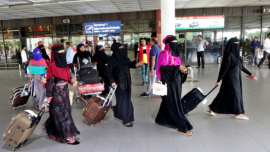
What the government can really do for returnee women migrants
Unthreading Partition: The politics of jute sharing between two Bengals

The hands that clean, the Harijans we refuse to see
Bound by dadan
Fish stocks collapse in the Bay of Bengal, fishermen at risk
Shifting lives in the haor / A wetland losing its farmers