


How should Bangladesh adapt to the evolving situation in the Middle East?

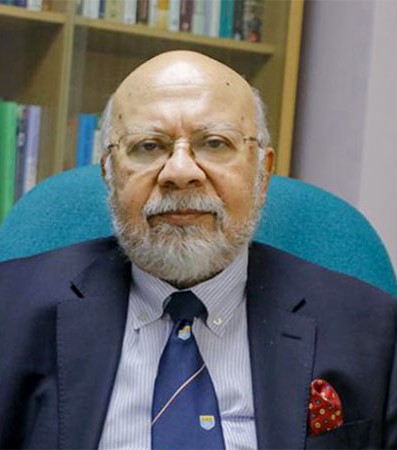
As the Iran-US-Israel war currently sits on an uncertain ceasefire, former Bangladesh Ambassador to Iran, Tariq Karim, speaks to Ramisa Rob of The Daily Star about the shifting geopolitical dynamics in the region and how Bangladesh should reassess its strategic relations.
Do you think this ceasefire will result in long-lasting de-escalation?
I would hope for the best, but prepare for the worst. We must never forget that the worst can happen at any time. Iran’s interpretation of the ceasefire includes that all hostilities will be seized by Israel anywhere. But Netanyahu has continued attacking Lebanon, which is included in the ceasefire. If the ceasefire doesn’t last, the Strait of Hormuz will remain closed. I also read reports that while all these talks of peace are going on, US troops deployment has not stopped. Another point to consider is the interlocutors who will be meeting in Islamabad. Those who were mediating last year in June, were ones that Iran went back to in good faith in February before this war started. Iran won’t trust the same interlocutors. They might be willing to sit but they will not sit quietly. They will be fully prepared to hit out if any signs of good faith are not displayed. So it is very fragile and can blow up in our faces. The stock markets will go up and down. People in the US, in Bangladesh and elsewhere will have their stock markets perform better with the word of peace and ceasefire. But these are illusions.
How will the global balance of big powers shift in the aftermath of this war?
In my view, Iran is well-set to emerge as the next notable power in the international scene. Firstly, Iran has played their cards well, they’ve stood up to every coercion that Israel and the US have jointly tried to inflict on them and they’ve stood tall. Secondly, the trajectory of the war has also shown a clear alignment of geopolitical players — the big ones who matter, and how they line up is imperative. In that sense, it is very evident that Iran is being helped, covertly and overtly by China, Russia and North Korea. These geopolitical players were considered enemies of the West for the US, and they are now solidly with Iran.
The technology that Iran has, and dexterously used in this war, has been painstakingly acquired over the decades of relationships with the key geopolitical powers that Iran quietly nursed and nurtured. In my opinion, the alignment that has emerged, shifts the global balance of powers away from the West. Here, we must remember that Russia is a Eurasian power. Russia has discovered that it might very well end up being the big power in Europe, as the other European nations will have to readjust to Russia. But Russia also has more heft and gravitas with its current state of relations with Iran, China, and North Korea. So, those who have been characterised as the villains are likely to emerge as the victors.
How should Bangladesh adjust to the changing scene, both externally and internally?
I have always, historically, advocated that we should always have relations with Iran. During the days of the Shah, Iran had tentatively offered to help us develop our own hydrocarbon resources and build our hydrocarbon industry. It was an offer that they renewed when I served as Bangladesh’s Ambassador there. But Bangladesh did not consider it due to fear of reprisal from the US, sanctions and strong-arming of most of the industries in the region by the US.
I’ve always said that we, Bangladesh, are like a walnut in the pincers of two nutcrackers — a regional one between India and China, and a global one between the Indo-Pacific and BRI. The walnut must develop a thick shell, on its own, not from nutrients outside. In other words, if we do not nourish ourselves with nutrients from inside, we will automatically have a brittle shell which will crack under pressure. We cannot afford to fight with anyone. We have to diversify.
Our relations have to be built on our national interests. One of the main principles in foreign relations, one that would be wise to remember: there is no such thing as “friendship” in international relations. Friendship is when one country approaches and engages with the other with their own national interests in mind. To state it very crudely, the immediate concern of such friendship is, “what is in it for me?” Unfortunately, Bangladesh has made our national interests secondary to those of other nations. It is true that we started off as a weak nation with nothing, and we had to rebuild a nation, so obviously we had to depend more on one side or the other. But we are not a weak nation today. We are not a nation on our knees, crawling in dust, struggling to shake the miseries and tragedy of war behind us. We have actually emerged as a middle-sized economy to be reckoned with. And we blew that opportunity, is how I would describe it.
Everybody only talks about the youth of Bangladesh but in nature, we do not invest in the youth, which is our biggest asset. Since the uprising last year, why did we not invest in creating more job opportunities? Why did we not reconfigure our educational curriculum? In the US, for example, every accomplished person doesn’t go to Harvard or Yale, nor does everyone even have a bachelor’s degree. I’ve also seen this in China: people stream into places where they can thrive, where they can have self-fulfillment. There are always opportunities, so we have to drastically monitor and reevaluate our policies to produce a nation which will give us the ability to stand on our own. Why do our people keep wanting to leave the country? Even if they get low paying jobs abroad, they want to take the risk, they want to risk their lives and escape their homes. They don’t trust that their own nation, its industries, will be able to solidify itself internally.
We should also learn from Iran. They have been under sanctions for four decades. But what do they have in the end? They have a high literacy rate of both women and men. They can provide basic medical services, perhaps even some advanced services to their own population. Iran has managed on their own without being fully dependent on anyone for their domestic development and sustenance. That is what I call internal resilience.
I’ve always said that we, Bangladesh, are like a walnut in the pincers of two nutcrackers — a regional one between India and China, and a global one between the Indo-Pacific and BRI. The walnut must develop a thick shell, on its own, not from nutrients outside. In other words, if we do not nourish ourselves with nutrients from inside, we will automatically have a brittle shell which will crack under pressure. We cannot afford to fight with anyone. We have to diversify.
We have neglected Iran, and it’s time we reach out. I often see messages of solidarity being exchanged with the Arab Gulf countries which is of course, necessary too, as our people are employed there. But the Gulf nations are likely to become less relevant in the very near future. If the present scenario that emerges in my thinking is consolidated, then it will be Iran that will take over the geopolitical weight of the Gulf. If the US President Trump’s indescribable epithets of destroying “a civilisation” had materialised, Iran would not have buckled under that. If the Gulf countries, with which we pursue friendship, allow the US to use their bases to attack Iran, then it’s fair game for Iran and they would have probably gone for a complete onslaught for every infrastructure in the Gulf states that keeps them going. Iran has already destroyed their tourism industry, and it will take a long time to regain that. The Gulf is acutely scarce of water, and if Iran touches the desalination plants, their population will starve and die from thirst. The Gulf economies were diversifying and going into manufacturing and focusing on the development of science and technology to make inroads into medical science. That too, would be destroyed if the US had done what Trump said. What would have emerged from that scenario is a battered, badly bruised Iran, but one that would still be standing. They will continue to rebuild with fervour with the new arrangements coming in place.
In my view, Iran is well-set to emerge as the next notable power in the international scene. Firstly, Iran has played their cards well, they’ve stood up to every coercion that Israel and the US have jointly tried to inflict on them and they’ve stood tall. Secondly, the trajectory of the war has also shown a clear alignment of geopolitical players — the big ones who matter, and how they line up is imperative. In that sense, it is very evident that Iran is being held, covertly and overtly by China, Russia and North Korea. These geopolitical players were considered enemies of the West for the US, and they are now solidly with Iran.
We used to send workers to Iran back in the day. Now, Iran will start reconstructing themselves as a modern power, they will start doing exactly what the Gulf states have done, and they will do it very fast. Bangladesh will then need to court them, and Iranians have long memories of their own population and history but also memories of who stood with them and who did not. So, we have to think more broadly about our long-term interests. I hope we have quietly reached out to Iran, but if not, I certainly think we should. This is not to say we should not keep our ties with the Gulf states. We should have an inclusionary approach. But we cannot take sides with anyone against anyone else. We should position ourselves in a place where two countries fighting with each other becomes a different matter, and we have good relations with both. This way, we will be able to say, “You are fighting with each other but don’t come fight in our drawing room.”
The old world order is finished. A new world order has not yet emerged but we have to position ourselves to survive in a new emerging world order. Borders are changing across Europe and the Middle East, and it will come to our borders as well if we don’t play our cards well. We have to indulge in anticipatory thinking.
Send your articles for Slow Reads to slowreads@thedailystar.net. Check out our submission guidelines for details.