


Global celebrations of Beijing+20
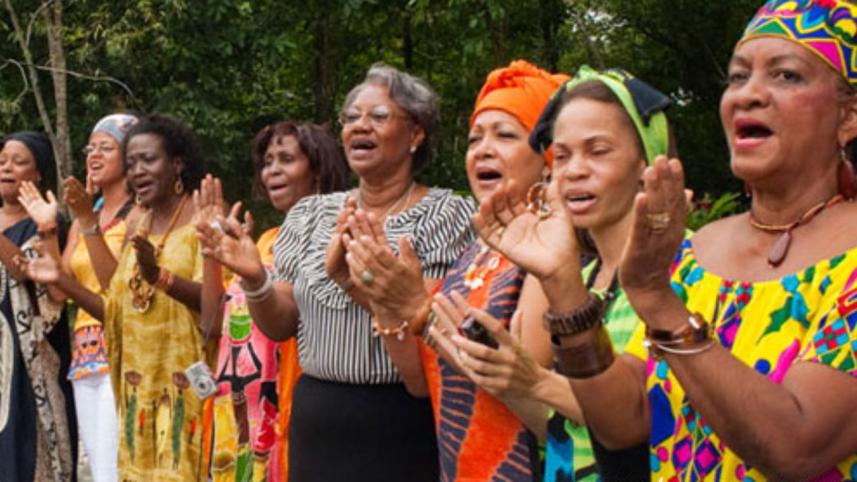
TWENTY years ago, thousands of delegates left the historic Fourth World Conference on Women on a high. The overwhelming feeling was that we had won a great victory for gender equality. Leaders from 189 countries, including Bangladesh, had committed to an extraordinary Platform for Action, with ambitious but realistic promises in key areas and a roadmap for getting there.
Bangladesh has been internationally recognised for its achievements since then. With genuine commitment governments and civil society have worked to lift women out of poverty and illiteracy, achieve gender parity in school enrollment and improve health especially for women as mothers. The country benefitted as women came out of their houses into the factories and other jobs. There are more women in decision-making in national and local government and other successes to be celebrated

Yet there is a paradox; despite these achievements, the vast majority of women live with injustices that are completely inconsistent with human rights and the values on which Bangladesh was founded.
Girls start school but many do not finish. Boys who drop out of school may work in unskilled labour; girls will most often be married and work long hours for little or no pay. Levels of adolescent pregnancy are the highest in South Asia, and violence is so high as to be a normal part of women's lives.
We should celebrate successes but we must not be blind to continuing inequalities and the ways in which people's daily lives are shaped by gender roles and discrimination. Consider the context of climate change. Unpaid work for women increases significantly as households adapt to changes in the environment. Many men become day labourers or migrate to urban centres for work. Women take over the men's agricultural work or fishing while continuing the household work. Increasing scarcity of water and fuel often adds to the demands, increasing women's exposure to harassment. Micro-enterprises supported by development agencies provide some additional income, and managing the family's main livelihood can improve women's status in the household, but the total work burden is enormous, negatively affecting women's health and leaving little time to participate in community affairs.
During floods or tidal surges expectations that women will forgo their own welfare for their family's survival are common. In many households women are excluded from decision making and are not permitted to travel to services or markets without their husband's permission. In case of disaster they may be afraid to take the decision to move to a shelter. Women who go to the shelter may find secure space for pregnant and lactating mothers and female toilets, but not always.
Policies and programmes which are based on clear analysis of these realities are more likely to reach and benefit women. However, policies and programmes are implemented by people who live in the same environment where discrimination is practiced. Inevitably, some of those service providers will interpret policies through their own beliefs. Some justice officials will blame women who are raped for being out of their houses after dark and some health care providers will blame the mother who has no control over household resources for not feeding her children better food. We need to change these mindsets, but fair treatment by public services cannot wait for attitudes to change. Managers and decision-makers must be held responsible to provide adequate resources and training for service providers and those front-line providers must be accountable for treating women and men with equity.
Designing programmes in awareness of women's realities, taking steps to remove barriers women face and implementing accountability systems will help reduce inequalities. Global experience shows us, however, that this will not be enough to end violence against women or other serious abuses of women's human rights.
A national study by the Bangladesh Bureau of Statistics found that 67% of ever-married women had experienced physical violence by their spouse. The findings suggest that in any 12 month period, at least 13 million women are physically assaulted. This can only be possible if the majority of people accept this violence and that acceptance can only be possible because women and girls are less valued than men. How can governments, media, private sectors, NGOs and citizens work together to challenge this devaluing of women?
Again, changing mindsets is not the only answer. One critical step is to reform laws that make women 'less equal' than men. By law the age of majority is 18. Girls under 18 cannot legally give consent, and yet one half of girls 15 to 19 are married. These girls have no right of consent over a decision that will shape their lives. Marital rape is not recognised in the law of Bangladesh, suggesting that women have no right to bodily integrity. Personal laws impose limits on women's ability to protect their rights and their children in the context of marriage; inheritance law is a barrier to women's access to resources.
Secondly, recognise women's contribution to the national economy. Much of women's production of food and goods for the market is invisible because they work as unpaid family labourers. Women's unpaid care work is the foundation on which reductions in poverty and improvements in health and education have been achieved. Agriculture is the biggest sector of work for women, but they are not recognised as farmers. Domestic work is not included in the Labour Act, excluding those women, children and few men from the protections set out for other workers.
Thirdly, take actions to overcome social barriers that prevent fulfillment of women's human rights. School stipends are an example of a policy that provides support and incentives for families to educate their girls as well as their boys. Government and tertiary educational institutions can implement systems to increase women's enrolment in universities, technical colleges and skills training: stepping up action to prevent sexual harassment, setting quotas for girls, hiring more women to teach subjects traditionally dominated by men. Some employers already set targets to recruit women, invest in female employees and audit their human resource policies to help dismantle the glass ceiling. Any sector can implement strategies that will remove barriers to women's equal participation, the only limits are commitment and ingenuity.
Finally, yes, we do need to change social beliefs and attitudes. However, on International Women's Day let's commit to move beyond a sole focus on personal change and work together for social change.
Twenty years ago, leaders around the world promised to achieve gender equality. If leaders across Bangladesh join with gender equality advocates today; if business leaders, government members, educators, media and others genuinely step up their action for equality and build on the foundation laid in the last 20 years; if they can make the necessary investments, build partnerships and hold each other accountable for results, we could finally see those promises fulfilled.
The writer is Country Representative, UN Women.
 For all latest news, follow The Daily Star's Google News channel.


Comments